One-Pot Meals For Seniors
Cooking later in life often becomes less about showing off in the kitchen and more about making good food feel manageable again. One-pot meals suit that shift beautifully because they reduce cleanup, simplify timing, and ask less from tired hands, sore joints, or shorter attention spans. They can also be adapted for smaller portions, softer textures, and nutrition goals such as higher protein or lower sodium. For many seniors, that combination turns dinner from a chore back into a reassuring part of the day.
Outline and Importance: Why One-Pot Meals Make Sense for Seniors
Before diving into ingredients and recipes, it helps to see the road map. This article covers five practical areas:
• why one-pot cooking is especially useful for older adults
• how to build balanced meals that support strength and steady energy
• which shortcuts save effort without sacrificing quality
• what kinds of one-pot dishes work best in real life
• how to turn the idea into a sustainable weekly routine
That outline matters because many seniors are not looking for culinary theater; they are looking for meals that fit the body, the budget, and the rhythm of ordinary days. A one-pot meal does not demand three burners, a baking dish, and a separate saucepan. Instead, it brings ingredients together in a single vessel, whether that vessel is a soup pot, deep skillet, Dutch oven, pressure cooker, or slow cooker. Fewer moving parts mean fewer chances to overcook something, forget a pan on the stove, or end the evening with an exhausting cleanup session.
There is also a strong practical argument for this style of cooking. Multi-step meals can become harder with age due to arthritis, reduced grip strength, balance issues, or simple fatigue. Even seniors who still enjoy cooking may prefer a method that asks for less standing, less lifting, and less mental juggling. A simmering pot of soup or a skillet meal with rice and vegetables can feel almost companionable, like the kitchen is helping instead of demanding.
Compared with restaurant takeout, one-pot home cooking also offers more control. You can keep the sodium lower, soften vegetables longer, choose a more comfortable spice level, and adjust the portion to avoid waste. Compared with frozen prepared dinners, one-pot meals often taste fresher and usually cost less per serving. A basic pot of lentil soup, turkey chili, or chicken and vegetable stew can stretch across several meals, which is helpful for seniors living alone or couples who do not want to cook every day.
Emotion matters here too. Food is not only fuel. A warm pot on the stove can bring back routine, appetite, and comfort, especially during colder months or after a tiring day. In that sense, effortless one-pot meals are not just a cooking technique. They are a way to preserve independence while making daily nourishment feel realistic and kind.
Nutrition in a Single Pot: Balancing Protein, Fiber, Fluids, and Texture
The strongest one-pot meals do more than fill the stomach; they bring several nutritional needs together in a form that feels easy to eat. That matters for seniors because appetite often declines with age, while the need for key nutrients remains important. Muscle maintenance, bone health, digestive comfort, hydration, and steady energy all depend on regular, balanced meals. When breakfast is small and lunch is light, dinner has to work a little harder.
Protein deserves special attention. Many dietitians encourage older adults to prioritize protein at each meal, since it supports muscle retention and recovery. Needs vary by health status, body size, and medical guidance, but a commonly discussed range for many older adults is around 1.0 to 1.2 grams of protein per kilogram of body weight per day. In practical terms, a one-pot meal can help by combining protein with familiar comfort foods. Good options include:
• beans or lentils in soup and stew
• chicken thighs simmered with vegetables and grains
• ground turkey in chili
• eggs gently cooked into soft rice dishes
• tofu in brothy noodle bowls
Fiber matters too, especially for digestion and blood sugar steadiness. General recommendations for adults over 50 are often around 22 grams per day for women and 28 grams for men, though individual needs vary. Vegetables, beans, oats, barley, brown rice, and split peas all fit beautifully into one-pot meals. If fiber intake has been low, increasing it gradually is usually more comfortable than making a sudden jump.
Texture is another often overlooked issue. Some seniors live with dental changes, swallowing difficulties, or discomfort when chewing tougher foods. This is where one-pot cooking shines. Longer simmering softens vegetables, tenderizes meats, and creates moist dishes that are easier to manage. A bean stew may be a better choice than a dry grilled sandwich; a chicken and rice soup may feel far friendlier than a crisp salad on a day when chewing feels tiring.
Hydration also gets a quiet boost from soups, broths, and saucy dishes. They do not replace drinking water, but they can contribute to overall fluid intake, which is useful because thirst signals may weaken with age. The smartest one-pot meals are therefore not random mixtures. They are balanced bowls: protein for strength, vegetables for vitamins and color, fiber for digestion, starch for energy, and a texture that meets the eater where they are.
Effortless Cooking: Smart Ingredients, Shortcuts, and Safer Kitchen Habits
Effortless does not mean careless, and it certainly does not mean bland. In the best sense, effortless cooking is about removing needless friction. That starts with ingredients. Seniors do not need to chop every carrot from scratch or soak dry beans overnight to create a worthwhile meal. Frozen vegetables, low-sodium canned beans, pre-cut squash, rotisserie chicken, quick-cooking grains, jarred tomato sauce, and boxed broth can all make the process lighter. Used thoughtfully, these convenience items reduce strain while still leaving room for flavor and nutrition.
There is a useful comparison here between idealized cooking and functional cooking. Idealized cooking often celebrates long prep lists, handmade stocks, and intricate timing. Functional cooking asks a simpler question: what makes a healthy meal possible on a Wednesday when energy is limited? For many seniors, the second question is the one that matters. If rinsed canned beans save ten minutes and reduce sodium by roughly a third or more, that is not a shortcut to feel guilty about. It is a practical choice.
Kitchen safety belongs in this conversation too. One-pot meals reduce the number of hot surfaces and heavy dishes in play, which can lower the risk of spills and burns. A few habits make the process even easier:
• keep the most-used pot at waist height to avoid awkward lifting
• use a stable cutting board with a damp towel underneath
• choose pans with two handles if strength is limited
• portion leftovers into smaller containers before refrigerating
• label meals with the date so nothing lingers too long unnoticed
Equipment can help without turning the kitchen into a gadget showroom. A slow cooker is useful for seniors who like “set it and leave it” meals, though food safety still matters. An electric pressure cooker can shorten cooking time dramatically, especially for soups and beans, but only if the controls feel comfortable. A deep nonstick skillet may be best for someone who wants less weight and easier washing. The right tool is simply the one that feels safest and least tiring to use.
Finally, planning matters more than perfection. Keeping a small one-pot pantry on hand can prevent the end-of-day question that derails many good intentions. A can of beans, a bag of frozen vegetables, a carton of broth, and a grain like rice or barley can become dinner with very little fuss. When the kitchen stops asking for heroics, cooking becomes far easier to repeat.
Practical Meal Types: Comparisons, Examples, and When Each One Works Best
Not every one-pot meal serves the same purpose, and that is good news. Different days call for different kinds of ease. Some meals are best for freezer storage, some are gentler on the mouth, and some come together fast when hunger arrives before patience does. Understanding the strengths of each type helps seniors choose meals that truly fit the moment instead of relying on guesswork.
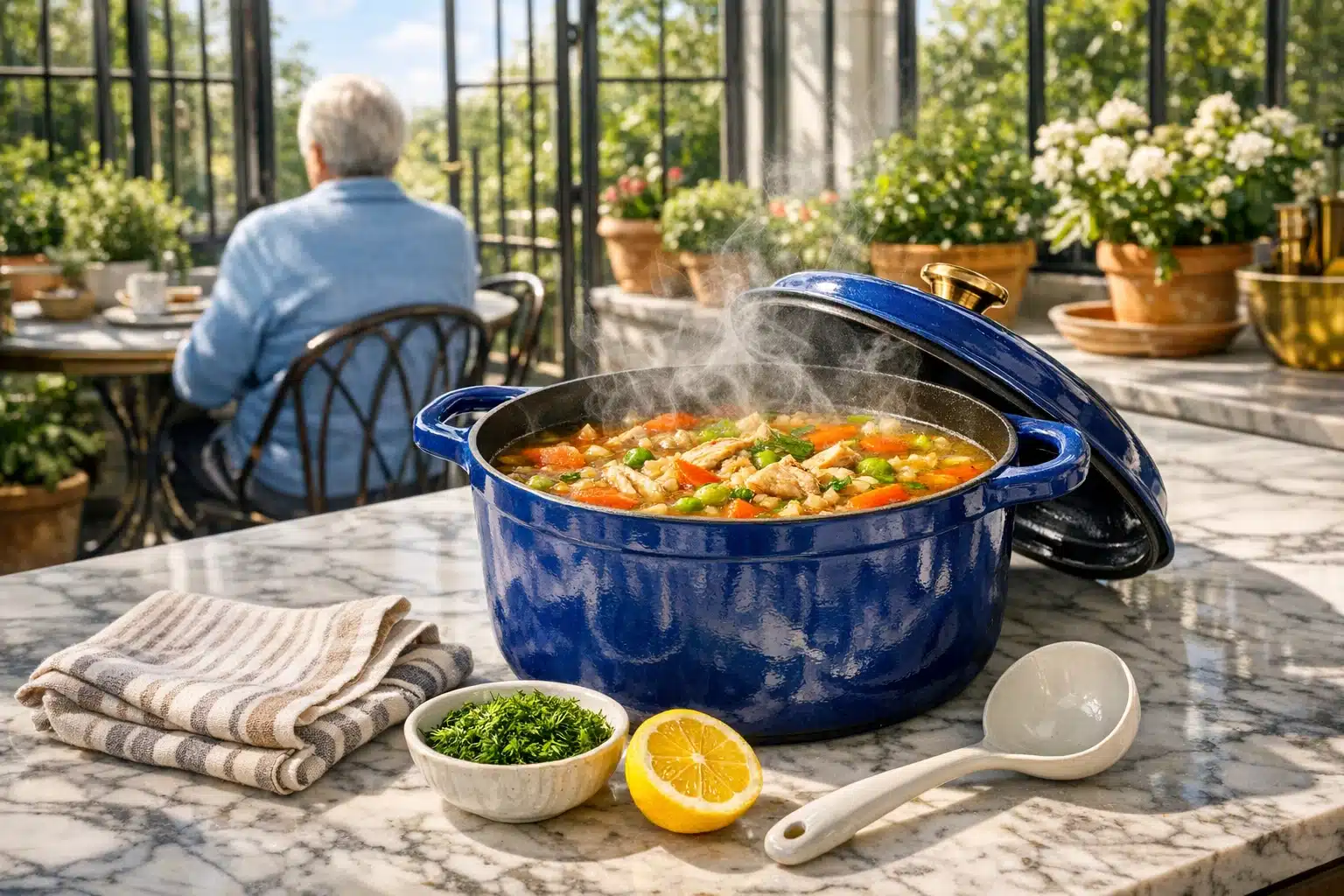
Soups are often the most forgiving. A chicken, barley, and vegetable soup offers protein, whole grain, and fluid in one bowl. It reheats well, can be made softer with extra simmering, and works beautifully in colder weather or during lower-appetite periods. Lentil soup is another strong choice because lentils cook faster than many dry beans and bring both protein and fiber. If chewing is an issue, soups and brothy stews are usually easier than skillet dishes.
Stews are slightly heartier and often more satisfying for those who want a meal that feels substantial. A beef and root vegetable stew can be rich and comforting, though it may be heavier and require longer cooking. A lighter alternative is turkey chili with beans, tomatoes, onions, and peppers. Chili freezes especially well, and the seasoning can be kept mild or made brighter with cumin and a small squeeze of lime rather than extra salt.
Skillet meals are excellent for speed. Think of a soft rice skillet with salmon, peas, and dill, or a pasta pan with white beans, spinach, garlic, and lemon. These dishes usually cook faster than soups and often feel more like a classic dinner plate condensed into one pan. However, they may require slightly more attention at the stove. For someone who values quick preparation but still wants a warm savory meal, skillet dishes strike a nice balance.
Here are a few dependable ideas and what they do well:
• Chicken and rice soup: gentle texture, easy to digest, freezer-friendly
• Lentil tomato stew: budget-friendly, high in fiber, satisfying without meat
• Turkey chili: protein-rich, easy to batch cook, great for leftovers
• One-pot pasta with beans and greens: fast, colorful, and filling
• Soft vegetable risotto with peas and parmesan: comforting, adaptable, and easier to chew than dry rice dishes
The beauty of these meals lies in their flexibility. If sodium must be reduced, use unsalted broth and herbs. If protein needs to rise, add beans, chicken, Greek yogurt on top, or a sprinkle of cheese. If appetite is light, serve smaller bowls and save the rest. A single pot can carry many forms, and that is exactly why it works so well.
Conclusion: Building a Gentle One-Pot Routine That Supports Independence
For seniors, the value of one-pot cooking is not only in the recipes themselves but in the rhythm they create. A manageable meal system can reduce decision fatigue, prevent skipped dinners, and make the kitchen feel useful instead of overwhelming. When meals become simpler to plan and easier to clean up after, there is more room left for appetite, enjoyment, and even a little pride. That is not a small thing. Food habits that feel sustainable are often the ones that last.
A realistic routine might start with just two one-pot meals each week. One could be a soup or stew made in a larger batch for leftovers. The other could be a faster skillet meal for a day when time or energy is short. Over time, that rhythm can grow into a reliable pattern:
• one pantry-based meal for convenience
• one freezer-friendly meal for future ease
• one softer-textured option for days when chewing feels harder
• one high-protein favorite that always sounds appealing
This approach also respects the fact that seniors are not one identical group. Some people cook for one, some for a partner, and some for visiting family. Some need lower sodium, others need more calories, and many need meals that are both affordable and easy on the hands. One-pot cooking adapts to all of those realities. It can be frugal without feeling sparse, nourishing without being complicated, and comforting without becoming monotonous.
There is something quietly reassuring about lifting the lid on a pot that contains the whole meal. No scattered pans. No puzzle of side dishes. Just dinner, ready in a form that makes sense. That simplicity can support independence at home, especially for older adults who want to keep cooking but no longer want the burden of elaborate preparation.
If you are cooking for yourself or for an older loved one, the best place to begin is with one dependable recipe that feels easy enough to repeat. Build from there. Keep ingredients simple, season gently, store leftovers safely, and adjust texture and portion size as needed. Over time, those modest choices add up to a kitchen routine that is lighter, calmer, and more nourishing. In the end, effortless one-pot meals are not about doing less carelessly. They are about doing what matters well, with comfort and common sense at the center.