Best Food To Eat If You Have Macular Degeneration
Macular degeneration can make faces blur, print fade, and everyday tasks feel surprisingly tiring, which is why food choices deserve more attention than they usually get. While no meal plan can reverse the condition, a thoughtful diet may help support the retina by providing antioxidants, healthy fats, and key minerals linked with eye health. The goal is not a miracle menu, but a practical way to eat that works in real life.
Outline: 1) how nutrition influences the macula, 2) leafy greens and colorful vegetables, 3) fish, nuts, seeds, and legumes, 4) eggs, fruit, and whole grains, and 5) a realistic eating pattern with a closing takeaway for people living with macular degeneration.
1. Why Food Matters When You Have Macular Degeneration
The macula is the central part of the retina responsible for detailed vision. It helps with reading, recognizing faces, threading a needle, checking medication labels, and spotting the fine print on a bill. When age-related macular degeneration, often called AMD, affects this area, central vision can weaken even while side vision remains. That is why many people say the condition feels strange rather than simple: the world is still there, but the sharp center seems less reliable.
Nutrition matters because the retina is metabolically active tissue. In plain language, it works hard and uses a great deal of oxygen, which means it is exposed to oxidative stress over time. Researchers have long studied the role of antioxidants and specific nutrients in protecting retinal cells. The AREDS and AREDS2 studies did not show that food cures AMD, yet they helped shape modern understanding of nutrients such as lutein, zeaxanthin, zinc, vitamin C, and vitamin E. For some people with intermediate or advanced disease, eye specialists may recommend AREDS2 supplements, but everyday food still matters because it influences overall dietary pattern, blood sugar control, cardiovascular health, and inflammation.
It helps to think of diet as part of a broader support system rather than a magic switch. A plate built around vegetables, fish, legumes, fruit, nuts, and whole grains offers several advantages at once. It can supply carotenoids that collect in the macula, healthy fats that support cell membranes, and fiber that helps steady blood glucose. A steadier dietary pattern may be helpful because high-glycemic eating has been associated in some research with faster retinal aging.
There is also a practical point that often gets overlooked. Many foods that support eye health also support heart and blood vessel health, and the retina depends on healthy circulation. In that sense, a better diet is like improving the soil around a tree rather than painting the leaves. It will not turn back time, but it may create better conditions for the tissue you still have.
What should you remember from the science? A few ideas stand out:
• Food is supportive, not curative.
• Nutrient-dense meals are more useful than chasing a single superfood.
• Patterns matter more than one perfect lunch.
• Personal medical advice should come from your ophthalmologist or registered dietitian, especially if you take blood thinners, have diabetes, or need supplements.
2. Leafy Greens and Bright Vegetables: The Most Important Foods to Put on the Plate
If there is one food group that deserves the front row in an AMD-friendly diet, it is vegetables rich in lutein and zeaxanthin. These are carotenoids that concentrate in the macula and help filter damaging light while acting as antioxidants. Dark leafy greens are the classic stars here. Kale, spinach, collard greens, turnip greens, Swiss chard, and romaine lettuce all contribute, though kale and collards are often highlighted for especially strong carotenoid content. Spinach is another excellent choice and is easy to work into soups, omelets, pasta, and smoothies.
Bright vegetables also deserve attention because the color on the plate often signals useful compounds. Orange bell peppers, corn, peas, broccoli, and zucchini can contribute zeaxanthin and lutein in varying amounts. Orange peppers are particularly interesting because they provide notable zeaxanthin, a nutrient often discussed less than lutein even though both are important to the eye. Carrots and sweet potatoes are rich in beta-carotene, which supports vitamin A status and general eye function, but for macular protection specifically, lutein and zeaxanthin tend to receive more focus in research.
There is a useful comparison to keep in mind. Eating a giant bowl of iceberg lettuce may feel healthy, but it does not offer the same nutritional density as a smaller portion of sautéed kale or steamed spinach. Likewise, a serving of deep-fried vegetables is not the same as roasted or lightly cooked produce dressed with olive oil. Some fat actually helps your body absorb carotenoids better, so the old fear of adding any oil at all can backfire. A drizzle of olive oil, a spoonful of avocado, or a few nuts can make these nutrients more available.
Practical vegetable choices include:
• Kale or collards, lightly cooked with olive oil and garlic
• Spinach folded into eggs, bean dishes, or soups
• Broccoli roasted until crisp at the edges
• Peas and corn added to grain bowls or salads
• Orange bell peppers sliced into wraps, stir-fries, or snack plates
• Sweet potatoes baked instead of served as fries
Cooking style matters too. Raw greens are useful, but cooked greens shrink, making it easier to eat a meaningful amount. If a salad feels like work, a warm skillet of greens may be the better answer. The best vegetable for AMD is not only the one with the highest lab value; it is the one you will actually eat several times a week. Consistency beats ambition every time.
3. Fish, Nuts, Seeds, and Legumes: Building a Stronger Nutrient Base
The next group of foods brings healthy fats, vitamin E, minerals, protein, and fiber into the picture. Fatty fish are especially valuable because they provide omega-3 fats, including DHA and EPA. DHA is a structural component of the retina, which is one reason fish appears so often in conversations about eye health. Salmon, sardines, trout, herring, and mackerel are among the strongest options. Observational studies have suggested that people who eat fish regularly may have a lower risk of progression or better retinal support, although diet is only one piece of a larger puzzle.
Not all fish meals are equal. A grilled salmon fillet with vegetables and brown rice is very different from heavily breaded fried fish paired with refined starch and sugary sauce. The fish may still offer some benefits, but preparation changes the nutritional profile. As a simple rule, aim for fish that is baked, grilled, poached, or broiled more often than fried. Two servings a week is a common goal in general nutrition guidance, though personal needs vary.
Nuts and seeds deserve more respect than they often get. Almonds, walnuts, pistachios, sunflower seeds, chia seeds, flaxseeds, and pumpkin seeds provide healthy fats and vitamin E, another antioxidant linked with eye-supportive eating patterns. Walnuts, chia, and flax contain plant omega-3s, while almonds and sunflower seeds stand out for vitamin E. They are small foods with serious leverage. A handful added to oatmeal or yogurt can quietly improve a meal without making it complicated.
Legumes round out this section beautifully. Lentils, chickpeas, black beans, cannellini beans, and edamame offer protein, fiber, and minerals such as zinc. Zinc has been studied in relation to retinal health and is included in AREDS formulas for a reason. Food sources can help support intake naturally while also replacing more processed options. A bean soup, a chickpea salad, or lentils folded into tomato sauce can do far more for long-term health than another ultra-processed frozen entrée.
Useful choices in this category include:
• Salmon, sardines, trout, or herring
• Almonds and sunflower seeds for vitamin E
• Walnuts, chia, and flax for plant omega-3s
• Chickpeas, lentils, and beans for zinc, fiber, and steady energy
If vegetables are the color on the canvas, this group is the structure underneath. It brings staying power to meals and helps turn eye-friendly eating into a habit instead of a slogan.
4. Eggs, Fruit, Whole Grains, and Smart Everyday Swaps
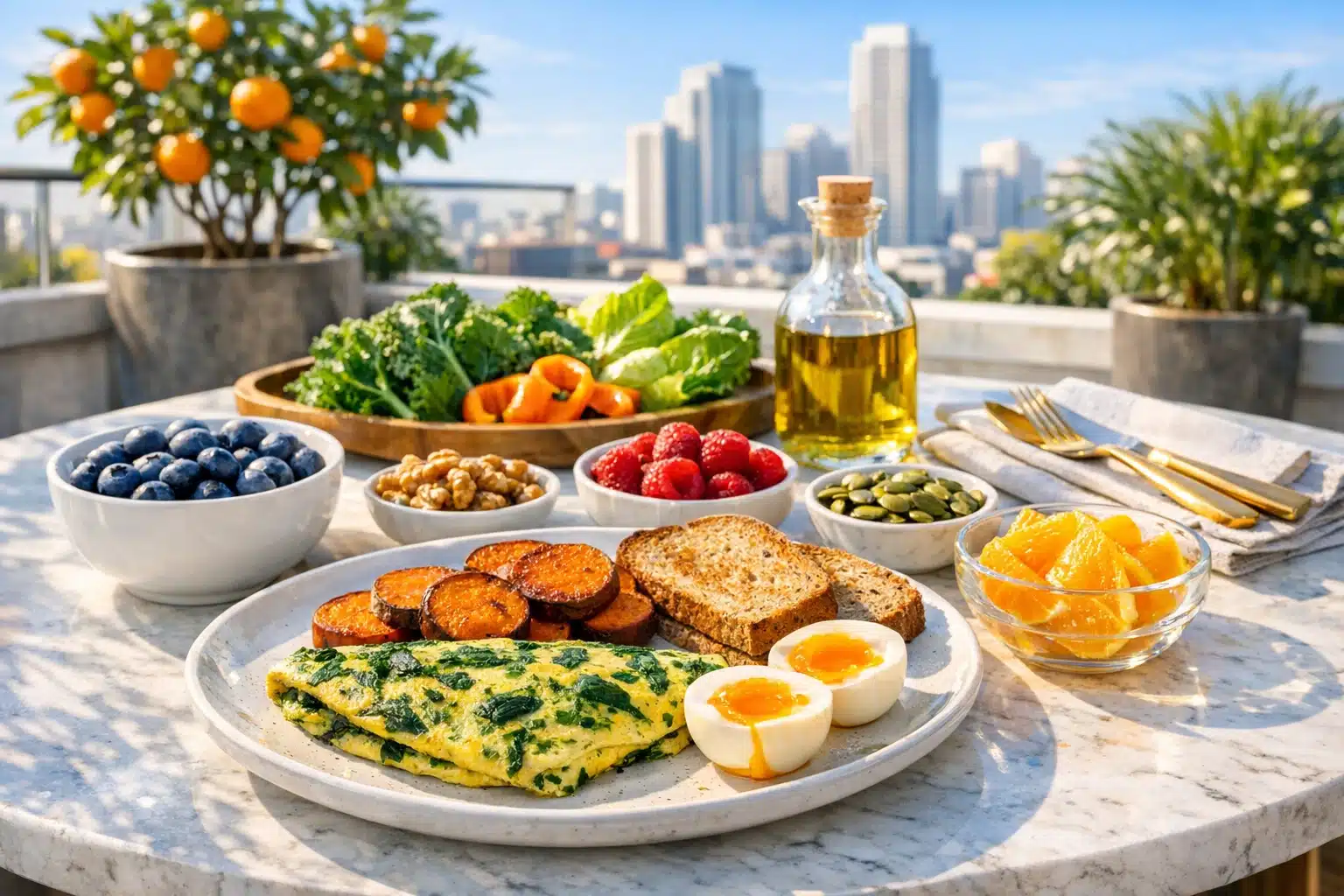
Some of the most helpful foods for macular degeneration are not exotic at all. They are the familiar staples sitting in the refrigerator door, the fruit bowl, or the pantry shelf. Eggs are a prime example. They contain lutein and zeaxanthin, and the fat in the yolk may improve how well those carotenoids are absorbed. That means an egg does not need to outscore kale in raw numbers to earn a place on the table. In real-life eating, eggs are convenient, affordable, and easy to combine with vegetables. A spinach omelet, a boiled egg with whole-grain toast, or a vegetable frittata can be a practical option for breakfast, lunch, or dinner.
Fruit also plays an important role, especially varieties rich in vitamin C and polyphenols. Oranges, grapefruit, kiwi, strawberries, blueberries, blackberries, and raspberries are all worthwhile. Citrus fruit contributes vitamin C, while berries offer anthocyanins and other plant compounds that support overall vascular health. No single berry is a miracle berry, but rotating several kinds adds variety and makes the diet more sustainable. If fresh produce is expensive or spoils too quickly, frozen fruit is a smart substitute and often just as nutritious.
Whole grains are often ignored in articles about eye health, yet they matter because overall dietary pattern matters. Oats, barley, quinoa, brown rice, farro, and whole-grain bread help create a lower-glycemic eating style compared with white bread, sugary cereals, pastries, and heavily refined snacks. Some research has linked high-glycemic diets with a greater risk of retinal damage over time. This does not mean you can never eat white rice or dessert. It means the everyday baseline should lean toward slower-digesting carbohydrate choices more often than not.
Here are a few smart swaps that make a real difference:
• Oatmeal with berries and walnuts instead of a sugary pastry
• Whole-grain toast with eggs instead of white toast with jam alone
• Brown rice or quinoa instead of fries
• Plain yogurt with fruit and seeds instead of sweetened pudding
• Roasted chickpeas instead of salty snack chips
These swaps are modest, but they add up. When meals are built from familiar foods rather than a rigid health script, people are more likely to stick with them. That matters because consistency is the quiet engine of nutrition. A better breakfast repeated over months may do more for your overall health than one ambitious salad eaten in a burst of motivation and never seen again.
5. A Practical Eating Pattern and Final Takeaway for People Living With Macular Degeneration
Knowing the right foods is helpful, but most people do better with a pattern than with a list. A workable day of eating for someone with macular degeneration might start with eggs cooked with spinach and mushrooms, plus whole-grain toast and a small bowl of berries. Lunch could be a salad with kale or romaine, chickpeas, orange peppers, cucumbers, olive oil, and grilled salmon, followed by a kiwi or an orange. Dinner might be lentil soup with roasted broccoli and a side of brown rice, or trout with sweet potato and sautéed greens. Snacks can stay simple: a handful of almonds, plain yogurt with blueberries, carrot sticks with hummus, or an apple with pumpkin seeds.
This style of eating does not require perfection. It asks for repetition of useful habits. If cooking feels tiring because vision changes have made chopping, reading labels, or using the stove more difficult, there are ways to make the routine easier. Pre-washed greens, frozen vegetables, canned beans with no added salt, and pre-cooked whole grains can shorten preparation time without sacrificing much nutrition. A caregiver or family member can also help set up ingredient stations, label pantry containers in large print, or batch-cook soups and grain bowls for the week.
It is equally important to notice what deserves a smaller role. Foods worth limiting include:
• Sugary drinks and desserts that crowd out more nutrient-dense choices
• Refined snack foods that deliver calories without much fiber or micronutrition
• Heavily fried meals eaten often
• Highly processed convenience foods loaded with salt and poor-quality fats
• Excess alcohol, especially if it disrupts appetite, sleep, or medication routines
This is not about guilt. It is about opportunity cost. Every meal takes up space, so it helps when that space is filled with foods that bring something useful to the table. For people living with macular degeneration, the most realistic goal is not a flawless diet but a steady one: more greens, more fish, more legumes, more fruit, more whole grains, and fewer foods that push nutrition in the opposite direction.
Final thoughts for readers with AMD: give yourself credit for small improvements. Add spinach before you overhaul breakfast. Choose salmon once a week before aiming for a textbook-perfect plan. Keep frozen berries in the freezer, canned beans in the cupboard, and olive oil near the stove. Those ordinary decisions may look unremarkable, yet over time they build the kind of eating pattern that supports both eye health and daily living. Pair that pattern with regular eye care, follow-up visits, and professional advice, and you give yourself the strongest practical foundation available.