Lingerie Trends For Bold Women In 2026
In 2026, lingerie is no longer treated as a hidden afterthought; it sits at the crossroads of fashion, comfort, identity, and self-direction. Bold women are choosing pieces that support movement, celebrate shape, and speak in colors, textures, and cuts that feel personal rather than prescribed. The shift matters because intimates now reflect wider conversations about confidence, inclusivity, sustainability, and technology. Follow the trend lines closely, and you can see a wardrobe category quietly becoming one of the clearest expressions of modern style.
Article Outline
- The cultural shift behind bolder lingerie choices in 2026
- The leading silhouettes, construction details, and design directions
- Color, texture, and fabric innovations shaping modern intimates
- Fit, inclusivity, and practical buying strategies for different needs
- How to style trend-forward lingerie and what it means for confident dressers
1. The 2026 Mood: Why Empowering Intimates Matter More Than Ever
The biggest lingerie trend of 2026 is not a single bra shape, lace pattern, or color story. It is a mindset. Empowering intimates have moved from niche language in brand campaigns to a real expectation among shoppers. Women are increasingly looking for pieces that do more than flatter in a narrow visual sense. They want lingerie that feels aligned with the rhythm of real life: long workdays, hybrid schedules, travel, social events, changing bodies, and a stronger desire to dress for themselves rather than for approval. In that context, “bold” does not simply mean revealing. It can mean visible confidence, precise fit, unusual color, strong lines, or even the simple decision to reject discomfort.
This shift has roots in broader fashion behavior. Over the past several years, the market has seen sustained demand for comfort-first clothing, inclusive sizing, and multifunctional garments. Lingerie followed that path, but 2026 pushes it further. Instead of treating comfort and statement design as opposites, brands are combining them. Structured mesh, stretch lace, wide underbands, smoothing panels, and adaptive closures are appearing in the same piece. The result is a category that looks more sophisticated and feels less restrictive than many women remember from older lingerie norms.
There is also a cultural change in how lingerie is discussed. Once framed mainly around seduction or secrecy, it is now part of conversations about self-expression, body neutrality, and personal style. That matters because language influences design. When the wearer becomes the main audience, the product changes. You see fewer one-note ideas and more nuanced collections built around different lifestyles and moods.
- Confidence is being defined by choice, not by a single beauty ideal.
- Comfort is expected as a baseline, not treated as a bonus feature.
- Visibility is more accepted, with bras and bodysuits styled as part of an outfit.
- Support is increasingly engineered through fabric and pattern cutting, not only padding.
Compared with the heavily standardized lingerie trends of the 2010s, 2026 feels more personal and less prescriptive. A woman might choose a sleek wireless longline bra for a workday, a dramatic sheer bodysuit under a blazer for evening, and a ribbed soft-cup set for travel, all without seeing those choices as contradictory. The message is clear: the modern lingerie drawer is not built around one version of femininity. It is built around versatility, comfort, and a strong sense of self. That is precisely why empowering intimates have become so relevant. They are no longer just what sits under the outfit. They are part of the story the outfit tells.
2. Silhouettes and Details Defining the Year
If 2026 had a design signature, it would be soft structure with visible intention. Lingerie trends are leaning into pieces that look refined and architectural without becoming rigid. This is showing up in several key silhouettes. Longline bras are especially notable because they distribute support more evenly and create a streamlined line under clothing. Balconette shapes remain strong for women who like uplift and a defined neckline, while modern triangle bras continue to evolve with better side support and wider bands. Bodysuits are also expanding beyond occasionwear and entering the realm of everyday styling, often layered under shirts, knits, or tailoring.
One of the clearest differences between 2026 and earlier trend cycles is the decline of exaggerated padding as the default visual solution. Support is now more often created through construction. Designers are using power mesh, bonded edges, strategic paneling, and improved elastic placement to shape the body comfortably. That means a bold piece can still feel light. It also means women have more options if they want lift without bulk or contour without stiffness.
Sheer layers remain important, but they are being handled with greater sophistication. Instead of relying on transparency alone, many designs mix opacity and lightness to create contrast. A bra might combine mesh cups with satin-trimmed straps, or a bodysuit may use embroidered zones to guide the eye while still feeling wearable. Cutouts and hardware details are present too, though the more modern versions tend to be cleaner and more restrained than the overtly decorative styles seen in previous years. Think polished rings, subtle front closures, elongated strap lines, or geometric seaming that looks almost tailor-made.
A useful way to understand the 2026 landscape is to compare the main trend categories:
-
Wireless pieces: best for ease, travel, layering, and long daily wear.
-
Balconette and demi styles: ideal for structure, outfit framing, and sharper tailoring.
-
Longline designs: useful for smoothing, posture support, and statement styling.
-
Bodysuits: versatile for visible wear, layering, and reducing bunching under clothes.
There is also stronger interest in modular design. Convertible straps, removable pads, and adjustable bands are not new, but brands are treating them more thoughtfully. A bold woman in 2026 often expects one piece to do several jobs. The same bra may need to work under a T-shirt, with an off-shoulder top, or beneath a sharp jacket. That expectation is shaping the market. Good lingerie now behaves a bit like good design in general: it solves problems quietly while still looking striking. The magic is not loud. It is precise, wearable, and deliberate.
3. Color, Texture, and Fabric Innovation in Modern Lingerie
The color story of 2026 tells us a lot about where lingerie is heading. While black, ivory, and soft nude tones remain foundational, the newer mood is richer and more expressive. Deep chocolate, oxblood, ink navy, dark plum, slate blue, olive, and mineral green are appearing more often in trend-forward collections. These shades feel grounded, modern, and less predictable than standard bright jewel tones. At the same time, softened metallic accents, smoky pastels, and skin-tone ranges with more depth are expanding visual choice without pushing everything toward theatrical styling.
Texture is just as important as color. Lingerie for bold women is no longer built only around traditional floral lace. In 2026, texture is being used almost like a language. Matte microfiber gives a clean and minimal effect. Stretch lace brings softness and decorative interest. Fine mesh introduces lightness. Ribbed knits create a sportier, lounge-adjacent mood. Satin details add polish. When these materials are combined thoughtfully, the result can feel both intimate and directional. A set does not need heavy embellishment to make an impression; sometimes the contrast between a smooth band and an airy cup does all the talking.
Fabric innovation is also moving from marketing phrase to practical advantage. Across the apparel sector, consumers increasingly care about breathability, traceability, and durability, and lingerie is no exception. Many brands are using recycled polyamide, certified cotton, TENCEL modal, and improved elastane blends that aim to balance stretch with recovery. Better recovery matters because a bra that loses shape quickly stops delivering the fit it promised. Moisture-managing finishes and lighter lining materials are also becoming more relevant, especially for women who want lingerie to perform across long days rather than only look attractive in a drawer.
- Recycled synthetics are being used more often in mesh and lace bases.
- Natural-origin fibers are popular in softer, lounge-oriented intimates.
- Low-bulk seams and smoother linings improve wear under fitted clothing.
- Expanded nude palettes make “neutral” a more realistic category for more skin tones.
There is an emotional side to fabric too, and this is where 2026 feels especially interesting. The best pieces invite touch without sacrificing practicality. Slip your hand across a modern bra or bodysuit and it often feels less costume-like than older versions, more fluid and intelligent. That tactile quality matters because it changes the relationship between wearer and garment. Instead of something endured for the sake of appearance, lingerie becomes something enjoyed for its material experience. In that small but meaningful way, fabric innovation supports empowerment. When a piece feels good against the skin, confidence stops being abstract. It becomes physical, immediate, and easier to trust.
4. Fit, Inclusivity, and Smart Shopping for Different Bodies and Lifestyles
No lingerie trend deserves attention if it fails at fit. That is one of the clearest lessons shaping the 2026 market. Women are more informed than they used to be, and they are less willing to accept discomfort disguised as luxury. As a result, fit innovation and size inclusivity are now central to how better brands compete. More labels are extending cup and band ranges, improving grading between sizes, and designing with fuller busts, smaller bands, longer torsos, and different support preferences in mind. This is not just a moral shift; it is a practical one. A brand that fits more bodies more accurately is simply more useful.
Inclusivity also means recognizing that bold style is not limited to one body type. A woman who wants dramatic mesh, sculpting lace, or a strong silhouette should not have those choices reduced because of her size. In 2026, the better collections understand that support and visual impact can coexist across a broader spectrum of bodies. Wider straps, reinforced side wings, taller center fronts, and smarter strap placement are helping more women access the same design language. For shoppers with sensory sensitivities or mobility needs, details like softer elastics, front-fastening styles, tag-free finishes, and simplified closures are increasingly important as well.
Buying wisely still requires a little strategy. Many returns happen because shoppers focus only on appearance, not function. A useful approach is to match the lingerie type to the real role it needs to play. A plunging bra may suit lower necklines, but it is not automatically the best all-purpose choice. A longline style may smooth beautifully under tailoring, yet feel less practical for high-activity days. A soft-cup bra may be ideal for remote work, flights, or recovery days, while a structured balconette can frame an evening look better.
- Check band stability first; it provides much of the support.
- Look at strap width and placement, especially for fuller busts.
- Consider your wardrobe: fitted knits, open necklines, sheer layers, or workwear.
- Read fiber composition to understand stretch, softness, and heat retention.
- Replace worn basics before they distort your idea of your correct size.
Digital fitting tools are improving too, although they work best as guidance rather than absolute truth. Size calculators, virtual fit questionnaires, and detailed product reviews can narrow options, but they do not eliminate the need for body awareness. The best shopper in 2026 is not the one chasing every trend. It is the one who knows the difference between a beautiful piece and a useful one, then finds the rare item that manages to be both. That is where empowering intimates truly deliver: when style, support, and self-knowledge meet in the same drawer.
5. Conclusion: Styling Bold Lingerie in 2026 and Choosing What Feels Like You
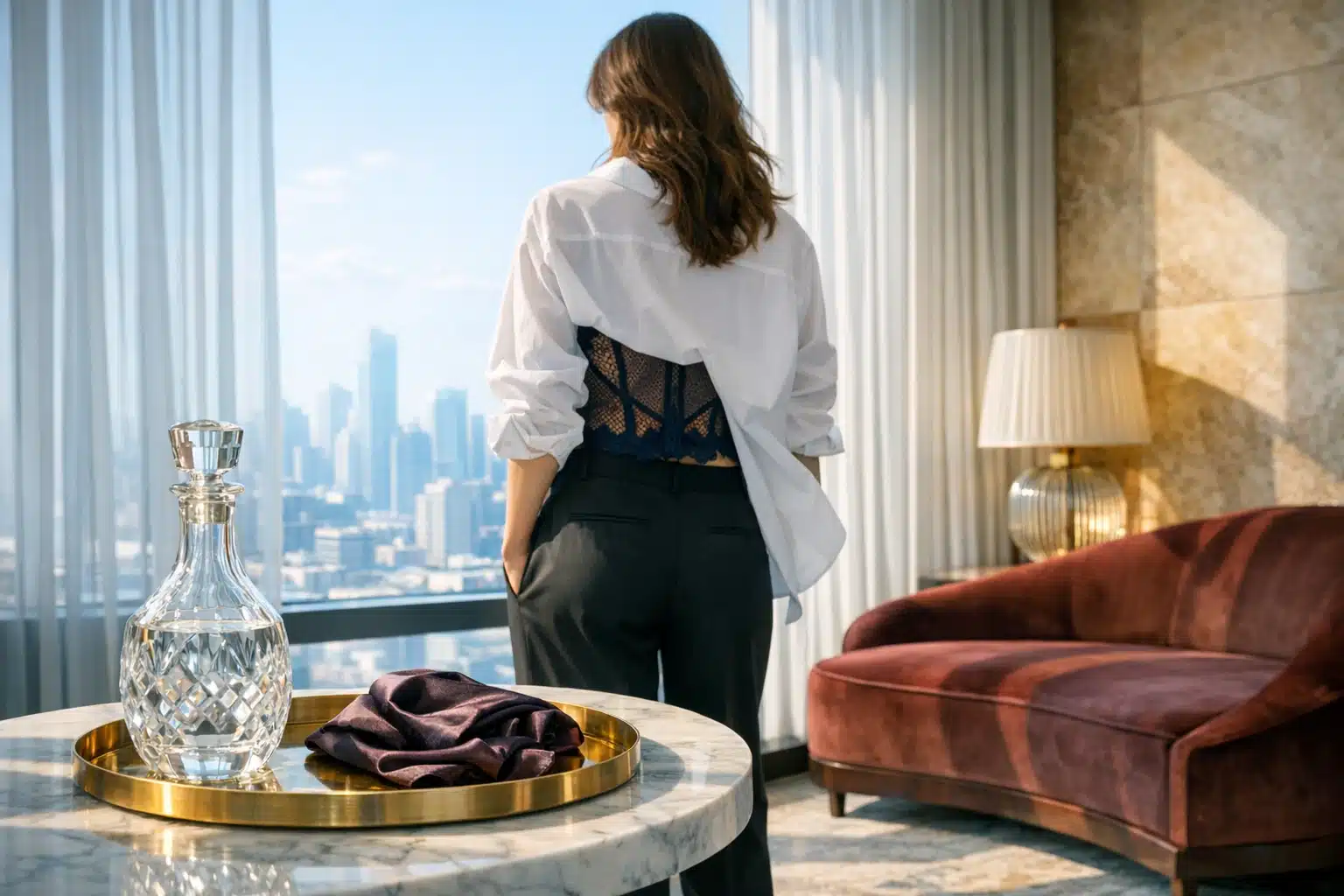
For the women this trend cycle speaks to most clearly, lingerie in 2026 is not about trying to fit a role. It is about editing a personal wardrobe from the inside out. A bold approach can be subtle or dramatic. It might mean a sharply cut bodysuit under a relaxed blazer, a visible lace edge peeking from an oversized shirt, a sculpting longline bra beneath a crisp white button-down, or a tonal set chosen purely because it changes the way you carry yourself. Styling has become less about hiding the category and more about deciding how much of it belongs in view.
This is why lingerie now works as wardrobe architecture as much as intimate apparel. The right piece shapes how fabrics fall, how necklines sit, how posture reads, and how comfortable you feel across a full day. Under tailoring, seamless or lightly structured bras keep lines clean. With knits, soft-cup styles and smoothing bodysuits reduce bunching while preserving ease. Under sheer or semi-sheer layers, textured bras with polished straps or geometric lace can become intentional design elements. Even the humble matching set has evolved; in 2026, coordination often feels less old-fashioned and more quietly powerful, like beginning the day with a private kind of order.
For bold women, the smartest way forward is not to buy everything labeled trendy. It is to identify the combinations of support, texture, shape, and color that make you feel most like yourself. Build from there. A practical rotation usually includes a few invisible essentials, a couple of statement pieces, and one or two highly versatile items that can move between everyday wear and more expressive styling. If sustainability matters to you, pay attention to materials and durability. If confidence is your priority, focus on fit first. If fashion is the thrill, experiment with visible layering and stronger tones.
The larger story is encouraging. Lingerie is becoming more inclusive, more technically thoughtful, and more emotionally intelligent. That gives women more freedom to choose intimate pieces that do not ask them to trade comfort for presence or personality for polish. In 2026, empowering intimates are not a fantasy category reserved for campaigns and mood boards. They are a practical, stylish reality for women who want their clothing, right down to the first layer, to reflect confidence on their own terms.