 Artificially generated image
 2-Night Northern Lights Cruise from Dover
A 2-night Northern Lights cruise from Dover sounds like an easy brush with Arctic magic, yet the truth is subtler and, for many travelers, more appealing. These short sailings center on winter skies, open water, and the chance rather than the promise of aurora activity. Anyone wanting a compact escape without boarding a plane may still find value in expert talks, dark-horizon viewing, and the simple pleasure of time at sea. This guide breaks down the route, the odds, the costs, and the kind of traveler most likely to enjoy it.
Outline
• What a short Northern Lights cruise from Dover really offers, and why expectations matter. • How the itinerary usually works, including the atmosphere on board during a two-night sailing. • The actual science behind aurora sightings from southern UK waters, with comparisons to Norway and Iceland. • Planning advice covering budget, packing, cabins, seasickness, and photography. • A practical verdict on who should book this kind of trip and who would be better served by a longer, farther-north itinerary.
What a 2-Night Northern Lights Cruise from Dover Really Is
The phrase Northern Lights cruise can create a vivid image almost instantly: a dark deck, a silent sea, and green ribbons moving across the sky. That image is powerful, but on a two-night sailing from Dover it needs context. Dover sits in southeast England, far south of the Arctic regions most strongly associated with reliable aurora viewing. Because of that geography, this kind of trip should be seen less as a guaranteed aurora expedition and more as a short winter cruise built around the possibility of seeing unusual night-sky activity.
That difference matters because it changes the way the trip should be judged. If a traveler books expecting the same viewing odds as Tromsø, Alta, or northern Iceland, disappointment is likely. If the same traveler books expecting a compact sea break with an outside chance of witnessing something rare, the cruise can feel thoughtful, atmospheric, and surprisingly rewarding. In other words, the product is often about experience design as much as destination. The sea itself becomes part of the appeal: fewer streetlights than on land, uninterrupted horizons, and long periods of darkness in winter.
There is also a practical reason these short cruises attract interest. Not everyone wants the time, cost, or complexity of a week-long Arctic holiday. A two-night departure from Dover can appeal to travelers in southern England who prefer easy rail or car access, minimal annual leave, and a clear total price. For first-time cruisers, it can function as a trial run. You learn whether you enjoy life on board, how you handle motion at sea, and whether night-deck viewing suits you before committing to a more ambitious itinerary.
Several factors shape the value of the trip:
• Accessibility: Dover is one of the UK’s most recognizable cruise departure points, with straightforward connections from London and the southeast.
• Time efficiency: two nights can fit neatly into a weekend.
• Atmosphere: winter sailings often feel calm, introspective, and a little cinematic.
• Uncertainty: aurora sightings remain possible, but they are never assured.
That final point is not a drawback so much as the central truth of the itinerary. Aurora tourism always involves uncertainty, even far north. Solar activity, cloud cover, moonlight, and local weather all affect visibility. On a short cruise from Dover, those variables carry even more weight because the ship is not traveling deep into the auroral zone. The result is a product that suits curious, flexible travelers more than checklist hunters. Think of it as a maritime winter escape with a compelling celestial theme, and the whole concept starts to make far more sense.
Typical Itinerary, Onboard Rhythm, and the Appeal of Leaving from Dover
A two-night cruise from Dover is brief by cruise standards, which means every hour tends to be used efficiently. While exact routes vary by operator and weather conditions, these sailings commonly focus on time at sea rather than multiple port calls. Some may head into the North Sea before turning back, using distance from land and urban lighting to improve nighttime viewing conditions. Others may combine sea time with a very short stop, though the classic version is essentially a compact round-trip built around the onboard experience.
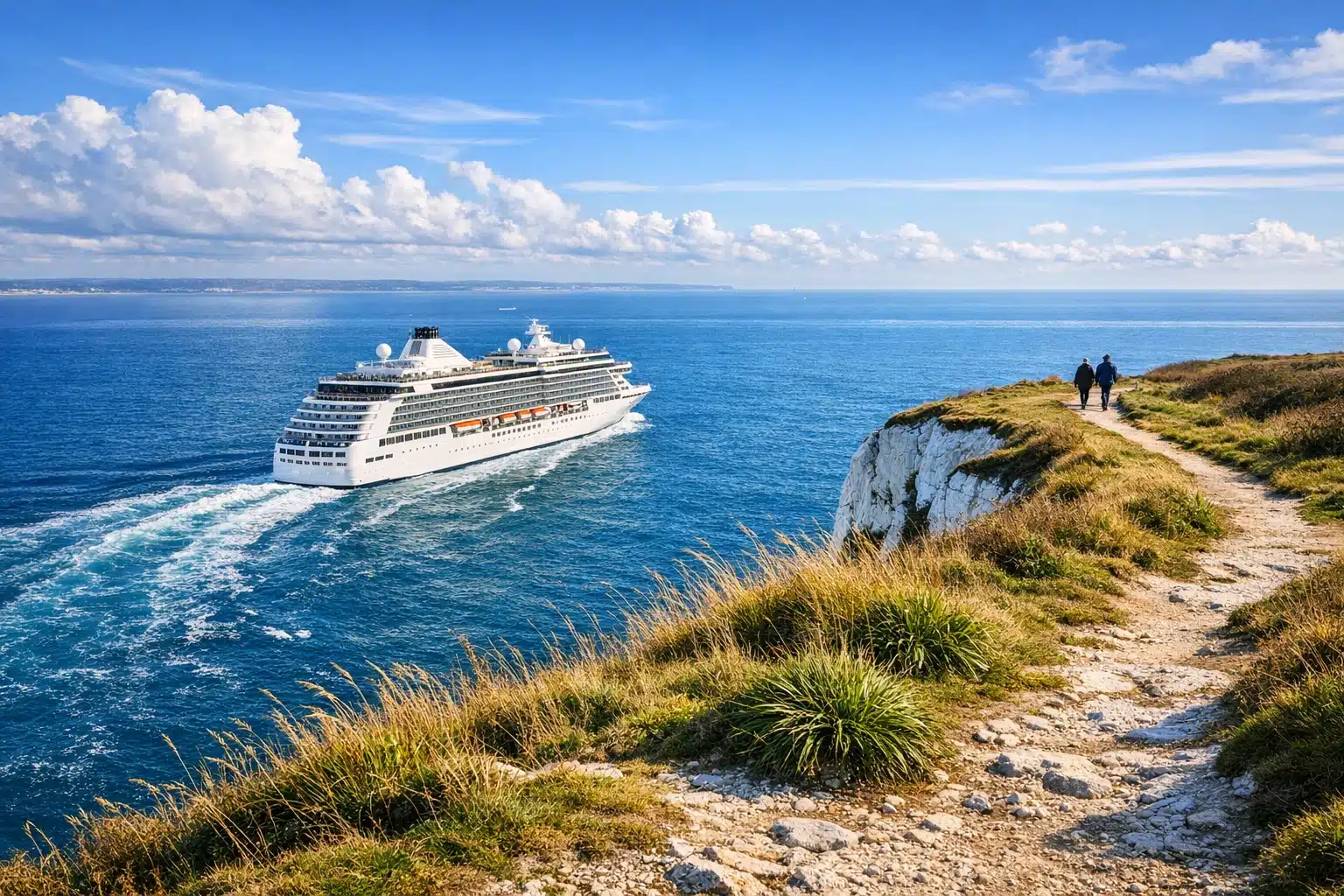
The rhythm of such a cruise is part of its charm. Embarkation day usually carries a mix of practicality and anticipation. Passengers board, explore public spaces, settle into cabins, and watch the White Cliffs fall away as the ship departs. That departure often becomes the emotional opening scene of the trip. By evening, the cruise settles into a pattern: dinner, entertainment, perhaps a drink in a lounge, and then repeated glances toward the outer decks in case conditions improve. If the itinerary includes astronomy talks, weather briefings, or aurora updates, those sessions add both structure and excitement.
Because the voyage is short, onboard choices matter. Travelers who want a restful break may value quieter lounges, sea-view spaces, and a comfortable cabin. More social guests may prefer bars, live music, quizzes, or theatre-style entertainment. Families sometimes enjoy the novelty of a ship-based mini holiday, though the late-night nature of aurora watching often makes the concept more appealing to couples, friends, and adults traveling without children. There is a slight contradiction at the heart of the trip: the most memorable moments may happen outside, in the cold, in darkness, long after dinner service ends.
Dover gives this format a specific advantage. It is far easier for many UK travelers to reach than airports serving Arctic connections, and it avoids baggage rules, security queues associated with flying, and the need for overseas transfers. That convenience can lower the threshold for travel. A weekend suddenly feels possible.
A typical onboard experience often includes:
• A first evening focused on departure, dining, and early sky checks.
• A full day at sea with talks, relaxation, shopping, spa time, or deck walks.
• A second night dedicated to the best viewing efforts if the forecast looks promising.
• A morning return to Dover with breakfast and disembarkation.
Compared with a week-long Norway itinerary, this is clearly not destination-heavy travel. It is mood-heavy travel. The ship becomes a floating observation point, hotel, restaurant, and winter retreat all at once. For the right traveler, that compactness is not a compromise; it is precisely the point. You step away from routine, trade street noise for sea wind, and spend two nights inhabiting a slower, darker, more watchful world.
The Real Chances of Seeing the Northern Lights from a Short Dover Cruise
This is the question most readers care about, and it deserves a direct answer: the chance of seeing the Northern Lights on a two-night cruise from Dover is generally much lower than on longer itineraries that sail to northern Norway, Iceland, or other high-latitude regions. That does not make the trip misleading by definition, but it does mean travelers should understand the science behind the spectacle before booking.
The aurora borealis forms when charged particles from the sun interact with Earth’s magnetic field and atmosphere. These interactions are concentrated around the auroral oval, a band centered much farther north than southern England. Places such as Tromsø, Alta, and parts of northern Finland sit far closer to this zone, which is why they are widely known as dependable aurora destinations in winter. From the south of the UK, sightings can happen, but they are uncommon and usually require stronger geomagnetic storms than those needed in northern Scandinavia.
Visibility depends on several conditions happening at once:
• Sufficient solar and geomagnetic activity.
• A dark sky with limited light pollution.
• Clear or broken cloud cover.
• A viewing window that lines up with nighttime hours.
• Patience, because aurora displays can intensify or fade quickly.
A cruise ship can help with one of those variables: darkness. Being offshore usually means darker horizons than most towns and cities in southern England. That can improve the viewing environment compared with staying on land near built-up areas. However, darkness alone does not compensate for latitude. It is entirely possible to spend two lovely nights at sea under clear skies and still see nothing more exotic than stars, planets, and a bright moonlit wake.
This is where comparison becomes useful. A short Dover sailing may offer a low-probability, low-effort aurora attempt. A winter voyage in northern Norway offers a high-probability, higher-cost aurora holiday. Neither is automatically better; they serve different aims. If your goal is simply to maximize aurora odds, the farther-north option is the stronger choice by a wide margin. If your goal is a quick maritime escape where an aurora sighting would be a bonus rather than the only acceptable outcome, Dover can still make sense.
Forecasts can add excitement, but they should be used carefully. Travelers often hear about the Kp index, a scale associated with geomagnetic disturbance. Stronger events can push aurora visibility farther south, yet the index alone does not guarantee a visible display from any one location. Cloud cover can ruin an otherwise excellent forecast, while a modest event under perfectly dark, clear conditions can occasionally surprise observers. That uncertainty is part science, part suspense, and part weather roulette.
The honest conclusion is this: a two-night Dover cruise offers possibility, not probability. Treat any aurora appearance as a rare success rather than an included feature. Framed that way, the trip becomes much easier to appreciate for what it actually delivers.
Planning the Trip: Budget, Packing, Cabins, Comfort, and Photography
Good planning has an outsized effect on a short cruise because there is little time to recover from poor choices. On a two-night sailing, the difference between a comfortable cabin, sensible clothing, and a realistic schedule can shape the whole experience. Budgeting is the first step. The headline fare may include accommodation, standard meals, and access to general entertainment, but extras often change the true cost. Drinks, specialty dining, Wi-Fi, parking, rail tickets to Dover, travel insurance, shore-side hotel stays before embarkation, and optional spa treatments can all add up quickly.
For value-conscious travelers, an inside cabin may seem attractive on such a short trip, and often it is. If you expect to spend most of your time in lounges, on deck, or asleep, the cabin mainly functions as a base. However, there are trade-offs. An ocean-view or balcony cabin can make the voyage feel more immersive, especially during daylight. That said, balcony viewing on a cold, windy winter cruise is not always as romantic as brochures suggest. Public outer decks may provide wider sightlines and better chances to scan the sky.
Packing should focus on warmth, layering, and practicality rather than sheer volume. Even a mild winter departure can feel sharply colder at sea once wind chill is factored in. Gloves, a hat, a scarf or neck gaiter, and a waterproof outer layer are more useful than fashionable but thin clothing. Comfortable shoes with good grip matter too, especially on open decks.
A sensible packing list often includes:
• Layered clothing with a thermal base.
• A warm mid-layer such as fleece or wool.
• Wind-resistant waterproof jacket.
• Hat and gloves suitable for standing still outside.
• Motion sickness remedies if you are unsure how you cope at sea.
• Portable charger, because photography and weather checking drain batteries quickly.
Seasickness is worth addressing honestly. The North Sea can be calm, but it can also be lively, especially in winter. Travelers prone to motion sensitivity should consider preventive measures before boarding rather than waiting until symptoms appear. Midship cabins on lower decks are often preferred by people seeking less motion, though exact conditions vary by ship and sea state.
Photography deserves special mention because many travelers hope to capture any aurora display they see. A smartphone may record bright events, but a camera with manual controls usually performs better in low light. Even then, success depends on stability, patience, and knowing your settings in advance. If you spend the whole cruise trying to troubleshoot a tripod in the wind, you may miss the simple pleasure of looking up. The best approach is balanced: prepare for photos, but do not let the camera replace the experience.
In practical terms, this is a short trip best served by thoughtful restraint. Pack smart, budget for extras, dress for cold decks, and assume that comfort is not a luxury but a tool. When those basics are in place, the cruise becomes easier to enjoy whether the sky performs or not.
Who Should Book This Cruise, Who Should Choose Another Option, and How to Decide
Not every travel product suits every travel goal, and a two-night Northern Lights cruise from Dover is a perfect example of that rule. It works best for travelers who enjoy the process of travel as much as the headline attraction. If you like ships, winter sea views, compact getaways, and the suspense of maybe seeing something extraordinary, this format can be appealing. If you mainly want to tick off the aurora with the highest practical odds, there are stronger alternatives.
This cruise tends to suit several groups particularly well. First are first-time cruisers who want a low-commitment introduction to life on board. Two nights are enough to test the waters without committing a week of holiday time or a much larger budget. Second are couples or friends seeking a seasonal break that feels different from a standard city weekend. There is something quietly dramatic about standing on deck after dark with only the wind, the wake, and a sky full of possibility. Third are travelers based in southern England who value simplicity. Reaching Dover can be far easier than arranging flights, northern transfers, and cold-weather land travel.
It may be less suitable for:
• Aurora purists who would feel disappointed by anything short of a likely sighting.
• Travelers who dislike uncertainty or variable weather.
• People highly sensitive to ship motion and winter conditions.
• Families with very young children if the main attraction involves staying up late on cold open decks.
• Budget travelers comparing it directly with cheap city breaks rather than with longer cruise or Arctic options.
Alternatives depend on your priority. If viewing probability is the top goal, consider a longer winter trip to northern Norway, Finnish Lapland, Swedish Lapland, or Iceland, ideally with several nights available to absorb weather risk. If you mainly want a short sea escape, a mini cruise without aurora branding may offer similar relaxation at a lower fare. If astronomy interests you broadly, some dark-sky destinations on land can provide strong stargazing with easier sleeping patterns and less motion.
Decision-making becomes easier when you ask one simple question: what would make this trip feel successful even if no aurora appears? If your answer includes rest, sea air, a pleasant cabin, good food, starry skies, or the novelty of a winter voyage, then the cruise may be a good fit. If your answer is only “seeing the Northern Lights,” then the mismatch is already visible before booking.
There is something refreshing about a trip that resists easy ranking. It is not the most efficient way to hunt aurora, and it does not pretend to be. Instead, it offers a brief departure from routine, wrapped in maritime atmosphere and a little celestial hope. For travelers willing to embrace uncertainty, that can be more than enough.
Conclusion: Best for Curious Weekend Cruisers, Not Dedicated Aurora Chasers
A 2-night Northern Lights cruise from Dover is most rewarding for travelers who want a short, accessible winter break with a sense of occasion. It is a smart option for people who live within easy reach of Dover, prefer not to fly, or want to try cruising without committing to a longer voyage. The experience can feel memorable even without an aurora sighting because the real strengths lie in the sea journey, the dark skies, the onboard atmosphere, and the pleasure of stepping out of routine for a couple of nights.
For readers whose main objective is to maximize the chance of seeing the Northern Lights, the most practical advice is to look farther north and stay longer. Geography matters, and a weekend sailing from southern England cannot match the viewing potential of Arctic itineraries. Still, that does not make the Dover option irrelevant. It simply belongs in a different category: not a high-odds expedition, but a compact themed escape with an exciting possibility attached. Book it with clear expectations, and it can feel charming, distinctive, and well judged. Book it as a guaranteed aurora trip, and it is likely to disappoint.