What Is New in iPhone 18 Pro Max: Features, Technology Upgrades, Price Expectations
The iPhone 18 Pro Max is still over the horizon, yet it already sits at the center of a familiar tech ritual: reading the future through patents, supply-chain clues, and Apple’s own design habits. For buyers planning a long-term upgrade, these early signals matter because premium phones cost more, last longer, and often shape accessory choices, carrier plans, and trade-in timing. That makes the phone’s likely design, new hardware, and price strategy worth examining well before launch week noise takes over.
Outline and Context: How to Read an Early iPhone 18 Pro Max Forecast
Before diving into design sketches and feature wish lists, it helps to set expectations properly: Apple has not officially announced the iPhone 18 Pro Max, so any serious discussion has to separate reasonable projection from pure fantasy. That does not make the topic pointless. In fact, early analysis is useful precisely because smartphone upgrades are no longer casual purchases. Many people now keep a premium phone for three to five years, and the difference between buying now and waiting one more cycle can affect value, performance, battery life, and resale timing.
This article follows a simple structure so readers can move from broad context to practical conclusions. The outline is straightforward:
-
First, we look at how the iPhone 18 Pro Max may look on the outside, including its shape, materials, buttons, camera layout, and front display design.
-
Next, we examine the internal story: chip upgrades, battery and thermal improvements, display advances, camera hardware, wireless connectivity, and AI-focused features.
-
Then, we turn to money: Apple’s pricing history, the cost pressures shaping future models, and the most realistic launch price range.
-
Finally, we close with a buyer-focused summary built around a simple question: who should wait for this phone, and who should not?
The most reliable clues usually come from long-running Apple patterns rather than dramatic leak culture. Apple tends to preserve a recognizable silhouette for several generations, then refine it with better materials, tighter bezels, and more mature hardware inside. Patents can hint at experimentation, but they are not launch promises. Supply-chain reports may point to component trends, though they often arrive without final product context. Analyst notes can be helpful when they align with manufacturing realities, but they also vary in accuracy.
Rumor season can feel like a hall of mirrors unless you know where the glass ends and the metal begins. A grounded approach works better. Ask what Apple has been trying to improve consistently: efficiency, camera quality, on-device processing, display immersion, and premium fit and finish. If the iPhone 18 Pro Max follows that arc, it is likely to look familiar at first glance yet feel more refined in ways that matter over months of daily use rather than five minutes on a store table.
How the iPhone 18 Pro Max May Look: Design Direction, Materials, and Visual Identity
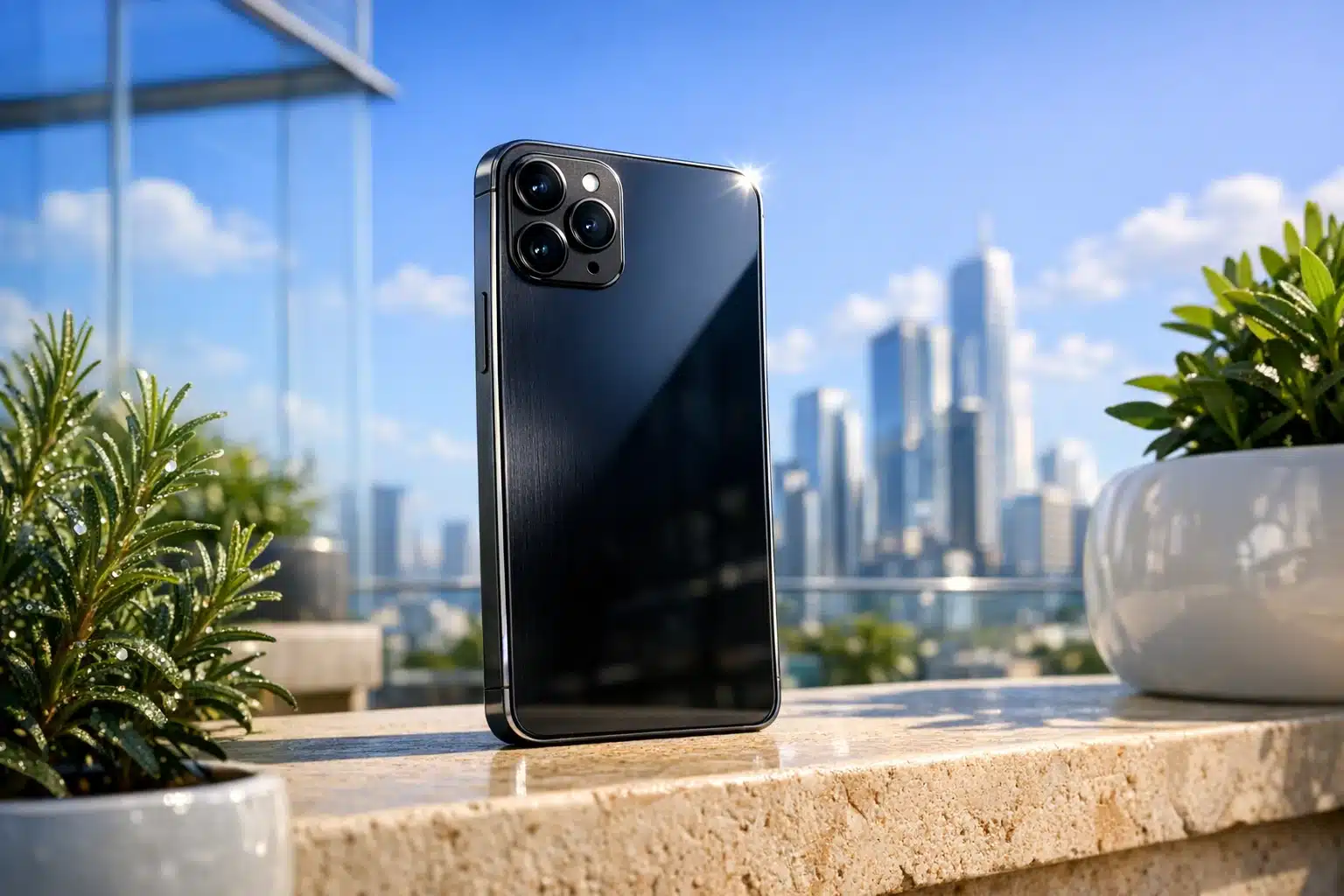
If Apple stays true to form, the iPhone 18 Pro Max will probably not arrive as a radical costume change. It is more likely to resemble a tailored suit than a theatrical outfit: familiar lines, sharper execution, and a few details that quietly announce a new generation. Apple has spent years polishing the modern iPhone formula of flat sides, a large edge-to-edge display, premium metal framing, and a raised camera system. That overall identity is unlikely to disappear, but it could become cleaner and more seamless.
One of the most probable changes is an even more refined front face. Apple has steadily reduced bezels over time, and the next logical step is to make the display feel more like a single uninterrupted sheet of light. That could mean thinner borders, more symmetrical corners, and possibly a smaller visible cutout area for front-facing sensors. Whether that becomes a reduced Dynamic Island, a narrower pill, or partial under-display sensor integration depends on how far the technology has matured. Apple usually waits until a component meets its standards before making it central to the design, so a cleaner front is plausible, while a fully invisible camera system is still less certain.
The frame could also evolve. Titanium or another lightweight premium alloy may remain important if Apple wants to keep the large Pro Max comfortable in the hand. A phone of this size lives or dies by balance. Shaving a few grams, softening certain contact edges, or redistributing internal weight can change the daily experience more than a dramatic new shape. Apple may keep flat sides for visual precision while slightly contouring the edges where hand meets frame, creating a device that looks crisp on a table but feels less severe in the palm.
The rear design will likely continue to prioritize camera hardware, which means the camera bump may stay prominent or even grow if sensor sizes increase. That is not glamorous, but it is realistic. Better optics require physical space. A likely visual direction includes:
-
slimmer display borders and a more immersive front view,
-
a lighter premium frame with improved hand feel,
-
subtle button refinements, including continued use of customizable controls,
-
a refined camera island designed around larger imaging components,
-
muted or sophisticated color finishes rather than flashy tones.
USB-C is also likely to remain, both for ecosystem consistency and broader accessory practicality. Apple rarely reverses a major connector transition once it settles into the product line. The most believable visual future for the iPhone 18 Pro Max, then, is not a sci-fi leap. It is a more polished, more integrated version of the modern Pro Max idea: less clutter, better proportion, and a front that inches closer to all-screen elegance.
What May Be New Inside: Chipset, Camera, Display, Battery, Connectivity, and AI
The real story of a future Pro Max model is usually not written only in aluminum, glass, or titanium. It is written in heat control, image processing, battery efficiency, memory bandwidth, and how fast the phone can understand what you want before you finish asking. By the time an iPhone 18 Pro Max would be due, Apple will almost certainly be pushing harder on exactly those areas.
Start with the chip. If Apple maintains its current naming rhythm, the device could carry an A20 Pro-class processor or equivalent. The name matters less than the trend behind it: a more efficient architecture, faster neural processing, and improved graphics performance without a large power penalty. Manufacturing advances, whether through a smaller process node or a more mature version of an existing one, would likely target three goals at once: longer battery life, stronger sustained performance, and better on-device AI features. Apple has increasingly emphasized private, local processing, and that direction suggests the next Pro Max will lean even more heavily on its neural engine and memory subsystem.
RAM could become a bigger story than casual buyers expect. Modern AI features, high-end mobile gaming, advanced photography workflows, and desktop-style multitasking ambitions all benefit from more memory. A move upward in RAM capacity would not be surprising if Apple wants its flagship to feel future-ready for several software generations. In practical terms, that could help with smoother background app retention, faster media exports, and more ambitious on-device assistance tools.
Display improvements are also likely, even if the panel looks similar on paper. Apple may pursue a brighter and more power-efficient LTPO OLED panel, finer motion handling, improved outdoor readability, and reduced reflectivity. Those changes rarely make for flashy launch slogans, yet they matter every single day. A display that wastes less power and remains readable in harsh daylight is a meaningful upgrade, especially on a device designed for prolonged use.
Camera upgrades remain one of the clearest reasons buyers watch the Pro Max line. Apple’s recent pattern suggests that future improvements would focus less on chasing a headline megapixel race and more on image consistency, low-light capture, video quality, zoom flexibility, and computational photography. Plausible changes include larger sensors, better periscope-style telephoto reach, refined stabilization, smarter portrait separation, and more advanced video processing. If Apple expands creative controls, it could also strengthen tools for creators who shoot short-form video, travel footage, product clips, or family memories without carrying a dedicated camera.
Battery and thermal design deserve equal attention. A large flagship can only feel premium if it stays cool and predictable under load. Better internal heat spreaders, denser battery packaging, and more efficient wireless components could all contribute to longer screen time and steadier performance. Connectivity may also improve through faster Wi-Fi standards, stronger satellite or emergency communication features, and continued modem refinement.
The most meaningful upgrades, if they land, would likely be these:
-
faster and more efficient silicon built for local AI tasks,
-
better battery endurance through component efficiency rather than simple size increases,
-
noticeably improved zoom and video performance,
-
a brighter, less reflective display,
-
more capable wireless and system-level intelligence features.
In other words, the iPhone 18 Pro Max may not need one magic trick. It may instead arrive as a bundle of upgrades that make the phone feel quicker, steadier, smarter, and more camera-ready from morning to midnight.
Price Expectations: What the iPhone 18 Pro Max Could Cost and Why
Price predictions are never glamorous, but they are often the most useful part of any early phone analysis. Apple’s Pro Max line has shown that the company does not always raise prices every single year in a simple upward staircase, yet it does adjust value through storage tiers, materials, and feature separation. In the United States, several Pro Max generations opened at $1,099, while the iPhone 15 Pro Max moved to a $1,199 starting point with 256GB as the base storage configuration. That history matters because it shows Apple can shift the entry price not only by changing the number on the box, but also by moving the starting storage level and trimming lower configurations.
For the iPhone 18 Pro Max, a realistic expectation is that Apple will protect its premium positioning rather than chase aggressive affordability. Several cost factors point in that direction. Advanced camera modules are expensive. High-end silicon remains costly to manufacture. Memory upgrades, premium frame materials, larger batteries, and improved displays all add pressure. On top of that, regional taxes, currency movements, import rules, and supply-chain volatility can change local pricing even when the U.S. number appears stable.
A sensible forecast is that the phone could start around the current top-tier flagship norm rather than drop below it. In practical terms, that means a U.S. launch price around $1,199 would feel unsurprising if Apple keeps 256GB as the base tier. A move toward $1,299 would also be believable if the phone arrives with a major camera jump, more RAM, or an especially costly new display and internal design. Higher capacities would, as usual, rise quickly beyond that point.
Buyers should also remember that the sticker price is only part of the story. Real-world cost often depends on:
-
trade-in values for older iPhones,
-
carrier installment promotions,
-
whether Apple keeps the base storage generous,
-
regional tax structures and currency exchange rates,
-
the resale strength of the outgoing model you currently own.
For many readers, the better question is not “Will it be expensive?” because the answer is almost certainly yes. The better question is “Will the added value justify waiting?” If Apple delivers meaningful leaps in battery life, camera versatility, display quality, and on-device intelligence, a high launch price becomes easier to rationalize for heavy users. If the changes are mostly cosmetic or incremental, the smarter financial move may be buying the previous generation at a discount. In short, the iPhone 18 Pro Max is likely to remain a premium-tier purchase, with the most realistic U.S. entry range sitting somewhere around the upper flagship bracket rather than drifting downward.
Conclusion: Who Should Pay Attention to the iPhone 18 Pro Max and Who Should Wait Calmly
The iPhone 18 Pro Max already looks like the kind of device that will attract two very different audiences. The first group includes people whose current phone is several years old and beginning to show its age through weaker battery life, slower performance, dated camera results, or storage pressure. For them, a future Pro Max could represent a meaningful step forward in several categories at once. The second group includes recent flagship owners who enjoy following every rumor but may not actually need a new phone when launch season arrives. For them, the smartest move may be patience.
Based on Apple’s broader direction, the iPhone 18 Pro Max will probably matter most to buyers who care about three things: longevity, imaging, and system intelligence. If Apple improves efficiency, thermal control, zoom quality, display readability, and local AI processing at the same time, the phone could feel like a substantial upgrade for creators, frequent travelers, remote workers, and users who expect a device to stay dependable for years. A large-screen flagship is not just a gadget for spec sheets; for many people it is camera, navigator, editor, wallet, work tool, and entertainment screen all in one.
There are good reasons to wait for it if you fall into one of these categories:
-
you are using an older Pro Max or a non-Pro iPhone and want a major leap,
-
you care deeply about mobile photography or video creation,
-
you want stronger battery endurance and more future-proof hardware,
-
you are interested in Apple’s expanding on-device AI features,
-
you plan purchases around long upgrade cycles rather than yearly swaps.
On the other hand, if you already own a recent high-end iPhone that performs well, the iPhone 18 Pro Max may be more interesting than necessary. Apple’s most important improvements often feel cumulative, not revolutionary. That means the value of waiting depends on where you are starting from. A four-year-old phone and a one-year-old phone tell completely different upgrade stories.
For the target reader weighing timing, the balanced takeaway is simple. Expect a familiar but more polished design, a stronger emphasis on efficient performance and AI-ready hardware, camera gains that matter more in practice than on a spec card, and a price that stays firmly in premium territory. Watch the official announcement with curiosity, not blind certainty. If Apple turns these likely trends into real improvements, the iPhone 18 Pro Max could be less about surprise and more about refinement done right.