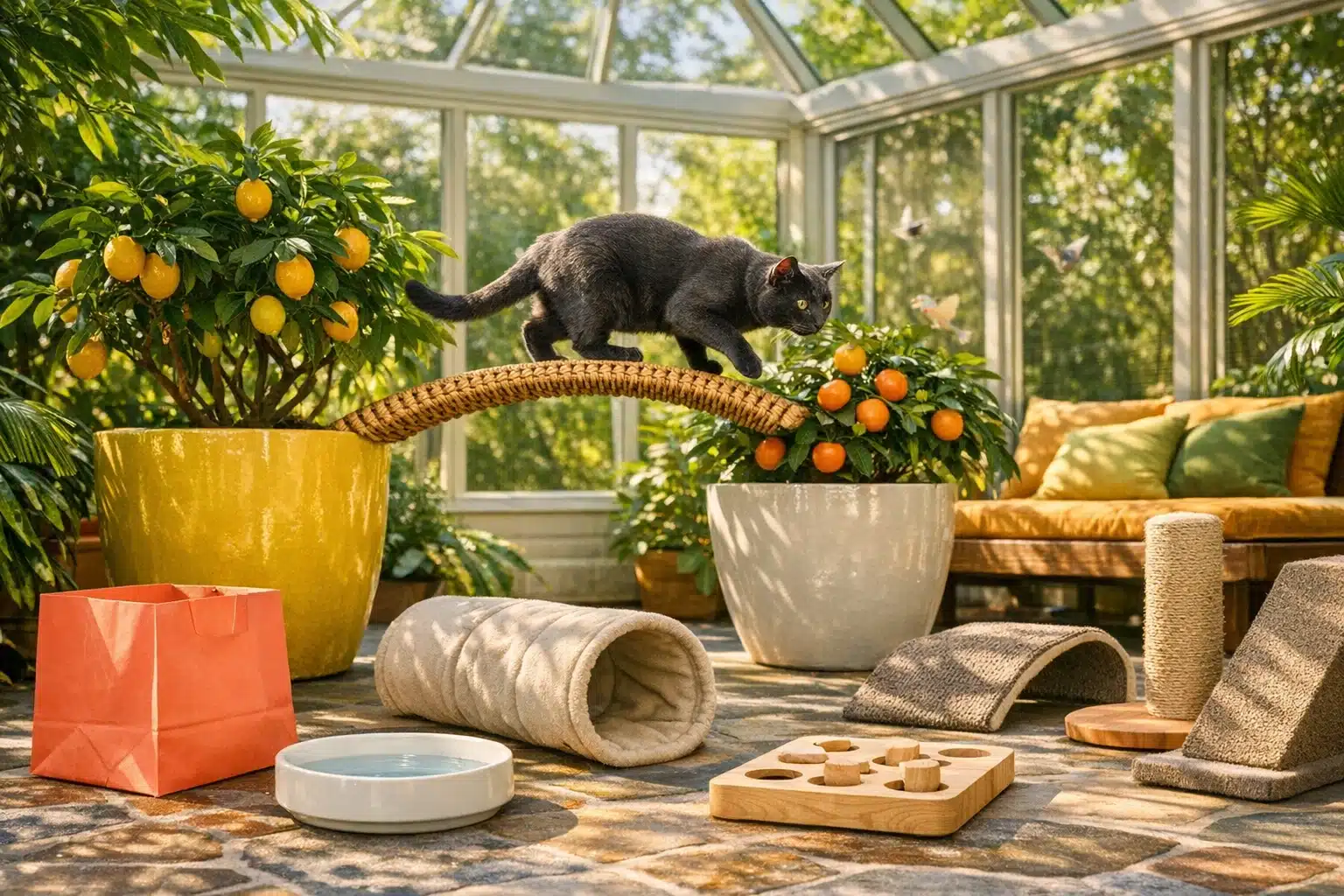
 Artificially generated image
 What Indoor Cats Need Every Day: A Complete Guide
Indoor cats may never cross a fence, yet they still need a full, vivid life every single day. Food alone is not enough; comfort, movement, routine, and mental challenge all shape how calm, healthy, and confident a cat feels indoors. When those needs are met, small changes such as steadier litter box habits, gentler play, and deeper rest often appear. This article explains the daily essentials that turn indoor living into a setting where a cat can truly thrive.
Article Outline
• Food, water, and feeding rhythm
• Exercise, hunting play, and movement
• Safe territory, routine, and restorative rest
• Litter care, grooming, and health monitoring
• Attention, social connection, and mental enrichment
1. Food, Water, and a Predictable Feeding Rhythm
Every indoor cat needs reliable access to fresh water and nutritionally balanced meals, but the real story goes deeper than simply filling a bowl. Cats are obligate carnivores, which means they depend on nutrients found in animal-based proteins, including taurine, arachidonic acid, and certain forms of vitamin A that are essential to normal body function. A good daily routine starts with feeding food that is complete and balanced for the cat’s life stage, whether kitten, adult, or senior. Indoor cats often burn fewer calories than outdoor cats, so portion control matters. Free-feeding can work for some animals, yet many indoor cats do better with measured meals because it helps owners notice changes in appetite, manage body weight, and create a more stable daily rhythm.
Water deserves just as much attention as food. Cats have a naturally low thirst drive, a trait linked to their desert-dwelling ancestors, so many do not drink as much as owners expect. That is one reason wet food can be useful for some cats, especially those that rarely visit the water bowl. Placement also matters. Many cats prefer water set away from food and litter boxes, and some drink more from wide bowls or fountains because their whiskers do not brush against the edges. A tiny household detail can become a surprisingly big quality-of-life improvement.
Daily basics in this area often include:
• Measured meals at regular times
• Fresh water changed at least once a day
• Separate feeding spots in multi-cat homes
• Occasional monitoring of weight and body condition
• Treats kept to a modest share of total calories
Think of feeding not as a mechanical task, but as one of the anchors of a cat’s day. Regular meals can reduce food anxiety, support healthy digestion, and give shy cats a moment of calm predictability. In homes with more than one cat, separate stations can lower tension and stop one confident eater from dominating the bowls. If appetite suddenly drops, thirst sharply increases, or weight changes without an obvious reason, that is useful information rather than a small quirk. Cats are subtle creatures; often the body whispers before it shouts. A well-planned feeding routine helps owners hear those whispers early.
2. Exercise, Hunting Play, and Daily Movement
An indoor cat may look perfectly content while folded into a sunbeam, but beneath that stillness is a body designed for stalking, pouncing, climbing, and short bursts of athletic power. Daily movement is not a luxury; it is part of basic care. Without enough physical activity, indoor cats are more likely to gain excess weight, become bored, or direct pent-up energy into scratching furniture, knocking objects from shelves, or launching midnight hallway sprints worthy of a tiny thunderstorm. Play gives that energy a healthy outlet while also engaging the mind.
The most effective kind of play usually mimics hunting. Wand toys, feather teasers, rolling balls, and small tossable toys work well because they let a cat chase, stalk, and capture. Many behavior specialists recommend short sessions rather than one long marathon. Two or three rounds of interactive play lasting 10 to 15 minutes can fit a cat’s natural pattern better than a single extended session. The sequence matters too: stalk, chase, pounce, catch, then eat or enjoy a small treat. That rough pattern echoes instinct and can leave a cat more settled afterward. Laser pointers can provide excitement, but they are best paired with a toy the cat can physically catch at the end so the game does not feel oddly unfinished.
Movement is not only about toys. The indoor environment itself can encourage activity:
• Cat trees create vertical climbing routes
• Window perches turn outside birds into natural entertainment
• Tunnels and boxes invite exploration
• Food puzzles make meals more active
• Hallway toy tosses can awaken even a sleepy adult cat
Age and personality matter when comparing exercise needs. Kittens usually want frequent play and rapid novelty. Young adults often need vigorous sessions to stay trim and emotionally satisfied. Mature cats may prefer slower games, gentler climbing, and shorter activity bursts, especially if arthritis or stiffness is present. A playful routine should suit the individual, not an internet stereotype. One cat may launch itself like a gymnast at dawn, while another prefers a dignified evening hunt under the sofa edge. The point is not to create a circus performer. It is to provide a daily chance for the cat to use its body in ways that feel natural, rewarding, and safe. When that happens, the home stops being a sealed box and starts feeling like a living territory full of possibility.
3. Safe Territory, Routine, and the Need for Rest
Indoor cats need more than square footage; they need a sense of territory. To people, a room is a room. To a cat, it is a map of pathways, lookout posts, hiding places, scent markers, and sleeping stations. When an indoor environment offers choice, cats often appear more relaxed and confident. When choice is limited, tension can surface through overgrooming, withdrawal, spraying, or friction between pets. A happy indoor cat usually has options: high places for observation, quiet corners for retreat, and familiar resting spots that are not constantly disturbed by feet, doors, or household noise.
Vertical space is especially valuable. A bookcase top, a wall shelf, or a sturdy cat tree can enlarge a cat’s world without changing the apartment’s footprint. Height allows a cat to survey the room, avoid conflict, and feel secure. In multi-cat homes, vertical routes can be the difference between casual coexistence and a low-grade turf dispute. Rest matters too. Most cats sleep or rest for a large part of the day, often 12 to 16 hours depending on age and activity level. Sleep is not laziness in the human sense; it is a normal and necessary part of feline life. What looks like a nap is often recovery, regulation, and simple peace.
Routine supports that peace. Cats tend to notice patterns quickly, and many feel safer when meals, play, and social contact happen at roughly expected times. Sudden shifts such as a new pet, a moved litter box, loud renovations, or guests staying for several days can unsettle them. Helpful daily supports include:
• Stable feeding times
• Consistent sleeping areas
• Predictable play windows
• Safe hiding spots that are never blocked
• Gentle transitions when household changes are unavoidable
There is also an emotional dimension to territory. A soft blanket by the window, a perch warmed by afternoon light, or a cardboard box that somehow outranks expensive furniture can become part of a cat’s private architecture. These ordinary objects help shape security. Comparing a bare room to a cat-friendly one makes the difference clear: one offers shelter, the other offers ownership. Indoor cats do not need a mansion, but they do need a home that lets them choose where to watch, where to rest, and where to disappear for a while. That autonomy is not indulgence. It is one of the daily ingredients of calm behavior and genuine well-being.
4. Litter Care, Grooming, and Everyday Health Signals
If food fuels the body and play sharpens the spirit, litter care and grooming reveal how well everything is working behind the scenes. Indoor cats rely completely on their household setup for sanitation, comfort, and physical maintenance. A clean litter box is not a cosmetic preference. It is a daily necessity that affects stress levels, toilet habits, and the owner’s ability to notice health changes early. Many veterinarians and feline behavior experts suggest the familiar guideline of one litter box per cat, plus one extra, especially in multi-cat homes. Placement matters just as much as quantity. Boxes should be easy to reach, placed in quiet areas, and kept far from food and water.
Scooping at least once a day helps in two ways. First, cats often avoid dirty boxes, which can lead to accidents elsewhere. Second, the litter box acts like a low-tech health report. Changes in stool consistency, urine volume, frequency, or straining can be early signs of illness. Because cats are masters of disguise when they feel unwell, these clues matter. An owner who pays attention may spot trouble sooner than one who simply empties the tray without looking. Unscented litter is often better tolerated than strongly perfumed products, and box style can influence use too. Some cats like open boxes with good visibility, while others prefer more privacy. There is no universal favorite, only the right fit for the individual animal.
Grooming is another daily pillar. Short-haired cats may handle much of their coat care alone, yet regular brushing can still reduce loose hair, limit hairballs, and help owners check for skin irritation, fleas, or lumps. Long-haired cats generally need more frequent grooming to prevent mats, which can pull at the skin and become painful. Nail care, dental hygiene, and quick visual checks also belong in a sensible routine:
• Look at the eyes and nose for unusual discharge
• Check ears for odor, redness, or heavy debris
• Brush teeth when possible, using cat-safe products
• Trim nails as needed, especially for less active cats
• Watch for changes in mobility, breathing, or coat quality
Compared with dogs, cats often announce discomfort more quietly. A cat may not limp dramatically or beg for help; it may simply stop jumping onto the chair it once loved, sleep in a different place, or hesitate before entering the litter box. Those are meaningful details. Daily care gives owners repeated chances to notice them. In that sense, routine maintenance is also quiet observation. A few attentive minutes each day can support comfort, prevent avoidable stress, and make veterinary conversations much more useful if concerns arise.
5. Attention, Social Connection, and Mental Enrichment
Indoor cats are often described as independent, and there is truth in that, but independence should never be confused with emotional self-sufficiency. Most cats need some form of daily social contact, even if they prefer it on their own terms. For one cat, that may mean curling beside a person during a work call. For another, it may be a slow blink from the hallway, a brief brushing session, and a few minutes of play before dinner. What matters is regular, respectful engagement. Cats who receive consistent, positive attention often show more confidence, fewer stress behaviors, and a stronger ability to adapt to ordinary household life.
Mental enrichment is closely tied to that social world. An indoor life can become monotonous if every day feels identical and nothing new happens except meals arriving from above like clockwork. Enrichment breaks that flatness. Puzzle feeders, rotating toys, scent-based games, paper bags without handles, treat hunts, and supervised access to a secure balcony or screened window can all add interest. Even changing the location of a favorite toy or introducing a new cardboard structure can awaken curiosity. The goal is not nonstop stimulation. In fact, too much novelty can overwhelm some cats. Good enrichment feels like a spark, not a storm.
Useful enrichment ideas include:
• Rotate toys rather than leaving every toy out all the time
• Offer scratchers with different textures and angles
• Create bird-watching spots near safe windows
• Hide small treats for simple search games
• Pair training with rewards to teach easy behaviors such as sit, target, or come
Training deserves special mention because it is often underestimated with cats. Short, reward-based sessions can provide mental exercise, strengthen communication, and help with practical tasks such as entering a carrier calmly or tolerating nail trims. Comparing passive entertainment with interactive enrichment shows why this matters. Watching the world from a window is valuable, but solving a puzzle feeder or learning to touch a target stick asks the cat to think, choose, and succeed. That sense of agency is powerful. For indoor cats, a good day usually includes at least one moment that feels like discovery. Maybe it is the crinkle of paper, the thrill of a wand toy swooping under a chair, or the satisfaction of figuring out where the hidden treat went. Those small adventures are how an enclosed life stays rich instead of merely safe.
Conclusion: Building a Better Everyday Life for Indoor Cats
For indoor cat owners, the central idea is simple: daily well-being comes from a combination of physical care, emotional security, and meaningful stimulation. A full bowl is only one piece of the picture. Cats also need movement, clean and accessible litter boxes, dependable routines, places to climb and hide, and regular moments of connection with the people they trust. When those elements work together, indoor living can be healthy, calm, and deeply satisfying. If you want your cat to do more than simply stay inside, focus on creating days that feel nourishing, interesting, and safe from whisker to tail.