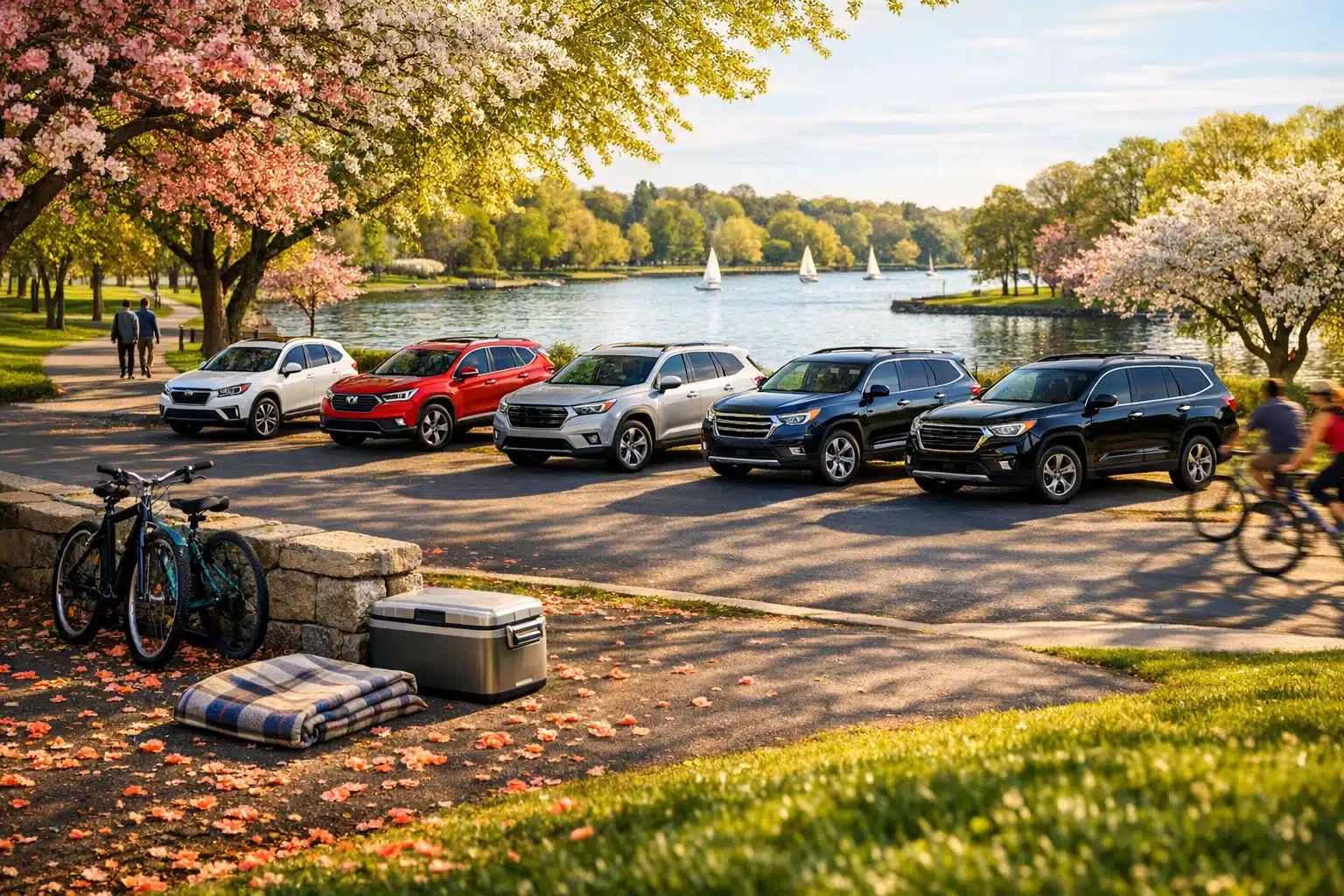
Top 5 Kia SUVs Known for Their Reliability and Longevity
Buying an SUV is rarely just about horsepower or screen size; for most drivers, the real test begins years later, after school runs, commutes, road trips, and cold starts have had their say. Kia has spent the last decade reshaping its reputation, turning several of its SUVs into realistic long-term choices rather than simple budget picks. This guide looks at five Kia models with strong durability traits, practical ownership appeal, and solid everyday usefulness. Before diving into each one, here is a quick outline of how the list is organized.
Article Outline
- Kia Sportage: the most balanced choice for buyers who want a proven compact SUV.
- Kia Sorento: a family-friendly option with good long-term value when paired with the right engine and transmission.
- Kia Telluride: a newer three-row SUV that has quickly built a strong dependability reputation.
- Kia Seltos: a small and efficient crossover that can make sense for budget-minded owners planning to keep a vehicle for years.
- Kia Niro: a practical hybrid crossover that blends efficiency with durable day-to-day engineering.
1. Kia Sportage: The Most Balanced Long-Term Kia SUV
If one Kia SUV deserves to be called the safest all-around reliability pick, it is the Sportage. The reason is not mystery or marketing magic. It comes from a straightforward formula: compact size, mainstream components, wide parts availability, and a long production history that gives mechanics, owners, and independent shops plenty of familiarity. In plain terms, the Sportage has been around long enough to be understood, and that matters when a vehicle moves from showroom shine to real-world duty.
The Sportage works well as a long-haul ownership choice because it usually avoids the excess weight, complexity, and repair expense that can come with larger SUVs. Compact crossovers often live easier lives than bigger family haulers. They carry fewer passengers, use smaller tires, place less strain on brakes and suspension parts, and typically cost less to maintain over time. That practical reality helps the Sportage age gracefully when it receives routine care.
For buyers who prioritize longevity over novelty, naturally aspirated Sportage models with conventional automatic transmissions are often the most appealing versions. They may not be the most exciting on paper, but long-term ownership is rarely won on paper. It is won through oil changes done on time, cooling systems kept healthy, and powertrains that are not constantly working at the edge of their limits. In that respect, the Sportage has often been a sensible middle ground between bargain pricing and everyday durability.
That said, a careful buyer should not treat every Sportage as identical. Some older Kia and Hyundai four-cylinder engines, especially certain 2.4-liter applications from past years, were linked to recalls and owner concerns. That does not erase the Sportage from the reliability conversation, but it does mean service history matters. A clean inspection, recall verification, and documented maintenance are worth far more than a polished exterior. When shopping used, condition beats trim level almost every time.
Compared with compact rivals such as the Toyota RAV4 or Honda CR-V, the Sportage may not always command the same resale premium, but that can actually work in its favor for value-focused shoppers. You are often paying less up front for a vehicle that still offers useful cargo room, solid safety features, and broad parts access.
- Strong parts availability in most markets
- Manageable maintenance costs compared with larger SUVs
- Compact size that reduces wear on tires, brakes, and suspension
- Good fit for commuters, couples, and small families
If reliability is a game of quiet competence, the Sportage plays it well. It may never feel dramatic, but a dependable SUV rarely needs to.
2. Kia Sorento: A Family SUV That Rewards Smart Spec Choices
The Kia Sorento sits in a very useful middle ground. It is larger and more family-oriented than the Sportage, yet usually easier to own and park than a full-size three-row SUV. That balance has helped the Sorento become one of Kia’s most practical long-term options, especially for buyers who need flexible seating, more cargo room, or occasional towing without stepping too far into heavy, expensive territory.
Reliability in the Sorento story depends heavily on configuration. This is not unusual in the midsize SUV category, where engine choices and transmission pairings can change the ownership experience quite a bit. If your goal is long service life, simpler is usually smarter. Older Sorento models with V6 engines and conventional automatics have often been favored by owners who want smooth power and a more established mechanical layout. In newer generations, non-turbo four-cylinder versions can also appeal to shoppers who value fewer high-stress components over stronger acceleration numbers.
Why does the Sorento earn a place on this list? Because the vehicle itself is fundamentally useful in the kind of way that supports longevity. Families who buy one tend to keep it busy but not necessarily abusive. It is a school-run machine, a vacation-hauler, a grocery carrier, and the kind of SUV that spends its life doing tasks it was clearly built to handle. That matters. Cars that are well matched to their role tend to age more predictably than cars constantly being pushed beyond it.
There are a few important caveats. Because Sorentos often handle more passengers and cargo than compact SUVs, suspension wear, brake condition, and cooling-system maintenance deserve close attention. If you are shopping used, mileage alone is not the whole story. A well-kept Sorento with 110,000 miles can be a better buy than a neglected one with 70,000. Service records, transmission behavior, and evidence of fluid changes are especially important here.
Compared with the Telluride, the Sorento is usually lighter, less expensive, and easier to find at a lower used price point. Compared with the Sportage, it offers more versatility for growing households. That is why it remains such a strong long-term candidate: it covers more life stages without becoming oversized or wasteful.
- Best for buyers who need extra room without moving into a large SUV class
- Strong value on the used market relative to size and equipment
- Often worth prioritizing simpler powertrains over the most powerful options
- Benefits greatly from documented transmission and cooling-system service
The Sorento is not the flashiest choice in the lineup, but it is one of the most rational. When chosen carefully, it can deliver years of very useful service with fewer surprises than many shoppers expect.
3. Kia Telluride: Newer to the Game, Yet Already a Serious Contender
The Telluride is the newest name on this list in spirit, even if it has already become one of Kia’s most recognizable SUVs. Introduced for the 2020 model year, it quickly earned praise for comfort, space, and overall execution. Reliability is always harder to judge on a younger vehicle than on a model with fifteen years of history, so the Telluride’s inclusion comes with one honest note: its long-term story is still being written. Still, what has been seen so far is encouraging.
Part of the Telluride’s appeal comes from mechanical simplicity where it matters. Rather than offering a crowded menu of engines, Kia paired it with a naturally aspirated 3.8-liter V6 and a conventional 8-speed automatic transmission. That is a reassuring recipe in a market increasingly full of small turbo engines, complicated hybrid systems, and aggressive transmission tuning. The Telluride is not primitive, but it does feel like it was engineered with mainstream family durability in mind.
Another reason the Telluride stands out is its sense of structural confidence. Open the doors, fold the seats, load luggage, and the SUV feels substantial rather than flimsy. That tactile quality does not automatically prove reliability, but it often hints at better long-term ownership because interior wear, rattles, and trim breakdown can make a vehicle feel old long before the powertrain gives up. The Telluride has generally avoided that early-aging impression better than many competitors in the same price band.
Of course, large SUVs live harder lives than compact ones. They haul more passengers, carry more cargo, and often spend more time on highways in all weather. That means routine service is critical. AWD systems need proper attention, brake wear should be monitored closely, and transmission fluid service becomes more meaningful if towing or mountain driving enters the picture. A big family SUV can be a marathon runner, but only if you remember to give it water.
Compared with the Sorento, the Telluride offers more passenger space and a stronger premium feel. Compared with many rivals, it has earned unusually high owner satisfaction in a relatively short time. The main tradeoff is simple: it costs more, and its lifespan record is naturally less complete than older Kia SUVs. Still, few modern three-row SUVs have built trust this quickly.
- Proven V6 and conventional automatic layout
- High owner satisfaction and strong real-world usability
- Better fit for large families and frequent road trips
- Needs disciplined maintenance because size increases wear on consumables
If the Sportage is the practical daily tool, the Telluride is the well-made road-trip cabin on wheels. It has not existed long enough to settle every debate, but it has already earned serious credibility.
4. Kia Seltos: Small, Efficient, and Easier to Keep on the Road
The Kia Seltos does not always get top billing in reliability conversations, mostly because it is newer and smaller than the brand’s headline SUVs. That is a mistake. For many drivers, especially commuters, first-time SUV buyers, and people who want manageable ownership costs, the Seltos has one major advantage: it asks less of itself. That matters more than it sounds. A lighter vehicle with modest performance goals often has an easier path to longevity than a larger, harder-worked one.
The Seltos entered the market as a subcompact crossover with a useful blend of city-friendly dimensions and surprisingly good cabin room. It is the kind of vehicle that slips into tight parking spots on weekdays and still handles errands or short trips without complaint on weekends. In ownership terms, that smaller footprint typically brings lower tire costs, lighter brake wear, and reduced fuel expense. Those are not glamorous details, but long-term reliability is built on a pile of unglamorous wins.
As with several vehicles on this list, the smartest durability choice is usually the simpler version. Buyers who want maximum long-term predictability often lean toward naturally aspirated trims and straightforward configurations rather than the sportier, more complex alternatives. There is nothing wrong with a turbocharged model when maintained properly, but if your goal is to own the vehicle well past the loan term, fewer stressed components can be a welcome advantage.
The Seltos also benefits from being honest about its job. It is not pretending to be a luxury SUV, a rock crawler, or a towing specialist. It is an urban and suburban utility vehicle, and that clarity helps. Vehicles built around clear, modest expectations often age with less drama. They are not overburdened by oversized wheels, extravagant electronics, or performance ambitions that can shorten the peace of ownership.
Compared with the Sportage, the Seltos gives up some room and highway composure, but it can be easier on the wallet. Compared with the Niro, it usually feels more like a traditional small SUV, especially in driving position and cargo flexibility. For younger buyers or households adding a second vehicle, it often lands in a sweet spot between practicality and operating simplicity.
- Lower running costs than larger SUVs in tires, fuel, and brakes
- Good choice for urban drivers who still want hatchback-like versatility
- Simpler trims are often the better long-term bet
- Best suited to light family duty, commuting, and everyday errands
The Seltos is not built for grand heroics, and that is part of its charm. Sometimes the vehicles that last best are the ones that never try too hard to impress.
5. Kia Niro: The Quiet Long-Distance Specialist
The Kia Niro occupies an interesting corner of the SUV landscape. Some buyers see it as a crossover, others treat it as a compact hybrid utility vehicle, and a few simply view it as a practical machine for cutting fuel bills without moving to a sedan. Labels aside, the Niro deserves a place in this discussion because reliability and longevity are not only about surviving abuse. They are also about reducing stress on the vehicle from the very beginning, and the Niro does that remarkably well.
Its core advantage is efficiency by design. A hybrid powertrain pairs a relatively small gasoline engine with electric assistance, which means the engine does not always carry the full burden during stop-and-go driving. That can reduce strain in daily use, especially in urban traffic where conventional SUVs often waste fuel and generate more wear from constant acceleration and braking. Regenerative braking adds another benefit by helping reduce brake wear over time, something many long-term owners appreciate once replacement bills start arriving.
The Niro is especially appealing to drivers who rack up miles steadily rather than dramatically. Think commuters, delivery professionals using their own car responsibly, retirees who take frequent regional trips, or families who want a second vehicle that will not punish the fuel budget. In those situations, the Niro’s engineering makes a lot of sense. It is not about brute strength. It is about sustainable effort, like a runner who knows the race is long and sets the pace accordingly.
There are still practical considerations. Hybrid systems add electrical complexity, and buyers should care about battery warranty coverage, software updates, and maintenance done by technicians familiar with the system. Even so, Hyundai-Kia hybrid technology has become far more established than many people assume. A Niro with consistent service and a healthy battery system can be a very rational long-term ownership play.
Compared with the Sportage or Sorento, the Niro offers less traditional SUV toughness and less cargo versatility for bulky family gear. Compared with many small gasoline crossovers, however, it often counters with lower running costs and calmer city behavior. If your definition of reliability includes affordable operation year after year, the Niro belongs in the conversation.
- Hybrid design can reduce fuel costs and brake wear over time
- Excellent fit for high-mileage commuters and practical households
- Battery health and software history matter when buying used
- Better for efficiency-focused owners than for towing or rough-road use
The Niro is the quiet achiever of the group. It does not shout for attention, yet it often makes its case one frugal, uneventful trip after another.
Conclusion: Which Reliable Kia SUV Should You Choose?
If you are shopping with longevity in mind, the right Kia SUV depends less on image and more on how honestly you match the vehicle to your life. The Sportage is the safest broad recommendation because it combines proven practicality, manageable costs, and strong all-round usability. The Sorento makes the most sense for households that need more room but still want a reasonable ownership equation. The Telluride is the family favorite for buyers who need genuine three-row space and are willing to pay more for comfort and presence. The Seltos suits city drivers who want easy ownership in a compact package, while the Niro stands out for people who value fuel efficiency as part of the long-term reliability picture.
The most important takeaway is simple: reliability is never just a badge on the hood. Specific model years, engine choices, maintenance history, recall completion, and how a previous owner treated the vehicle matter enormously. A carefully maintained Kia SUV can serve for many years, while a neglected one can become expensive regardless of its reputation. For readers comparing used examples or trying to choose a new daily driver they plan to keep for the long haul, this list offers a practical starting point: buy the simplest version that fits your needs, inspect it thoroughly, and let consistency do the heavy lifting.