Top 10 Vibration Relaxation Gadgets For Couples
Introduction and Article Outline
Shared relaxation has become a small luxury that many couples deliberately protect, especially when long workdays, endless notifications, and uneven routines make quality downtime harder to find. Vibration-based wellness gadgets can turn an ordinary evening at home into a calmer ritual by helping ease muscle tightness, reduce stress, and create a shared pause in the day. This guide maps the landscape, highlights ten standout gadget types, and shows how to choose one with clear eyes rather than flashy packaging.
The appeal of these devices is easy to understand. Many couples want something more practical than a decorative gift and more flexible than booking a spa session every time they feel worn down. A good relaxation gadget can live on a nightstand, in a living room basket, or inside a carry-on bag, ready for use after travel, workouts, long commutes, or simply a draining Tuesday. The modern market also offers more variety than it did a few years ago. Buyers can now compare quiet silicone models, heated wraps, rechargeable pillows, compact massage guns, and wearables with app control or programmable vibration patterns. In other words, this is no longer a one-product category.
Because the topic can blur wellness, comfort tech, and adult-oriented design, smart selection matters. The best device for one pair may be a poor fit for another. A couple in a small apartment may care most about noise and storage. Frequent travelers may value USB charging and waterproof construction. Someone who wants help with shoulders, calves, or feet will need different power and shape than a pair looking for a discreet gadget that supports close-contact relaxation. That is why comparisons are more useful than slogans.
Outline
- A quick framework for understanding what makes a vibration gadget worth buying.
- The first five product types, focused on classic home relaxation tools.
- The second five product types, including travel-friendly and more discreet modern options.
- A practical buying guide covering materials, battery life, noise, and maintenance.
- Safe use advice and a closing summary for couples choosing their first or next device.
Throughout the article, the ranking is based on versatility, comfort, ease of cleaning, longevity, noise, and value rather than novelty alone. Where useful, typical ranges are noted: many cordless devices offer roughly 90 minutes to 4 hours per charge, quiet premium models often stay near conversation-level sound, and body-safe silicone tends to outperform hard plastic when comfort and cleaning are both important. Think of this list as a field guide, not a fantasy brochure.
Top 10 Picks, Part I: The Most Practical Home Relaxation Gadgets
The first half of the list focuses on the devices most couples can imagine using immediately, even if they have never bought a vibration-based wellness product before. These are approachable, easy to understand, and often available in several price bands. They also work well as gifts because their use cases are familiar: sore shoulders after desk work, tired feet after standing, or a simple wish to unwind without turning relaxation into a project.
1. Handheld Cordless Body Massager
A handheld massager remains the category’s easiest entry point. Its big advantage is flexibility: one device can move from neck to calves to lower back without requiring furniture changes or straps. For couples, that means one person can use it solo while the other helps guide pressure or position. Most models include multiple speed levels, and many now use softer silicone heads that feel less clinical than older hard-plastic designs. The trade-off is that arm fatigue can set in during longer sessions, so ergonomics matter more than marketing language.
2. Vibration Massage Pillow
A massage pillow is ideal for buyers who want something unobtrusive. It can sit on a sofa, chair, or bed and usually supports the neck, mid-back, or lumbar area with minimal setup. Compared with a handheld device, a pillow offers less targeting but more passive comfort. Couples often like this style because it blends into home life; it does not need a demonstration, and it does not dominate storage space. If you share a couch in the evening, a compact pillow can become the gadget that gets used most often simply because it is within reach.
3. Heated Neck and Shoulder Wrap with Vibration
This style combines gentle vibration with warmth, which many users find more soothing than intensity alone. Heat matters because it changes the feel of the session, turning a functional tool into something closer to a wind-down ritual. A wrap is especially appealing in colder seasons or after long hours at a desk. Compared with a standard pillow, it feels more cocooning, though it is usually less versatile on legs and feet. Buyers should look for automatic shutoff, washable covers, and adjustable fastening points.
4. Vibrating Foot Massager
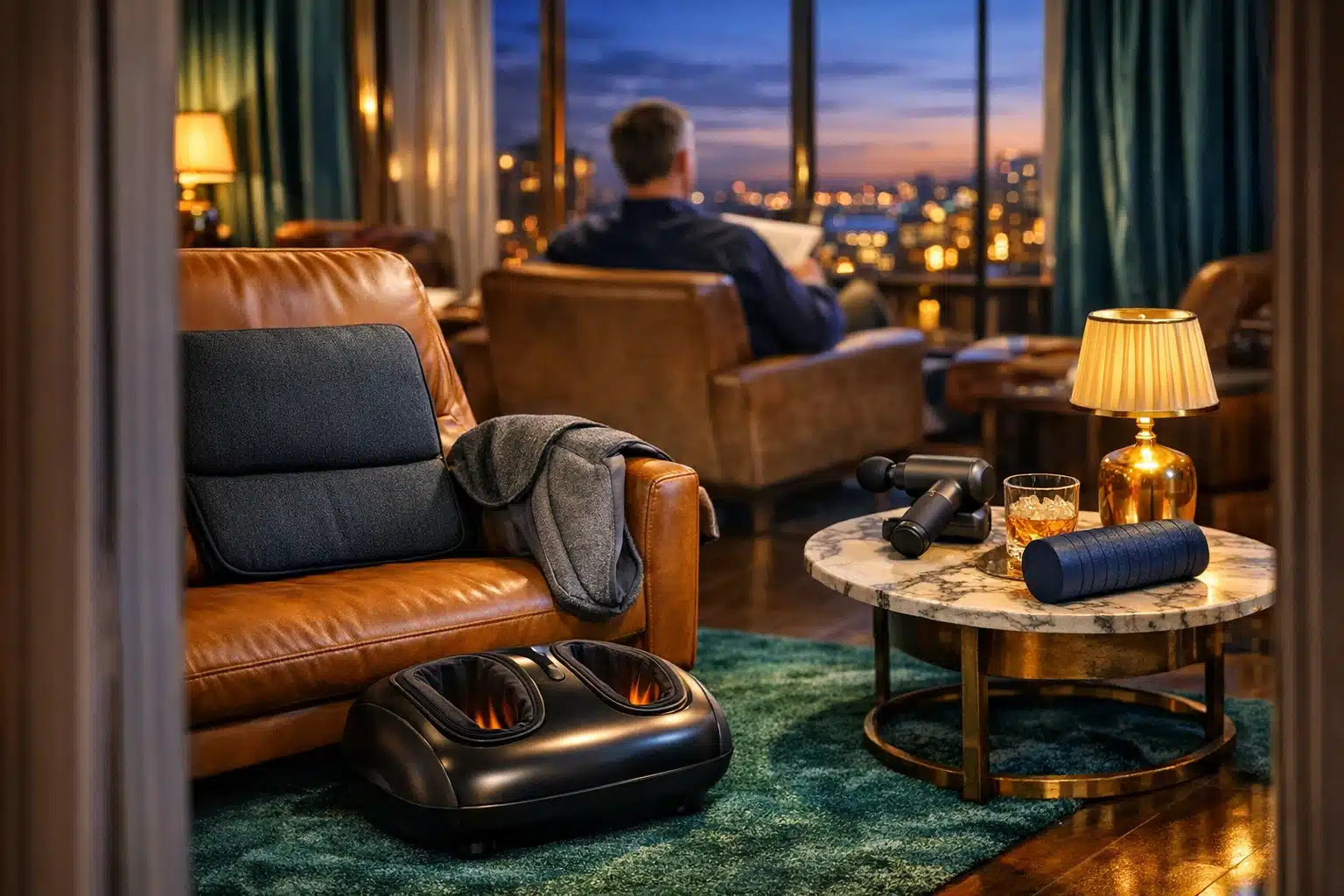
For couples who spend a lot of time standing, walking, or training, a foot unit can deliver the most immediate sense of relief. Shared use is simple: place it under a chair, take turns, and let the device do the work. Some units add compression, rollers, or heat, but even vibration-only versions can feel surprisingly restorative after a long day. In comparison with a handheld massager, a foot device is less versatile but often more satisfying for routine use because it asks almost nothing from the user beyond sitting down.
5. Vibration Seat Cushion
A seat cushion is the understated workhorse of the list. It turns an office chair, dining chair, or car seat into a relaxation spot without taking over the room. That makes it excellent for couples who like practical gifts and dislike clutter. Good models offer multiple zones, so one person might focus on the lower back while the other prefers upper-back vibration. The experience is usually broader and gentler than a massage gun or handheld tool, which is exactly why many households keep using it. It becomes part of the furniture rather than a gadget you forget in a drawer.
Among these first five, the handheld model wins on versatility, the pillow on convenience, the heated wrap on comfort, the foot unit on end-of-day payoff, and the seat cushion on everyday usability. None is universally best. The right choice depends on where tension usually shows up and how visible or portable you want the device to be.
Top 10 Picks, Part II: Compact, Wearable, and More Modern Options
The second half of the list covers products that feel newer, more specialized, or more discreet. Some belong squarely in mainstream wellness. Others overlap with the adult wellness market, where body-safe materials, quiet motors, and travel-friendly designs have pushed product quality upward. For couples, this is often the most interesting part of the category because the devices can support both independent use and shared relaxation without demanding a big setup.
6. Compact Massage Gun with Vibration Mode
A massage gun is technically distinct from softer, broader vibration devices, but many compact models now include gentler heads and lower settings that make them suitable for relaxed home use. Their strength is targeted muscle work on calves, thighs, glutes, and shoulders. Compared with a handheld body massager, a mini gun often feels more athletic and more intense, which can be great after workouts but less cozy before sleep. Couples who are active or who sit for long stretches often appreciate having one more technical option in the house.
7. Wearable Back or Hip Vibration Belt
Wearable belts are useful because they free the hands. You fasten the device around the lower back, waist, or hips and continue reading, tidying up, or watching a film while it runs. For pairs who want convenience over ceremony, that hands-free quality can make the belt easier to use consistently than stronger but less convenient tools. Look for breathable fabrics, a stable fit, and charging that does not require proprietary cables. These belts are rarely the most powerful products, yet they often score well on comfort and repeat use.
8. App-Enabled Palm-Size Relaxation Massager
This is where design starts to matter as much as raw power. Palm-size devices with quiet motors, body-safe silicone, and app or button control are popular because they are discreet, easy to clean, and portable enough for travel. Some are sold through adult wellness retailers, but their appeal also comes from broad usefulness: shoulders, hands, scalp, lower back, and close-contact relaxation all benefit from a compact, soft-touch design. For couples, app control can add convenience when one person wants to adjust intensity without interrupting the moment. Compared with larger home units, these devices sacrifice reach but gain privacy and portability.
9. Eye and Temple Massager with Gentle Vibration
Not every relaxation gadget needs to target the back. Eye masks with vibration, warmth, and compression are increasingly popular among people who spend hours looking at screens. They can feel surprisingly luxurious after a late work session or a long flight. Shared use is straightforward as long as cleaning and fabric hygiene are handled properly. In a comparison, this type is far less versatile than a general body massager, yet it excels at a very specific role: helping the face and head feel less overstimulated after a busy day.
10. Waterproof Mini Vibration Gadget for Bath or Travel
A waterproof mini device rounds out the list because it solves two real problems: storage and flexibility. It can live in a wash bag, be used in the shower or bath if the rating truly supports immersion, and usually cleans up quickly with mild soap and water. Couples who travel frequently or live in smaller homes often find these models more realistic than bulky plug-in equipment. When comparing them with larger units, expect shorter battery life and a more focused sensation. What they lack in breadth, they make up for in convenience, discretion, and the ability to fit almost anywhere.
If this half of the list has a unifying theme, it is modern usability. These gadgets tend to value portability, softer materials, lower noise, and streamlined controls. They may not replace a full massage chair, but for many couples they fit real life far better than oversized equipment with impressive specs and poor day-to-day practicality.
How to Compare These Gadgets Before You Buy
Choosing between ten appealing options gets much easier once you stop thinking in terms of “best overall” and start thinking in terms of fit. The strongest buying decision usually comes from matching a device to your habits, your space, and your tolerance for setup. A couple that wants a shared movie-night accessory should not shop the same way as a pair that wants post-workout recovery tools. Likewise, a travel-friendly gadget solves a different problem than a plush wrap designed for winter evenings on the sofa.
The first filter is body area. If tension concentrates in the upper back or neck, a pillow or heated wrap makes sense. If sore arches and heels are the recurring issue, a foot device will feel more rewarding than a general-purpose tool. If both people want flexibility, handheld models and compact silicone devices cover the widest range of use. The second filter is intensity. Some people love firm stimulation; others find high power tiring or noisy. That is why multi-level settings matter so much. A wide adjustment range usually adds more long-term value than one dramatic top speed.
Material quality is another major divider. Softer-touch silicone is often easier to clean, kinder on skin contact, and more premium in hand than bare ABS plastic. Fabric products can be cozy, but only if the cover is removable or wipeable. For shared use, cleaning should never feel like an afterthought. Also check water resistance carefully. “Splash-proof” and “fully waterproof” are not interchangeable, and confusing them can shorten a product’s life quickly.
- Battery life: many portable models deliver around 1.5 to 4 hours per charge, while larger plug-in units remove charging anxiety entirely.
- Noise: quieter devices are far more likely to be used in apartments, late evenings, or shared living spaces.
- Controls: physical buttons are simple, while app control can offer presets, gradual intensity shifts, and easier partner adjustment.
- Size and storage: a great product that never leaves the closet is functionally a poor purchase.
- Warranty and replacement policy: helpful signs of a serious manufacturer, especially in rechargeable categories.
Price deserves context too. Lower-cost gadgets can be perfectly serviceable for occasional use, especially in classic categories like massage pillows. Premium pricing becomes easier to justify when it brings one or more meaningful upgrades: quieter motors, body-safe materials, more consistent battery performance, better waterproofing, or noticeably better ergonomics. A couple does not need the most expensive item on the shelf. They need the one that fits naturally into their life and keeps being used after the novelty fades.
Safe Use, Everyday Routine Ideas, and Final Thoughts for Couples
A relaxation gadget works best when it becomes part of a routine rather than a once-a-month experiment. The simplest approach is to attach it to an existing habit. Use the foot massager during a shared episode of a series, keep the massage pillow by the reading chair, or charge a compact mini device next to the bedside lamp so it is ready without effort. Habit design may sound unromantic, but it is often the difference between a smart purchase and a forgotten one. The small rituals are what turn wellness tools into lasting comforts.
Communication matters just as much as features. Couples often have different tolerance levels for pressure, heat, and vibration patterns. One person may want strong, focused intensity on calves after exercise, while the other prefers low, broad vibration for quiet unwinding. That difference is not a problem; it simply means adjustable settings are worth paying for. If a device is intended for shared or close-contact use, agree on comfort, timing, and cleaning expectations in advance. The best experiences tend to feel easy and respectful, not improvised under confusion.
Safety is straightforward but important. Follow the manufacturer’s instructions, avoid using a damaged charger or torn covering, and do not treat consumer gadgets as medical devices. People with recent surgery, significant circulation concerns, nerve sensitivity, implanted medical devices, or pregnancy-related questions should check with a qualified clinician before using high-intensity or heated products. Start with the lowest useful setting, especially on smaller wearable or silicone devices that can feel stronger than their size suggests. If any gadget causes numbness, pain, or unusual irritation, stop and reassess rather than forcing a longer session.
- Clean shared devices after each use with the method recommended for their material.
- Store rechargeable products partly charged if they will sit unused for a long period.
- Keep waterproof claims in perspective and double-check the exact IP rating when provided.
- Replace products that lose charge rapidly, overheat, or develop unstable motors.
For the audience this article is really written for, the takeaway is simple: choose the gadget that fits your shared rhythm. If you want a no-fuss household staple, start with a massage pillow, seat cushion, or foot unit. If portability, discretion, or modern design matters more, look toward compact silicone devices, wearables, or waterproof minis. The best “top 10” product is not the flashiest object on the list; it is the one that makes it easier for both of you to pause, reset, and enjoy a little more comfort together.