Minimalist Underwear: Explore What Makes It Different
Minimalist underwear is one of those quiet wardrobe shifts that says a lot with very little. As clothing gets lighter, more fitted, and more performance-driven, many shoppers are rethinking what they wear closest to the skin. This stripped-back category aims for fewer distractions, smoother lines, and a more deliberate approach to comfort. Understanding what sets it apart can help readers buy less impulsively and wear more confidently.
Outline
This article moves from definition to design, then to materials, practical benefits and drawbacks, and finally a buyer-focused guide. The first section explains what minimalist underwear is and what it is not. The second looks at how cut, seams, waistbands, and visual restraint shape its identity. The third examines fabrics and construction, the fourth compares advantages with trade-offs, and the fifth offers selection advice before ending with a conclusion for everyday shoppers.
1. What Minimalist Underwear Actually Means
Minimalist underwear is not defined by a single silhouette, price point, or brand philosophy. Instead, it is a design approach built around reduction: less visual noise, less bulk, fewer unnecessary layers, and a closer connection between function and form. In practical terms, that often means clean lines, smooth edges, muted colors, lighter fabrics, and construction choices intended to disappear under clothing rather than announce themselves. A minimalist pair may be a brief, bikini, short, boxer brief, thong, or high-cut style. The common thread is restraint.
This matters because underwear has changed from a hidden afterthought into a performance layer. People now expect their basics to cooperate with leggings, tailored trousers, slim dresses, lightweight denim, and travel wardrobes. Heavy lace, thick trim, oversized logos, decorative bows, extra stitching, or bulky seams can create friction, show through clothing, or simply feel distracting after a long day. Minimalist designs answer that problem by trimming the experience down to essentials.
It also helps to separate minimalist underwear from a few lookalike ideas. It is not always the same as sexy underwear, although some styles are very sleek. It is not identical to athletic underwear, even though both may prioritize breathability and stretch. And it is not always the cheapest option, because fewer visible details do not automatically mean lower manufacturing standards. Sometimes the opposite is true: when embellishment disappears, fabric quality and pattern accuracy become more important.
Three features appear again and again in this category:
• reduced seam bulk
• low-profile waist and leg finishes
• a focus on comfort, fit, and visual simplicity
There is also a broader cultural reason for its popularity. Minimalism in fashion has grown alongside capsule wardrobes, smaller closets, and a preference for versatile basics over trend-heavy purchases. Many consumers now want garments that work hard without demanding attention. Underwear follows the same logic. The best minimalist pieces are usually the ones you barely notice while wearing them, yet miss immediately when they are not in the drawer. That quiet reliability is the category’s real signature, and it explains why such a modest item has become part of a much larger conversation about intentional dressing.
2. Design Choices That Make It Look and Feel Different
If conventional underwear can sometimes feel like a room full of opinions, minimalist underwear feels more like a clear desk. The difference begins with design language. Many traditional styles use visible elastic, decorative contrast stitching, lace panels, piping, bold branding, layered waistbands, or shaped embellishments to create character. Minimalist design removes most of that and asks a simpler question: what does the garment need in order to fit well, stay in place, and remain comfortable under real clothes?
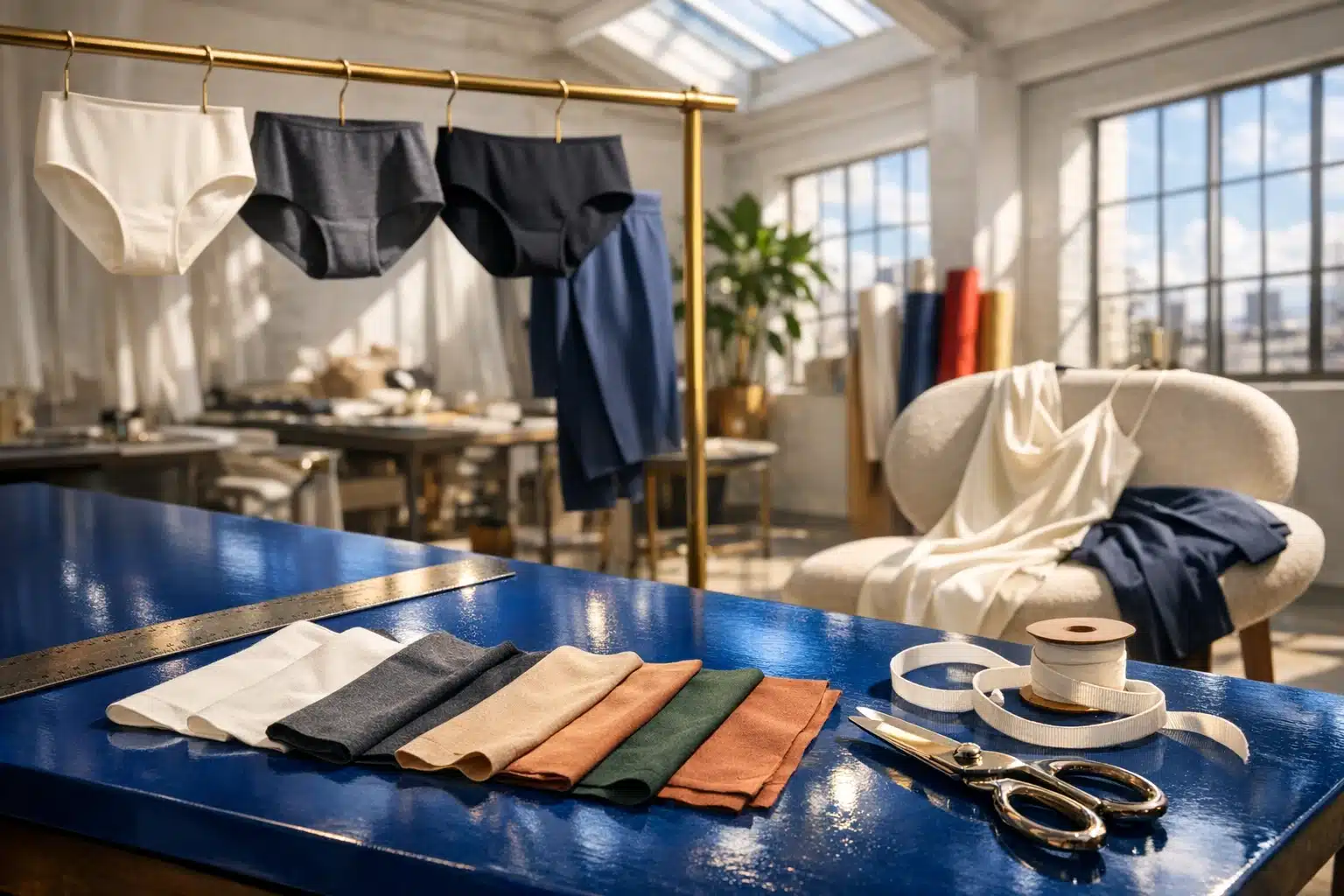
The answer often shows up in the cut. Minimalist underwear tends to use smooth curves rather than busy paneling. Leg openings may be bonded, laser-cut, or softly turned instead of finished with thick elastic. Waistbands are often flatter and less rigid. Colors usually stay close to neutrals such as black, white, beige, taupe, grey, and skin-tone variations, though deep green, navy, or muted terracotta may appear in more fashion-conscious collections. Prints exist, but they are usually subtle rather than loud.
These choices affect both aesthetics and utility. A flatter edge creates fewer visible lines under fitted clothing. Fewer seams can mean fewer pressure points. Lighter trims reduce the sense of being cinched or boxed in. Some people notice the difference most when sitting for long hours, commuting, or wearing thin fabrics that reveal every ridge underneath. In those moments, design stops being abstract and becomes very personal.
Typical minimalist markers include:
• limited ornamentation
• small or hidden logos
• smooth waist construction
• low-bulk leg openings
• shapes intended to sit quietly under clothing
That said, minimal does not mean one-size-fits-all. A minimalist thong solves a different problem from a minimalist full brief. One prioritizes near invisibility under body-skimming clothes, while the other may focus on coverage without thickness. Similarly, some minimalist boxer briefs aim for a second-skin feel, while others prioritize structure with a cleaner visual finish than traditional multi-panel styles.
The most interesting part is that simplicity makes every design decision more visible. When a garment has no lace, hardware, or flashy branding to distract the eye, the cut must be precise. A waistband that rolls, a leg opening that pinches, or a gusset placed awkwardly becomes obvious very quickly. In that sense, minimalist underwear is almost architectural. It may look calm on the surface, but behind that calm is a surprisingly exact set of choices. What appears effortless usually comes from careful editing, and that editing is what gives minimalist underwear its distinct identity.
3. Fabrics, Construction, and the Science of Everyday Comfort
Fabric is where minimalist underwear often earns its reputation. Because the design is visually restrained, material quality carries more of the experience. A pair that looks nearly invisible on a hanger can feel wonderful or disappointing depending on fiber choice, stretch recovery, moisture handling, and seam placement. That is why two similar-looking styles can perform very differently after a full day of wear.
Common fabric categories include cotton blends, modal, Tencel lyocell, microfiber synthetics, and performance knits that include elastane. Many everyday styles use about 90 to 95 percent cotton or modal with 5 to 10 percent elastane to add stretch and shape retention. Cotton remains popular for breathability and familiarity. Modal and lyocell are often chosen for softness, drape, and a cool-to-the-touch feel. Microfiber options can be especially smooth under clothing and quick to dry, which makes them useful for travel, workouts, or humid climates.
Construction matters just as much as fiber. Seamless or near-seamless methods can reduce ridge lines and pressure points. Bonded edges may help garments lie flat under thin fabrics. A well-designed gusset can improve hygiene and comfort without adding bulk. In boxer briefs and trunks, panel shaping influences support and mobility. In briefs or bikini cuts, the balance between front, back, and side coverage determines whether the garment shifts during movement.
When comparing materials, shoppers should pay attention to several practical questions:
• Does the fabric trap heat or release it well?
• Does it recover after stretching, or bag out by evening?
• Does it wick moisture, or stay damp?
• Does the waistband feel stable without feeling stiff?
• Do the edges lie flat after washing?
There is no universal best fabric because climate, activity, and personal sensitivity all matter. Someone who wants all-day softness for office wear may prefer modal. Another person may choose cotton for a dry, familiar hand feel. A frequent traveler may lean toward microfiber because it washes easily and dries overnight. People with sensitive skin may care less about trend language and more about tags, chemical finishes, or abrasive stitching.
In minimalist underwear, comfort is rarely accidental. It is engineered through small, almost invisible decisions: a softer elastic, a lighter knit, a flatter seam, a better ratio of stretch to recovery. You may never see those details in a mirror, yet you will notice them after eight hours at a desk, three hours on a train, or a day spent moving through summer heat. That is the quiet science behind the category.
4. The Real Benefits, the Honest Trade-Offs, and Who Notices Them Most
Minimalist underwear is often praised for comfort, but that word can be vague unless it is broken down. In real use, the biggest benefits usually fall into four areas: reduced visibility under clothing, lower bulk, easier layering, and a cleaner sensory experience. People who wear slim trousers, fitted skirts, lightweight dresses, or performance fabrics often appreciate how little a streamlined pair interferes with the outer garment. It is not simply about appearance. Smoother layers can reduce bunching, shifting, and the small irritations that build up during the day.
There is also a wardrobe-efficiency advantage. Minimalist pieces tend to mix well with many outfits because they are visually quiet and functionally versatile. A neutral, low-profile pair may work under workwear, travel clothes, loungewear, and evening outfits with equal ease. For capsule wardrobe fans, that matters. One good drawer of understated basics can cover more situations than a larger collection of highly specific, decorative styles.
Yet the trade-offs deserve equal attention. Some minimalist styles provide less structure, shaping, or coverage than more traditional designs. A laser-cut edge can feel invisible under clothing, but it may not be the right choice for someone who prefers a firmer hold. Very lightweight fabrics may dry quickly and feel airy, yet they can also be less durable if the knit is too delicate. Smooth microfiber can be excellent for travel, though some wearers still prefer the natural feel of cotton. Minimalism solves certain problems, but it does not erase personal preference.
People most likely to notice the difference include:
• anyone wearing fitted or thin outer layers
• commuters and office workers who sit for long stretches
• travelers packing light
• shoppers building a streamlined wardrobe
• wearers sensitive to seams, trims, or heavy elastic
Cost is another factor. Some minimalist underwear is affordable and widely available, but premium versions can be surprisingly expensive because they rely on better knit quality, bonded construction, or more precise patterning. Higher price does not guarantee better comfort, yet extremely cheap versions may lose shape quickly or cut corners on finishing.
Perhaps the most honest conclusion is this: minimalist underwear is not magic, and it is not for everyone. It will not turn a poor fit into a good one, and it will not replace the support needs of every body type or activity. What it can do is remove friction, both literal and visual, for people who value subtlety. If your ideal garment is the one you forget you are wearing, minimalist underwear may feel less like a trend and more like a practical upgrade hiding in plain sight.
5. How to Choose the Right Pair and a Conclusion for Everyday Shoppers
Buying minimalist underwear well is less about chasing a label and more about matching design choices to your real life. Start with the clothes you wear most often. If your wardrobe includes body-skimming dresses, tailored trousers, or light summer fabrics, low-bulk edges and smooth surfaces should move high on your priority list. If you spend long hours walking, commuting, or sitting at a desk, look closely at waistband width, seam placement, and whether the fabric stays comfortable over time rather than just for the first ten minutes.
A practical selection process can be simple:
• choose the silhouette you already know suits your body and routine
• then compare fabrics based on climate, softness, and drying speed
• inspect the waistband and leg finish for thickness
• read fiber percentages and care instructions
• test one or two pairs before replacing an entire drawer
It is also wise to think beyond appearance. Minimalist underwear in a soft neutral color may look elegant online, but the real questions are more grounded. Does it ride up? Does it stretch out after washing? Does it stay breathable in warm weather? Can you wear it under multiple outfits without adjusting it all day? Those answers matter far more than a polished product photo.
Care affects longevity as well. Lightweight fabrics and bonded finishes often benefit from gentle washing, lower drying heat, and avoiding rough surfaces such as zippers in mixed loads. Even a beautifully designed pair can wear out early if treated like heavy gym gear. Conversely, well-made basics that are washed carefully often justify their cost through frequent use.
For shoppers curious about making the switch, the smartest approach is gradual. Begin with one problem you want to solve: visible lines, bulky seams, travel convenience, heat management, or a more refined essentials drawer. Then buy for that need rather than for the idea of minimalism itself. A small improvement in daily comfort is usually more valuable than owning a fashionable concept.
Conclusion for everyday shoppers: minimalist underwear stands out because it does not try too hard. Its difference lies in editing, precision, and the way thoughtful design can make an everyday layer feel lighter, calmer, and more useful. If you want underwear that supports a modern wardrobe without adding visual clutter or physical distraction, this category is worth exploring. The best choice will be the one that fits your body, your clothing habits, and your tolerance for compromise, not the one with the loudest promise. In that sense, minimalist underwear succeeds by doing something rare in fashion: it makes less feel like enough.