Homeowners Are Ditching Blinds For This Clean, Modern Look
Blinds once signaled order and control, but in many rooms they now create a kind of low-level visual static, with slats, cords, shadows, and brackets all pulling the eye at once. As homes move toward softer, quieter interiors, many owners are choosing window treatments that seem to disappear rather than announce themselves. The appeal is not limited to looks alone. Better daylight, simpler cleaning, and a more composed atmosphere are all part of the shift.
Article Outline
- Why traditional blinds are losing favor in contemporary homes
- What defines a clean, modern window treatment in minimalist design
- How uncluttered window styling changes the mood and proportions of a room
- How different options compare in privacy, upkeep, comfort, and cost
- How homeowners can make the switch with confidence and avoid common mistakes
Why Traditional Blinds Are Losing Their Grip on Modern Interiors
For years, blinds were the default answer to a practical question: how do you control light and privacy without spending too much money or space? They still solve those basics reasonably well, especially in apartments, offices, and rental homes. Yet design preferences have changed, and what once looked neat can now feel busy. Horizontal blinds, faux-wood sets, mini blinds, and vertical tracks all introduce strong lines, segmented shadows, and visible hardware. In a room built around simplicity, those elements can interrupt the calm almost immediately.
One reason homeowners are moving away from blinds is visual clutter. Minimalist design is not only about owning fewer things. It is also about reducing surfaces, patterns, and details that constantly ask for attention. A blind is made of repeated parts: slats, cords, wands, clips, mounts, and tilt mechanisms. Even when it is perfectly clean, it adds texture and rhythm to the window area. In contrast, a single panel of sheer fabric, a recessed roller shade, or an unobstructed pane of glass gives the eye a place to rest. That difference may sound subtle, but it changes how the whole room reads.
Maintenance is another factor. Slatted blinds collect dust quickly, especially in kitchens, near roads, and in homes with pets. Cleaning them often means wiping piece by piece or using a specialty tool that still misses corners and edges. Bent slats, tangled cords, and yellowing plastic are also common complaints. Cordless versions have improved safety and reduced some of the fuss, but they do not completely remove the visual complexity that many people are trying to escape.
There is also a practical design issue: blinds can be awkward with today’s interiors. Open-plan homes, larger windows, and cleaner trim profiles make decorative excess stand out more clearly than before. In real estate photos and home renovation reveals, bright windows with simple treatments often help rooms appear larger and more current. Homeowners notice that effect. They see spaces where daylight washes across walls instead of being chopped into stripes, and they want that same sense of ease.
Several recurring frustrations push the change even further:
- Slats can warp, crack, or hang unevenly over time.
- Dust buildup is more noticeable than many expect.
- Light leakage between slats can be annoying in bedrooms.
- Visible mechanisms rarely match a refined interior palette.
So the move away from blinds is not a rejection of function. It is a decision to find function in a form that feels quieter, softer, and more aligned with how people now want their homes to feel.
What the Clean, Modern Look Actually Means at the Window
When people say they are replacing blinds with a cleaner look, they are usually not talking about one single product. They are talking about a design approach. Minimalist window styling favors fewer visible parts, gentler lines, and materials that support the architecture rather than compete with it. The result can look polished, effortless, and bright, even when the underlying goals are still the same: privacy, sun control, and comfort.
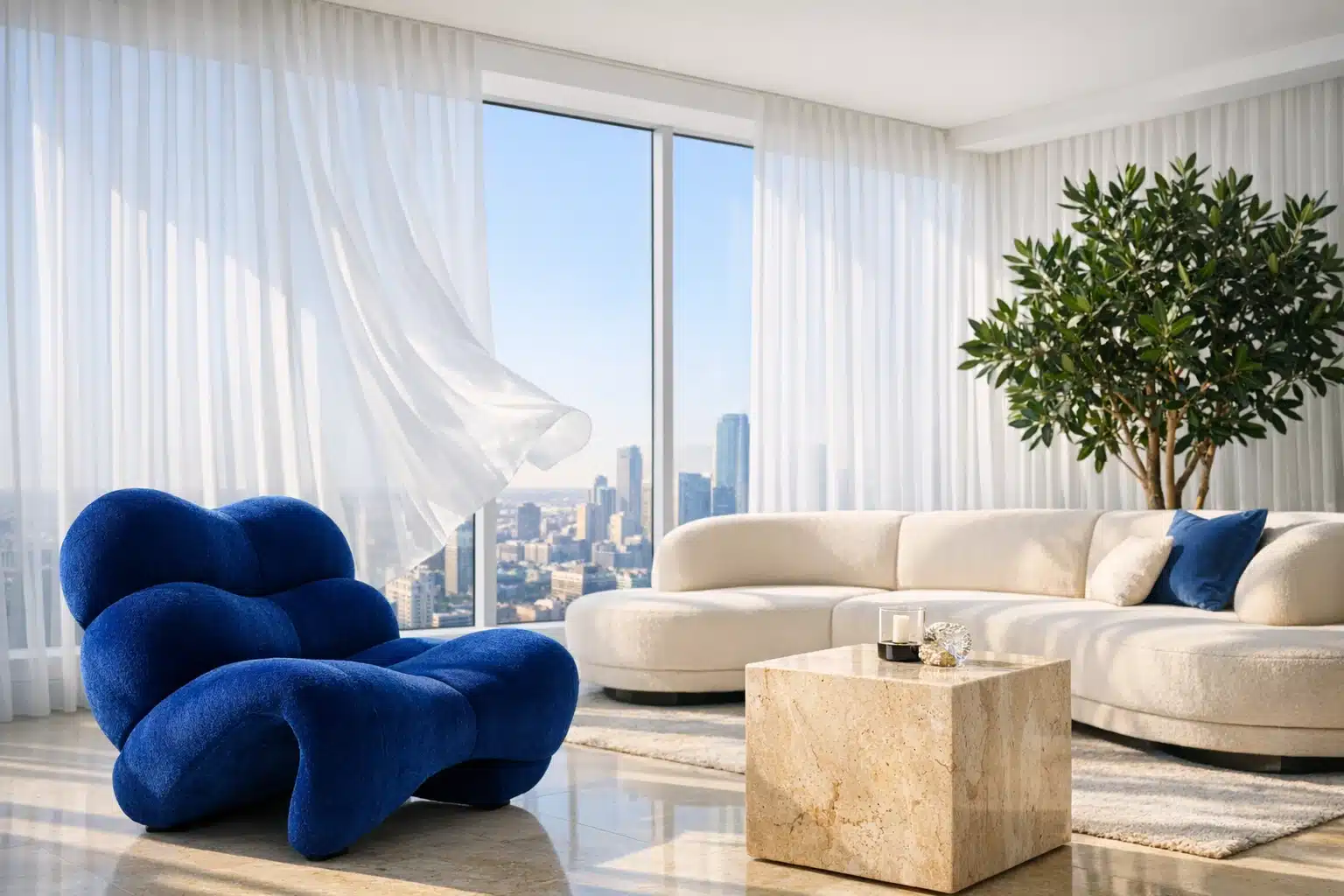
The most common alternatives include ceiling-mounted sheer curtains, ripple-fold drapery, recessed roller shades, tailored Roman shades, and in some cases no treatment at all where privacy is naturally available. Each option creates a different mood. Sheer curtains soften light and add movement, almost like a quiet breeze made visible. Roller shades sit close to the glass and nearly vanish when raised. Roman shades feel slightly more traditional, but in a plain fabric and a neutral tone they can look very restrained. The shared idea is simplicity.
What separates minimalist treatments from ordinary ones is not merely color. White or beige alone does not guarantee a clean result. Proportion, mounting height, stack-back, and hardware matter just as much. For example, curtains mounted near the ceiling and allowed to fall almost to the floor can make a room look taller and more deliberate. By comparison, short panels hung just above the frame often look like an afterthought. The same is true of roller shades: an inside mount with concealed hardware appears much more integrated than an exposed unit that interrupts the trim.
In many homes, the strongest version of this trend is layered simplicity. A sheer panel handles daytime softness, while a hidden blackout shade or lined drape handles nighttime privacy. This combination keeps the room airy during the day and useful after dark. It also avoids the all-or-nothing feel that some homeowners dislike in bare windows.
Hallmarks of the look usually include:
- Neutral or nature-based colors such as off-white, sand, stone, flax, soft gray, or muted taupe
- Low-contrast hardware in matte finishes or concealed tracks
- Fuller fabric panels with quiet drape instead of stiff, decorative gathers
- Simple shapes without valances, ornate trim, tassels, or busy patterns
- Thoughtful layering that preserves light rather than blocking it by default
This matters because windows act like visual anchors. If the treatment is heavy, fussy, or overly mechanical, the room can feel more crowded than it is. If the treatment is streamlined, the architecture starts to breathe. A narrow dining room gains grace. A modest bedroom feels calmer. Even a small home office seems less compressed. The window stops behaving like a problem to manage and starts acting like part of the room’s composition.
How Minimalist Windows Shape Calm, Light, and the Feeling of Space
Minimalist window design has influence beyond the frame itself. It changes the atmosphere of a room in ways that people often notice emotionally before they can describe them technically. A space with softer daylight and fewer visual interruptions tends to feel quieter, even when nothing else has been rearranged. That reaction is one reason this approach has spread so quickly across living rooms, bedrooms, kitchens, and home offices.
Light is the first big difference. Traditional blinds often break daylight into bands, creating hard-edged stripes across floors, walls, and furniture. Sometimes that effect is dramatic in a good way, but just as often it makes a room feel restless. Sheers and other minimal treatments diffuse light rather than fragment it. They let brightness enter while muting glare, so the room looks more even and flattering throughout the day. Paint colors appear truer. Wood finishes feel warmer. Upholstery seems less harsh. In photographs and in person, the result is usually more serene.
There is also a powerful effect on perceived size. Designers have long used vertical lines, uninterrupted surfaces, and negative space to make rooms appear larger. Window treatments that blend into the wall or extend from ceiling to floor reinforce that illusion. A small sitting area can feel more generous when the eye travels upward without stopping at a heavy valance or a stack of slats. Likewise, wide curtain placement that extends beyond the frame makes the glass seem larger, which can subtly improve the balance of the entire elevation.
Minimalist windows also connect beautifully with current interior preferences. Many homeowners now favor natural woods, limewash tones, matte finishes, warm whites, and simple upholstery silhouettes. Busy blinds can feel disconnected from that language. A linen-look drape or a plain woven shade, on the other hand, fits with these materials almost instinctively. The room starts to feel cohesive, not because every object matches, but because nothing is shouting over anything else.
This approach works especially well in spaces that benefit from emotional softness:
- Bedrooms, where diffused light supports a slower, more restful atmosphere
- Living rooms, where relaxed textures help offset screens and hard surfaces
- Dining spaces, where simple lines keep the focus on scale and conversation
- Home offices, where reduced visual noise can make concentration easier
There is a poetic side to it too. Minimalist windows do not empty a room of character; they let subtler character emerge. Morning light becomes part of the décor. The changing weather outside feels present without being overwhelming. A curtain moving slightly in the afternoon can give a room more life than a decorative accessory ever could. In that sense, the modern look is not about less for the sake of less. It is about making room for what matters most: light, proportion, and ease.
Comparing the Best Minimalist Alternatives for Privacy, Upkeep, and Comfort
A clean look only works long term if it also performs well. Homeowners who remove blinds quickly discover that style alone is not enough; bedrooms need darkness, street-facing rooms need privacy, and sun-heavy spaces need glare control. The good news is that minimalist window design is flexible. Several options can deliver a pared-back appearance without sacrificing day-to-day livability.
Roller shades are one of the strongest practical alternatives. They have a slim profile, can disappear almost completely when raised, and are available in light-filtering, solar, and blackout fabrics. For modern interiors, they are especially effective when mounted inside the frame or hidden behind a valance pocket. Compared with blinds, roller shades usually look more unified and are easier to wipe clean. Their main limitation is softness: by themselves, they can feel a little stark in spaces that need texture.
Sheer curtains and ripple-fold drapes solve that issue beautifully. They add movement, acoustical softness, and a relaxed architectural feel. During the day, they preserve brightness while screening direct views. At night, however, sheer fabric alone is not enough for privacy, so many homeowners pair it with a blackout layer. That layered approach often costs more than simple blinds, but it produces a more refined result and improves versatility.
Roman shades sit somewhere in the middle. They feel warmer and more decorative than roller shades, yet much calmer than many blind styles. A flat or relaxed Roman shade in a solid woven fabric can look quietly luxurious. It is a strong option for kitchens, breakfast nooks, and smaller windows where full drapery would feel bulky. The trade-off is maintenance: fabric shades may require more care than a wipeable roller.
Energy performance is worth mentioning as well. According to guidance from the U.S. Department of Energy, properly selected window coverings can help reduce heat gain and heat loss, though performance varies by material and fit. In general, tightly fitted shades and lined drapery do more for insulation than standard mini blinds. That matters for comfort near cold glass in winter and strong afternoon sun in summer.
A simple comparison looks like this:
- Roller shades: sleek, low-profile, easy to clean, excellent for modern rooms
- Sheer curtains: soft light, elegant movement, best when layered with privacy options
- Roman shades: tailored and warm, ideal for compact windows and classic-modern spaces
- Uncovered windows: striking and pure, but practical only where privacy and sun exposure allow
The smartest choice depends on the room. A bedroom may need blackout performance. A bathroom may require moisture resistance. A living room may benefit most from softness and daylight. Minimalist design does not mean using one answer everywhere. It means choosing the least complicated solution that still respects the way each space is actually used.
A Practical Conclusion for Homeowners Ready to Make the Switch
If you are drawn to this cleaner window style, the best move is not to copy a showroom image exactly. It is to study your own rooms and decide what each one needs most: privacy, softness, darkness, insulation, or simply less visual interruption. The homes that carry minimalist design most successfully are rarely the ones with the fewest items. They are the ones where every choice feels intentional, and window treatments play a larger role in that than people often expect.
Start by looking at your windows at different times of day. Notice where glare becomes a problem, which rooms feel exposed after sunset, and where heavy treatments are making the architecture look shorter or more crowded. Then consider whether the current blinds are solving those issues gracefully or merely tolerably. In many cases, the problem is not that blinds are unusable. It is that they are the least inspiring object in a room that deserves better.
A simple transition plan can help:
- Measure first and decide whether inside-mount or ceiling-mount installation suits the room better.
- Choose one neutral material palette that works with your walls, flooring, and upholstery.
- Prioritize high-impact rooms such as the living room or primary bedroom before replacing every window at once.
- Layer when necessary instead of forcing one product to do every job.
- Request fabric swatches and view them in morning, afternoon, and evening light.
It is also wise to avoid a few common mistakes. Curtains that are too short can cheapen the effect. Hardware that contrasts too sharply can call attention to itself. Ultra-thin fabrics may look lovely online yet offer almost no real-world screening. And an all-bare approach, while beautiful in some architecture, can feel exposed or unfinished in ordinary neighborhoods. Restraint works best when it is paired with realism.
For homeowners, the appeal of ditching blinds is ultimately very straightforward. A minimalist window design can make daily life look and feel calmer. It can brighten rooms, simplify cleaning, and support a more modern interior without a full renovation. Most of all, it proves that one of the biggest improvements in a home is not always adding more. Sometimes it is removing the busy layer that has been sitting in front of the light all along, and letting the room finally exhale.