 Artificially generated image
 14 Night Rarotonga All Inclusive Resort Stay
Introduction
Rarotonga has a way of changing a traveler’s sense of time. Over fourteen nights, the island stops feeling like a quick tropical backdrop and starts revealing its rhythms: bright lagoon mornings, unhurried market lunches, mountain silhouettes at dusk, and the small logistical details that determine whether an all-inclusive package feels effortless or limiting. That makes this topic relevant for couples, families, and long-haul visitors who want to book wisely rather than rely on glossy photos alone.
Outline
- Why a two-week stay often delivers better value and a more balanced experience than a shorter tropical break
- What “all inclusive” usually means in Rarotonga, including meals, drinks, activities, and common exclusions
- How to compare resort areas, room categories, beach access, and guest style before booking
- Ways to fill fourteen nights with lagoon time, inland adventures, cultural outings, and practical planning
- How to budget, book strategically, and decide whether this holiday style suits your travel priorities
Why Fourteen Nights in Rarotonga Can Be Better Than a Short Escape
A two-week stay in Rarotonga makes sense for a simple reason: getting there is a meaningful part of the journey for many international visitors, so staying longer often improves the overall value of the trip. Rarotonga is the main island of the Cook Islands, and although it feels wonderfully remote, that remoteness can mean long flights and limited routing options depending on where you begin. If a traveler is crossing several time zones or connecting through Auckland, a five-night holiday can feel compressed before it has properly begun. With fourteen nights, the pace changes. Arrival becomes a transition rather than a disruption, and the holiday has room to breathe.
There is also a practical side to this. A longer stay spreads fixed travel costs over more days. Airfare, airport transfers, travel insurance, and pre-departure planning cost roughly the same whether you stay six nights or fourteen. That does not make a longer holiday cheap, but it can make the daily cost more reasonable. Travelers comparing a short premium island break with a longer all-inclusive package often discover that the second option delivers more comfort per day, especially when meals are bundled into the rate.
Fourteen nights suit the character of Rarotonga itself. The island is not about rushing from one landmark to another. Its famous pleasures are softer and more atmospheric:
- Lagoon swimming and snorkeling in changing light
- Slow meals by the water rather than hurried sightseeing
- Exploring the island’s ring road, which circles roughly 32 kilometers
- Visiting markets, cafés, and small cultural events without trying to fit everything into a rigid schedule
A shorter stay often pushes travelers into a checklist mentality. They feel pressure to do the lagoon cruise, the cultural show, the inland hike, the market visit, and the beach day all at once. With fourteen nights, the island can unfold in layers. One day might be reserved for complete stillness, another for a bus ride around the coast, another for a paddleboard session followed by an early dinner. This matters because island fatigue can be real when expectations are too intense. Ironically, the tropical dream works best when it is not over-programmed.
There is an emotional argument as well. A long stay allows for the small moments that many people remember most: recognizing the staff member who knows your coffee order, returning to the same stretch of lagoon at different tides, or learning which evening breeze makes the beachfront terrace especially pleasant. These details are easy to miss on a hurried itinerary. In that sense, a 14-night all-inclusive resort stay is not only about quantity. It is about granting the destination enough time to become familiar, and that familiarity is often what turns a good holiday into a memorable one.
What “All Inclusive” Usually Means in Rarotonga and What You Should Check Carefully
The phrase “all inclusive” sounds wonderfully simple, yet in Rarotonga it can cover a range of package styles. Unlike some Caribbean destinations where all-inclusive is deeply standardized, South Pacific resort packages can vary more. One property may include breakfast, lunch, dinner, selected drinks, and non-motorized water sports, while another may offer full-board dining but limit beverages, premium menu items, or off-site experiences. That is why the traveler who reads the inclusion list with patience usually books better than the traveler who only compares headline prices.
At a minimum, many all-inclusive packages in Rarotonga center on accommodation plus meals. Breakfast is often the most straightforward inclusion, with buffet or à la carte options depending on the resort category and occupancy level. Lunch and dinner can be more variable. Some resorts include a set menu, others provide dining credits, and some alternate between buffet nights and plated meals. This matters because a package that looks generous on paper can feel restrictive if guests are expected to choose from a narrow list every evening.
Drink policies deserve special attention. In travel marketing, the difference between “all meals included” and “all meals and drinks included” is not minor. Alcohol may be limited to house beer, wine, or selected spirits. Imported brands, cocktails, minibar items, and premium coffee can attract extra charges. Families should also check whether mocktails, smoothies, and soft drinks are included throughout the day or only during meals. For many travelers, this is the line between a genuinely easy holiday and one that keeps generating small surprises at checkout.
Useful questions to ask before booking include:
- Are airport transfers included both ways?
- Are all restaurants on the property covered or only one main venue?
- Are premium seafood items, theme dinners, or private dining experiences extra?
- Do activity inclusions cover snorkeling gear, kayaks, and paddleboards every day?
- Is Wi-Fi free, limited, or sold as a separate package?
- Are taxes and service charges already built into the advertised rate?
It is also smart to check what is not included. Excursions such as lagoon cruises, scuba diving, fishing trips, spa treatments, and guided inland walks are frequently outside the package. That is not a flaw; it is simply part of realistic budgeting. In fact, many travelers prefer this structure because it keeps the base holiday simple while leaving room to choose special experiences à la carte.
A good all-inclusive stay in Rarotonga should reduce friction, not remove choice. The best packages make everyday decisions easy: where to eat, how to get from the airport, whether you can borrow a kayak without signing a fresh receipt. They still leave room for curiosity beyond the gates. If a resort gives you convenience while allowing the island itself to remain part of the adventure, that is usually a stronger package than one that tries to contain every moment inside the property.
Choosing the Right Resort Area, Room Type, and Style of Stay
Rarotonga may be compact, but resort location still shapes the holiday in surprisingly important ways. Because the island is encircled by a coastal road, different areas offer different balances of lagoon access, sunset views, wind exposure, proximity to dining, and access to activities. A traveler looking only at room photos may miss the bigger picture. On an island holiday, geography is part of the product.
The first choice is often between a quieter, more secluded setting and an area with easier access to shops, cafés, and excursions. Some travelers want a resort where most needs are met on-site, especially if they are booking all inclusive to minimize planning. Others prefer to be within easy reach of local food spots, cultural attractions, and transport options so that the stay feels connected to the island rather than insulated from it. Neither approach is automatically better. It depends on whether the guest sees the resort as the destination or as a comfortable base.
Beach and lagoon conditions matter as much as aesthetics. One side of the island may offer calmer snorkeling-friendly water, while another may feel breezier or better suited to dramatic ocean views. A postcard-perfect beach is not always the best swimming beach, and the reverse is also true. Families with younger children often prefer shallower lagoon areas with gentler entry points, while confident swimmers and active couples may prioritize better marine life or more open coastal scenery.
Room selection deserves care because fourteen nights is long enough for design details to influence mood. Consider the difference between these options:
- Garden rooms: often more affordable and private, but not always steps from the beach
- Beachfront rooms: convenient and scenic, usually priced at a premium
- Lagoon view suites: a middle ground for travelers who want water views without the highest rate
- Villas or larger family units: better for groups, longer stays, or guests who want more personal space
For a two-week holiday, functional comfort matters more than novelty. Storage space, shade on the terrace, air conditioning, blackout curtains, laundry access, and bathroom layout all become meaningful over time. A romantic overwater fantasy is irrelevant here because Rarotonga is not that kind of destination in the way some travelers imagine from brochures of other Pacific islands. Its appeal is more grounded: lush mountains, a living island community, a ring of beaches, and resorts that blend tropical relaxation with day-to-day practicality.
Guest style should influence the booking as well. Adults-only resorts may suit honeymooners or couples seeking a quiet atmosphere. Family-friendly properties can be better for multi-generational travel and often have room categories designed for longer occupancy. Some resorts feel polished and contemporary; others lean into a more relaxed island charm. Neither is universally superior. The key is alignment. A traveler wanting serenity may be disappointed by a lively entertainment schedule, while a family hoping for easy evening activity may find an ultra-quiet resort too subdued after several days.
The most satisfying choice is usually the one that fits real habits, not fantasy habits. If you know you enjoy walking to casual restaurants, reading by a calm lagoon, and taking occasional island excursions, book for that lifestyle. If you genuinely want to spend most of the fortnight within one well-run property, prioritize service consistency and inclusion quality. Rarotonga rewards honest planning.
How to Fill Fourteen Nights: Beaches, Culture, Weather, and the Pace of the Island
One of the biggest advantages of a 14-night resort stay is that it allows you to build variety into the holiday without turning it into work. Rarotonga is small enough to feel manageable and rich enough to keep your attention when you look beyond the beach chair. The trick is not to schedule every day in advance. Instead, think in themes: relaxation days, lagoon days, food and culture days, and active exploration days. That framework gives structure without making the trip feel like a business conference in sandals.
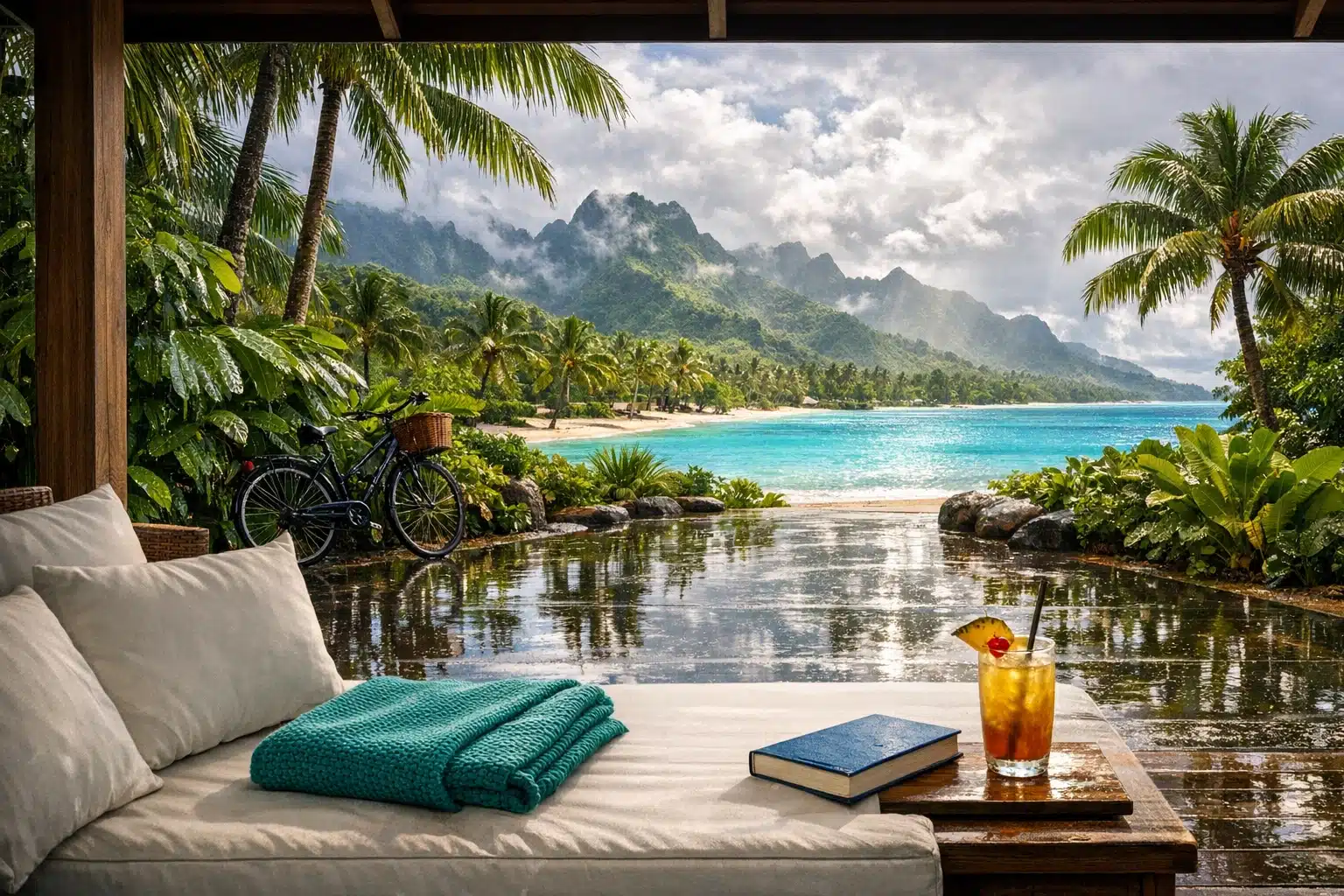
A classic slow day in Rarotonga can begin with breakfast facing the lagoon, drift into snorkeling in clear shallow water, pause for lunch under palms, and end with a quiet sunset walk while the mountains turn dark against a brilliant sky. Yet the island offers more than scenery. The Punanga Nui Market is one of the most popular local experiences for visitors interested in produce, crafts, casual food, and a more social side of island life. Cultural performances and island nights can add music, dance, and traditional cooking to the stay, offering context that a resort alone cannot provide.
Visitors who like moderate activity can mix in inland and coastal exploration. Popular options often include:
- Snorkeling trips or lagoon cruises
- Kayaking and stand-up paddleboarding
- Island bus rides for easy, low-stress sightseeing
- Cross-island hikes with a guide if conditions allow
- Café hopping, local dining, and market visits
Weather plays a strong role in planning. Rarotonga generally has a drier season from around May to October and a warmer, wetter season from roughly November to April. That does not mean one period is good and the other is bad; it means expectations should match conditions. The wetter months can still deliver excellent beach time, but humidity and brief heavy rain are more likely. Trade winds can also influence where swimming feels best on a given day. Over fourteen nights, these fluctuations become part of the rhythm rather than a disappointment, especially if your itinerary includes a mix of indoor and outdoor options.
It is wise to leave room for spontaneous adjustments. If the lagoon is especially calm, that may be the perfect morning for snorkeling. If showers arrive, it might become your market day, spa afternoon, or relaxed lunch outing. Long stays reward this kind of flexibility. They also reveal something charming about Rarotonga: the island does not perform for visitors in a rushed, theatrical way. It simply continues being itself. Sundays, for example, may feel quieter in line with local customs and community rhythms, and travelers who approach that with respect often enjoy a more authentic sense of place.
By the second week, many guests notice that they are no longer “using” the destination in a tourist sense; they are moving with it. That is when a resort holiday becomes more than an accommodation package. The reef, the road, the roadside fruit stalls, the evening air after sunset, and the reassuring familiarity of your chosen base all begin to connect. The island starts to feel less like a scene and more like a temporary home.
Budgeting, Booking Strategy, and Whether This Stay Suits Your Travel Style
A 14-night all-inclusive resort stay in Rarotonga is rarely the cheapest way to visit the South Pacific, but it can be one of the clearest ways to control costs while still enjoying a comfortable holiday. The key is understanding where the package creates value and where extra spending is still likely. Travelers are sometimes tempted to judge these trips only by the headline rate, yet a smarter comparison includes airfare, transfers, meals, drinks, activity access, and the convenience factor of having fewer daily decisions. Once those pieces are added together, a well-structured package can compare favorably with a room-only stay that looks cheaper at first glance.
Budgeting works best when separated into layers. Start with the core price: accommodation plus included meals and drinks. Then add the predictable extras such as flights, travel insurance, and any airport taxes or baggage fees not covered elsewhere. Finally, estimate discretionary spending. For many guests, that third layer includes spa treatments, one or two paid excursions, souvenirs, premium drinks, independent dining outside the resort, and transport if they rent scooters or use taxis regularly.
A practical budgeting checklist might include:
- Flight cost and routing flexibility
- Whether airport transfers are included
- Meal plan details and likely out-of-pocket dining expenses
- Alcohol policy and premium beverage surcharges
- Excursion budget for lagoon trips, guided activities, or diving
- Wi-Fi, laundry, tips where customary, and incidental purchases
Booking strategy matters too. Shoulder periods can sometimes offer a better balance of rate and weather than peak dates. Longer-stay promotions, meal upgrades, or resort credits may make a meaningful difference, particularly when spread across fourteen nights. Travelers should also examine cancellation terms closely. Flexible policies may cost a little more upfront, but they can be worthwhile when booking a long-haul trip that depends on international flights and seasonal conditions.
This kind of holiday suits several types of travelers particularly well. Couples who want a calm, scenic break with enough time to settle in often find two weeks ideal. Families can benefit from the predictability of meals and the ease of having a safe base between outings. Remote workers taking leave, retired travelers, and people celebrating a milestone anniversary may also appreciate the slower structure. On the other hand, travelers who crave constant nightlife, daily urban variety, or aggressive sightseeing may find two weeks on one island too gentle, even with excursions.
In the end, the appeal of a 14-night Rarotonga all-inclusive stay lies in its balance. It offers simplicity without necessarily feeling generic, and indulgence without requiring extravagance at every step. If your version of a successful holiday includes warm water, manageable logistics, familiar comforts, and enough time to stop watching the clock, this format is easy to understand. It does not promise perfection, and it does not need to. What it offers is something more believable: a chance to travel farther, slow down properly, and let a small island shape the pace of your days.
Conclusion for Travelers Considering a 14-Night Stay
For travelers who want more than a quick tropical snapshot, a 14-night all-inclusive resort stay in Rarotonga can be a well-judged choice. The extra time helps justify the long journey, softens the pressure to over-schedule, and makes the island’s quieter pleasures easier to appreciate. It also gives practical advantages, from better value per day to more flexibility if weather shifts or you simply want unplanned beach time. Most importantly, it allows you to choose a resort not just for appearances, but for how well it supports the kind of holiday you actually enjoy. If you value calm scenery, easy routines, and a destination that rewards slower attention, Rarotonga is likely to feel richer over two weeks than it ever could over a rushed long weekend.