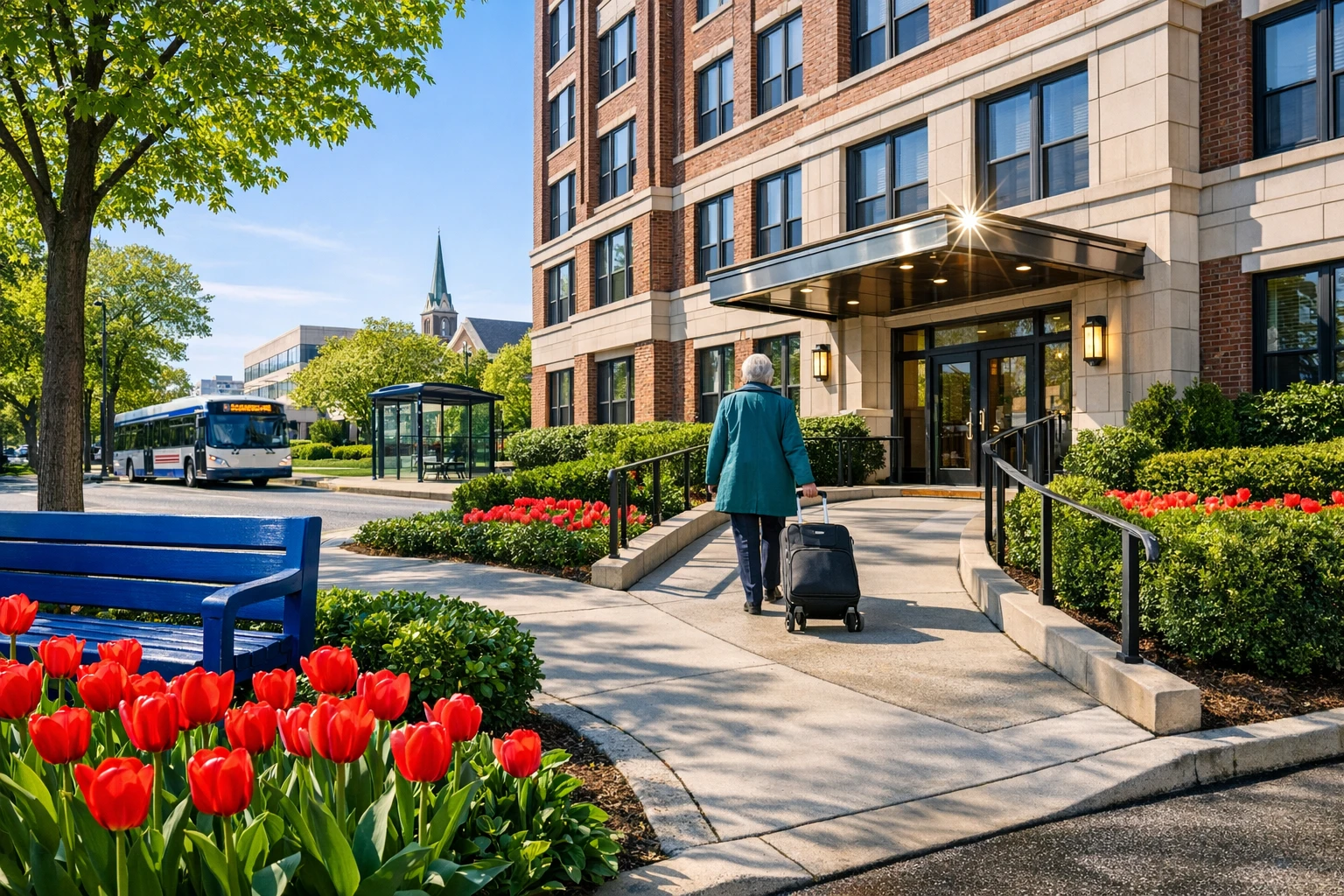
Section 8 Housing for Single Seniors: What to Know
For many single seniors, housing costs can feel like a slow leak in the monthly budget, draining peace as steadily as money. Section 8 rental assistance matters because it can lower rent pressure, support independence, and help older adults remain close to doctors, transit, and familiar neighborhoods. The challenge is that eligibility rules and waiting lists are not always easy to read at first glance. This article breaks the process into plain language, from qualification to vouchers to applications. If the system has seemed distant or confusing, this guide is meant to bring it within reach.
Outline
- The first section explains what Section 8 housing is, why it matters for single seniors, and how it compares with other affordable housing options.
- The second section looks at how a single senior could qualify for rental assistance, including income rules, family status, and local preferences.
- The third section describes how the Housing Choice Voucher Program works in everyday life, from rent calculations to inspections and landlord participation.
- The fourth section walks through the application process, the paperwork commonly required, waiting lists, and practical ways to stay organized.
- The final section offers a focused conclusion for single seniors who want to take sensible next steps without false expectations.
1. Understanding Section 8 Housing for Single Seniors
When people say “Section 8 housing,” they are often referring to federal rental assistance connected to the U.S. Department of Housing and Urban Development, usually called HUD. The most widely known form is the Housing Choice Voucher Program, which is run locally by public housing agencies, often called PHAs. A single senior can qualify as a one-person household, and in many cases that matters more than people realize. You do not need to be part of a large family to be considered for help. If you are 62 or older and living alone, the program may still apply to you, provided you meet the local eligibility rules.
For seniors, the importance of Section 8 is practical, not abstract. Many older adults live on fixed or limited incomes such as Social Security retirement benefits, Supplemental Security Income, pensions, part-time wages, or modest savings. Rent, however, does not care that a household is trying to stretch every dollar. It rises steadily, often alongside utility bills, insurance costs, and healthcare expenses. In that setting, rental assistance can function like a stabilizer on a bicycle: it does not remove every bump in the road, but it can help prevent a painful fall.
Section 8 is also relevant because it can offer flexibility. Unlike some housing programs that place a tenant in a specific development, the voucher model often allows the person to look for a qualifying private rental unit. That could mean an apartment near a bus route, a first-floor unit with fewer stairs, or a place closer to a pharmacy, family member, senior center, or medical clinic. The program does not guarantee a perfect unit, and available rentals can be hard to find, but it may expand choices compared with having no subsidy at all.
It helps to compare Section 8 with a few related programs:
-
Housing Choice Vouchers: The tenant searches for a unit in the private market, and the voucher helps pay the rent.
-
Public housing: The tenant lives in a property owned or managed by a housing authority.
-
Project-based rental assistance: The subsidy is tied to a specific building or unit rather than to the tenant.
For a single senior, that distinction matters. A voucher may offer mobility, while project-based help may offer access to a senior-focused building with supportive amenities. Neither option is automatically better; the right fit depends on health, budget, transportation, and local supply. What remains consistent is this: safe, affordable housing can make it easier to age with dignity, maintain routines, and keep daily life from shrinking under the weight of rent.
2. How a Single Senior Could Qualify for Rental Assistance
Qualifying for Section 8 as a single senior usually begins with a simple truth: age alone does not guarantee assistance, but age can place you in a category that local agencies recognize and sometimes prioritize. HUD generally treats an elderly household as one in which the head of household, spouse, co-head, or sole member is age 62 or older. A senior living alone can therefore count as both an elderly household and a one-person household. That status may affect deductions, waiting-list preferences, or placement within certain local programs, but it still works alongside income and documentation rules.
The biggest factor is usually income. Public housing agencies set income limits based on the area median income, often called AMI, for the county or metropolitan area. These limits vary widely by location. A senior with the same income might qualify in one city and not in another because rents and local income levels are different. In many cases, Section 8 serves households with very low income, and by law many new admissions are aimed at applicants at or below 30 percent of the area median income. That makes the program especially relevant for seniors who rely heavily on Social Security or SSI.
PHAs also review whether the applicant meets other baseline rules. A single senior may need to show:
-
Identity and age documentation
-
Citizenship or eligible immigration status, depending on household composition
-
Social Security information where required
-
Income records from benefits, pensions, or work
-
Rental history or contact information for prior landlords
Some seniors have an advantage not because the rules are softer, but because the rules recognize real-life costs. Elderly households may be able to receive certain deductions when adjusted income is calculated, especially for allowable medical expenses above the applicable threshold. That can make countable income lower than gross income, which may improve affordability and sometimes eligibility. In plain language, the system may look not only at what comes in, but at the fact that older adults often face healthcare costs that younger applicants do not.
Local preferences can also matter. Some PHAs give preference to applicants who are elderly, disabled, paying an unusually high share of income toward rent, homeless, or living in the jurisdiction. Preferences are not the same everywhere, and they do not override program limits, but they can shift how quickly an application moves once the list is open. A single senior should therefore think locally, not just federally. The national rules create the frame, but the local housing agency fills in many of the details. Calling the PHA directly and asking, “What preferences apply here?” can sometimes save weeks of confusion.
3. How the Section 8 Housing Choice Voucher Program Works in Everyday Life
The Housing Choice Voucher Program can seem mysterious until you picture its monthly rhythm. A public housing agency approves an eligible household, places it in the program when a voucher is available, and then helps pay part of the rent for a privately owned unit that meets program rules. The tenant is not handed a blank check, and the landlord is not free to name any price. Instead, the arrangement is built around income calculations, payment standards, rent reasonableness, and an inspection process designed to make sure the unit is safe and decent.
In general, a participating household pays about 30 percent of its adjusted monthly income toward rent and utilities, though actual amounts can vary depending on local rules and the unit selected. The voucher covers the rest up to an approved limit. If a unit is priced above the agency’s payment standard, the household may be allowed to choose it, but there are important limits. At the initial lease-up, many PHAs will not approve the unit if the tenant’s share would exceed 40 percent of adjusted monthly income. That rule is important for single seniors because it discourages renting a place that looks acceptable on day one but becomes hard to sustain by month three.
The unit itself must pass inspection under HUD housing quality standards or equivalent local standards. Inspectors usually look at key safety and habitability issues such as:
-
Working heat, water, and electricity
-
Functional doors, locks, windows, and smoke alarms
-
Reasonably sound floors, walls, and ceilings
-
A usable kitchen and bathroom
-
Absence of major health or safety hazards
Landlords also have a role. Many private owners can choose whether to accept vouchers, subject to state or local fair housing laws. Once they participate, the rent still has to be judged reasonable compared with similar unassisted units in the area. That matters because Section 8 is not supposed to overpay for a rental simply because a subsidy is involved.
One useful feature is portability. In many situations, a voucher holder may be able to move the assistance to another jurisdiction after following the program rules. For a senior, that could mean a chance to relocate closer to adult children, public transit, or specialized healthcare. Still, portability takes coordination, and it is not as instant as packing a suitcase and heading for the train station.
Compared with project-based subsidized housing, vouchers usually offer more choice but also require more searching. A senior in project-based housing may wait for one building and then stay put. A senior with a voucher may have more freedom, but must locate a landlord, submit paperwork, pass inspection, and complete recertifications. Neither path is effortless. The best description is that vouchers trade some certainty for some flexibility.
4. How to Apply for Section 8 and Prepare for the Waiting Process
Applying for Section 8 usually starts with finding the correct public housing agency. That may be a city housing authority, a county office, or a regional agency serving several communities. HUD provides online tools to locate agencies, and seniors can also ask a local Area Agency on Aging, a legal aid office, a social worker, a senior center, or a 211 referral line for help. The biggest surprise for many applicants is that not every waiting list is open all the time. Some lists open briefly, accept applications for only a few days, and then close again. Missing that window can delay the process significantly.
When the list is open, the application may be online, on paper, or both. A senior who is not comfortable with computers should not assume the process is out of reach. Many PHAs, libraries, nonprofit agencies, and community organizations offer assistance with forms. If internet access is a barrier, it is worth asking whether a paper application, in-person support, or reasonable accommodation is available.
Applicants are commonly asked for documents such as:
-
Photo identification
-
Birth certificate or other proof of age
-
Social Security award letters or SSI statements
-
Pension statements, bank records, or proof of other income
-
Current lease information and rent amount
-
Medical expense documentation if the agency uses it for income adjustments
After the initial application, many seniors enter a waiting list. Some lists are first come, first served; others use lotteries; others sort applicants by local preferences. Waiting times can range from months to years depending on the area. That is frustrating, but it is normal. The key is to stay reachable. If the agency sends a letter, email, or phone request and gets no response, an applicant may lose the spot. Updating address changes, phone numbers, and mailing contacts is not glamorous work, but it can be the difference between progress and starting over.
It is also wise to apply broadly where allowed. Some seniors apply not only to one voucher list, but also to public housing, senior apartments with project-based subsidies, rural housing options, or state and local rental programs. That layered approach can improve the odds of finding help sooner. One more caution is worth noting: legitimate housing agencies do not sell guaranteed voucher placements. Be wary of anyone demanding a large fee, promising immediate approval, or claiming inside access. In a process that already feels like a maze, scams often appear dressed as shortcuts. Real help is usually slower, plainer, and much less dramatic.
5. Conclusion for Single Seniors: A Practical Path Forward
If you are a single senior trying to make sense of Section 8, the most important takeaway is that this program can be meaningful help, but it works through rules, local limits, and patience rather than speed. The good news is that living alone does not exclude you. In fact, a one-person household can qualify, and older applicants may benefit from elderly household status, possible income adjustments, and local preferences. The harder truth is that demand is often high, open waiting lists can be brief, and finding a unit after receiving a voucher may still require persistence.
That means the smartest approach is not to wait for the process to become simple, but to become prepared. Preparation can include gathering identification, benefit letters, lease records, and medical expense documentation ahead of time. It can mean calling the local housing authority and asking specific questions instead of trying to decode every rule alone. It can also mean applying to more than one affordable housing option, because vouchers are only one part of the wider housing landscape.
For many seniors, housing decisions are deeply tied to health, routine, and independence. A cheaper apartment is not just a number on paper if it is near a bus line, a pharmacy, a familiar grocery store, or a trusted doctor. In that sense, Section 8 is about more than rent. It is about keeping daily life within reach, preserving choice where possible, and creating breathing room in a budget that may already be stretched thin.
A useful next-step checklist may look like this:
-
Find your local public housing agency and ask whether the waiting list is open
-
Ask what income limits and preferences apply to single seniors in your area
-
Collect key documents before you begin an application
-
Apply to other affordable housing programs at the same time when possible
-
Keep your contact information current after applying
There may not be a quick fix, and no honest guide should pretend otherwise. Still, for a single senior facing rising rent, Section 8 can be one of the most important doors worth knocking on. Even when the hallway feels long, understanding how the system works is the first solid step toward a more stable place to land.