Costco Water Heater Installation Pricing Explained
Introduction
Replacing a water heater rarely feels exciting, yet few home purchases affect daily comfort more directly. One cold shower is enough to turn a quiet appliance into an urgent budget question, especially when installation quotes seem to speak their own language. This guide breaks down how Costco water heater pricing is usually built, what members are actually paying for, and where costs can rise before the work begins. Read on, and the estimate starts to look less like a mystery and more like a map.
Article Outline
• How Costco water heater installation pricing is typically organized
• The main cost components that appear in a quote
• Why tank, tankless, gas, and electric models change the final price
• How member pricing may be structured, including promotions and add-on charges
• A practical conclusion for homeowners comparing estimates and planning a budget
How Costco Water Heater Installation Pricing Usually Works
When homeowners search for Costco water heater installation pricing, they often expect a single posted number, something as simple as a warehouse shelf tag. In practice, that is rarely how the process works. Water heater installation is usually arranged through local service providers or regional contractor networks, so the final quote reflects not only the appliance itself but also the conditions inside your home. Costco may be the starting point for the purchase journey, but the installed price normally depends on site-specific details such as fuel type, venting, access, and local code requirements.
This matters because a water heater is not a plug-and-play purchase in the way a microwave or toaster might be. A standard replacement in a garage with easy access can be much simpler than replacing an older unit tucked into a closet, attic, or finished basement. If the new heater matches the old one in size, fuel, and venting, the job is usually more predictable. If the project involves converting from tank to tankless, resizing gas lines, upgrading electrical service, or bringing old plumbing up to current code, the price can move quickly.
In broad U.S. market terms, many standard tank-style replacements land somewhere in the low four figures to mid four figures after labor and required materials are added. Tankless systems often cost more upfront because the equipment is pricier and the installation work can be more involved. These are only common market ranges, not universal Costco prices, and they can shift based on region, home layout, and the installer assigned to the job.
A typical pricing path often looks like this:
• Initial request or consultation
• Home assessment or review of the existing system
• Equipment recommendation based on size, fuel, and household demand
• Written quote showing standard installation and extra work if needed
• Scheduling, installation, inspection, and haul-away if included
For members, the key lesson is simple: the number on the estimate is usually a layered total, not a mystery surcharge. Think of it less like buying a box off a pallet and more like commissioning a compact utility project. The heater is the headline, but labor, compliance, and compatibility write much of the story. Once you understand that structure, Costco-related pricing becomes easier to evaluate against other bids from local plumbers or big-box programs.
Water Heater Installation Pricing and Components
The most useful way to understand water heater installation pricing is to separate the quote into its major components. Homeowners often focus on the appliance cost first, but the installed price is built from several layers. In many cases, the heater itself is only one part of the total. A fair estimate should make clear what is included, what is assumed, and what may trigger additional charges if the existing setup does not meet current requirements.
The first major component is the equipment cost. For a standard tank water heater, the unit price may range roughly from about $600 to $2,000 depending on brand tier, capacity, fuel type, warranty length, and efficiency level. Heat pump or hybrid electric models commonly start higher, often around $1,500 and moving upward. Tankless units may begin around $1,500 and climb well past $3,500 for larger or premium models. These ranges reflect common market conditions rather than fixed prices from any one retailer.
The second component is labor. A straightforward tank-to-tank replacement is usually the least expensive installation scenario. In many markets, labor for that kind of job may fall somewhere around $800 to $2,000, depending on complexity. Tankless installations, relocations, or conversions can rise well beyond that because they may involve venting changes, control setup, gas work, electrical upgrades, and longer installation time.
Other common price components include:
• Permit and inspection fees, which may range from around $50 to several hundred dollars depending on city or county rules
• Removal and disposal of the old unit
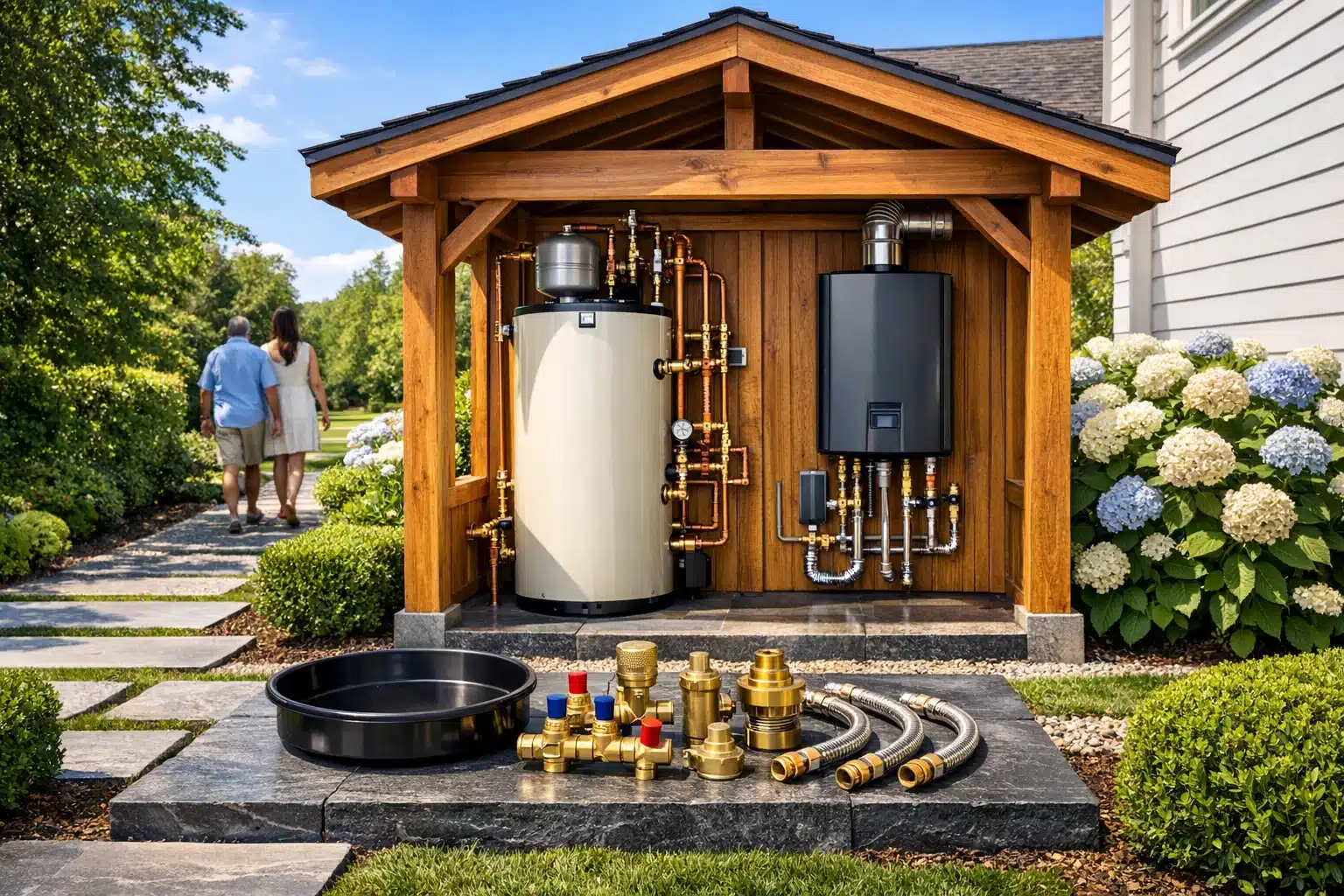
• Materials such as connectors, valves, pans, fittings, vent pieces, and insulation
• Code upgrades, including expansion tanks, seismic straps, drain pans, shutoffs, or updated venting
• Accessibility surcharges if the heater is in a difficult location
• Optional warranty upgrades or maintenance plans
Code-related items are especially important because they can surprise homeowners who are only comparing appliance prices. A home built years ago may have a water heater that was acceptable at the time but no longer matches current safety or plumbing standards. That can mean adding an expansion tank, replacing old supply lines, improving combustion air provisions, or installing a proper drain setup. None of these changes are glamorous, but they protect the system and often satisfy local inspection rules.
In short, pricing is usually structured as equipment plus installation labor plus required compliance work plus optional upgrades. Once you view the quote through that lens, line items stop looking random. They become the building blocks of a legal, safe, and functional installation, which is exactly what a homeowner should want from a major utility appliance.
Tank, Tankless, Gas, and Electric: Why Equipment Choice Changes the Quote
Two water heaters can both make hot water and still produce wildly different installation quotes. That is because the style of system and its energy source influence not only the equipment price but also the amount of labor and modification needed to make everything work safely. If the quote feels like it grew legs overnight, the reason is often found in the technology choice rather than in the contractor’s pen.
A standard storage tank water heater is usually the simplest and most affordable path when replacing an older unit with a similar model. For example, swapping a 40- or 50-gallon gas tank for another gas tank of similar dimensions is often the cleanest scenario. The plumbing connections may align more closely, the venting may remain similar, and the overall labor time is often shorter. Electric tank replacements can also be straightforward when voltage, amperage, and physical space already match the new unit.
Tankless units are different creatures entirely. They are compact on the wall, but the quote behind them can be bigger. A tankless system may require upgraded gas piping, special vent materials, a condensate drain, new electrical connections for ignition and controls, and precise sizing based on how many fixtures may run at once. In cold climates or larger households, sizing becomes especially important because a tankless heater must meet peak demand in real time rather than relying on stored hot water. That performance advantage can be attractive, but it often arrives with a higher installed cost.
Heat pump or hybrid electric models add another layer of comparison. They can be energy efficient, but they cost more upfront and may require sufficient air space, condensate management, and attention to room conditions. The homeowner may save on utility bills over time, yet the installation quote can still be higher than that of a conventional electric tank.
Here is a simple comparison framework:
• Standard tank replacement: usually lower upfront cost and simpler labor
• Tankless installation: higher equipment cost and more potential upgrade work
• Gas systems: may involve venting and gas-line considerations
• Electric systems: may involve circuit capacity, wiring, or panel issues
• Hybrid systems: higher initial price with potential efficiency benefits
For Costco members reviewing estimates, the takeaway is practical. The most budget-friendly quote is often the one that keeps the project closest to the home’s current setup. The moment the job shifts into conversion territory, pricing can climb because the installer is no longer just replacing a heater. They are reworking part of the home’s mechanical infrastructure, and that is where the bigger numbers usually begin.
Typical Cost Components of a Water Heater and How Pricing Is Structured for Members
For members, one of the biggest questions is not simply “How much does it cost?” but “How is the price built?” That distinction matters. Costco-related installation pricing is often easier to understand when you picture it as a stack of separate layers: appliance cost, standard installation, required accessories, permit-related items, and any home-specific upgrades. Some member offers may also include a promotional incentive, such as a Costco Shop Card or limited-time deal, but these programs can vary by location and by season, so they should be treated as possible benefits rather than guaranteed features.
A member quote may begin with a base system recommendation. That line usually reflects the chosen water heater model, its capacity, and its efficiency tier. Next comes standard installation, which may cover the expected labor for a routine replacement. The important detail is the word standard. Standard does not always mean complete for every home. It often assumes normal access, a similar replacement type, and no unusual code or mechanical issues. If the installer discovers corroded shutoff valves, noncompliant venting, outdated gas connectors, or a need for an expansion tank, those items may be added to the total.
A hypothetical member quote might look something like this:
• Water heater equipment: $1,100
• Standard installation labor: $1,000
• Permit and inspection: $150
• Expansion tank and related fittings: $200
• Vent adjustment or connector upgrade: $300
• Old unit removal and disposal: $75
• Promotional member credit or shop card value: minus $300
That example would place the effective total at $2,525 before any applicable taxes or financing costs. The point is not the exact number. The point is the structure. A member may see a useful incentive attached to the purchase, but the real savings should be evaluated against the full installed price, not against the equipment cost alone.
When reviewing a Costco-associated quote, members should ask clear questions:
• Does the price include permit fees?
• Is haul-away included?
• Are code upgrades already built in or billed separately?
• What defines standard installation?
• Is the quoted model sized correctly for household demand?
• Are there financing terms or warranty options that change the final cost?
This is where good pricing becomes less about the sticker and more about transparency. A quote that is slightly higher but clearly itemized can be more valuable than a lower number with vague exclusions. For homeowners, especially members comparing service programs, clarity is money. It prevents surprise charges, reduces confusion on installation day, and makes the final invoice feel earned rather than improvised.
Conclusion for Homeowners: How to Compare Quotes and Budget With Confidence
If you are a homeowner trying to make sense of Costco water heater installation pricing, the smartest move is to compare proposals as complete systems, not as isolated headline numbers. A lower quote can look attractive until you discover it excludes permits, haul-away, code corrections, or key accessories. By contrast, a more detailed estimate may initially seem higher but actually represent a more realistic total. In home improvement, the cheapest door is sometimes the one that opens into extra costs.
Start by identifying your replacement scenario. Are you swapping a similar tank for a similar tank, or are you considering a bigger change such as tankless or hybrid technology? The answer will drive both price and complexity. A straightforward replacement is often the easiest path for homeowners focused on keeping upfront costs manageable. A more advanced system may offer performance or efficiency advantages, but the installation can require mechanical updates that raise the initial investment.
It also helps to approach the decision with a short checklist:
• Confirm the heater size matches household usage
• Ask whether the quote includes permits and inspection
• Review labor, materials, and disposal charges separately
• Check for required code upgrades before approving the work
• Weigh any member promotion against the true installed total
• Compare warranty coverage and service responsiveness, not just price
For Costco members specifically, the value often lies in convenience, contractor coordination, and the possibility of member-oriented incentives, not necessarily in a universal lowest price. That is an important distinction. A solid installation program can still be worthwhile if it offers clear documentation, licensed labor, and a quote structure that helps you understand exactly what you are buying.
In the end, this topic matters because hot water is one of those quiet comforts you only notice when it disappears. Taking time to understand pricing before the emergency hits can save money, stress, and rushed decisions. For households replacing an aging unit or preparing for a remodel, the best strategy is simple: ask for line-item detail, compare like for like, and treat the installed price as the real number that counts. Once you do that, water heater shopping becomes less of a scramble and more of a well-managed household decision.