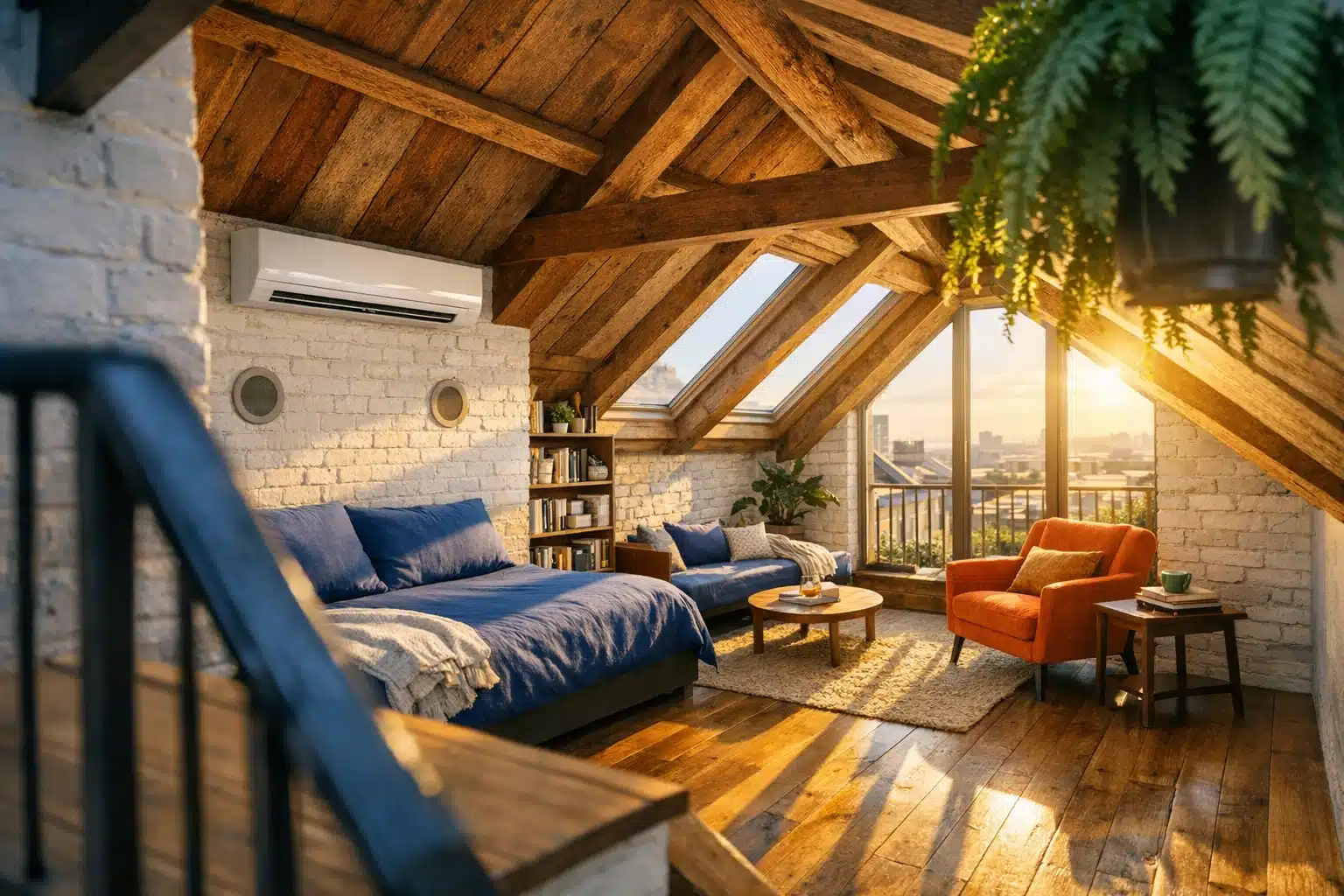
Air Conditioning System Without Outdoor Unit 2026
Outline and Why This Topic Matters in 2026
Choosing an air conditioning system is no longer just about cooling a room; it is about preserving quiet, saving energy, and fitting comfort into real homes with real limits. In 2026, ductless and no-outdoor-unit systems matter because many apartments, renovated houses, and protected buildings cannot accept visible condensers. This article explores how these modern setups improve daily living, where they work best, and what homeowners should weigh before buying. If summer has ever turned your bedroom into a restless box of warm air, the details ahead will feel immediately useful.
Residential cooling has become a more nuanced subject for one simple reason: homes are different, but comfort expectations are rising. Some families need cooling in a single attic room that turns into an oven by late afternoon. Others need a full-home strategy that avoids tearing open walls for ducts. In many urban buildings, the challenge is even tighter. Exterior rules, noise complaints, balconies with limited space, and heritage restrictions can all make a standard outdoor condenser impractical. That is why two categories are drawing attention in 2026: ductless AC units, which avoid bulky ductwork, and air conditioning systems without an outdoor unit, which remove the exterior condenser altogether.
The article follows this roadmap:
- First, it explains how ductless AC units improve residential comfort in practical day-to-day terms.
- Second, it defines what an air conditioning system without an outdoor unit actually is, since the phrase is often misunderstood.
- Third, it compares benefits, limitations, and cost considerations for both options.
- Fourth, it gives buying guidance for homeowners, renovators, apartment residents, and anyone planning a 2026 upgrade.
This distinction matters because comfort is more than a thermostat number. A home that feels pleasant usually balances several factors at once: temperature, humidity, noise, airflow, and control. A unit that cools quickly but rattles all night may solve one problem and create another. A system that is beautifully hidden but expensive to run may look smart on paper and disappoint in August. The better choice depends on building type, climate, room usage, insulation quality, and budget. By understanding how ductless systems and no-outdoor-unit systems differ, homeowners can make decisions that match how they actually live rather than how a brochure imagines they live.
How Ductless AC Units Improve Residential Comfort
Ductless AC units, commonly called mini-splits, improve residential comfort by focusing on precision rather than brute force. Instead of pushing conditioned air through long duct runs, they deliver cooling directly to the rooms that need it. That alone changes the experience of a home. Bedrooms can stay cool at night without overcooling the kitchen. A home office can remain crisp during the afternoon while unused spaces rest at a milder setting. In everyday life, this kind of zoning feels less like machinery and more like customization.
One of the clearest advantages is steadier temperature control. Many modern ductless systems use inverter-driven compressors, which can adjust output gradually rather than switching fully on and off in abrupt cycles. That smoother operation helps prevent the familiar pattern of a room becoming chilly, then stuffy, then chilly again. It also supports better humidity removal when the system is properly sized. HVAC professionals often warn that oversized equipment can short cycle and reduce dehumidification, leaving the air cool but clammy. A correctly selected ductless unit can help avoid that muggy feeling that makes summer discomfort linger even after the temperature drops.
Noise reduction is another major comfort upgrade. Indoor heads on quality mini-splits often operate very quietly on lower fan settings, with some models reaching sound levels comparable to a whisper or a quiet library. That matters in bedrooms, nurseries, and study spaces where background noise shapes how a room feels. Traditional window units may cool effectively, but they often sound like an appliance doing battle with the wall. A ductless system usually feels calmer, and calm is part of comfort.
Ductless units also allow room-by-room control, which can translate into both convenience and savings. Common comfort gains include:
- Different temperatures for sleeping areas and living spaces.
- Less wasted cooling in guest rooms or storage areas.
- Fast response for rooms that heat up quickly from sun exposure.
- Cleaner aesthetics than window units blocking light and views.
There is an important clarification, though. A ductless mini-split is typically not an air conditioner without an outdoor unit. Most ductless systems still use an outdoor condenser connected by refrigerant lines to one or more indoor units. Even so, they remain highly attractive for homes without existing ducts. They avoid the energy losses associated with leaky ductwork, simplify retrofits, and often improve comfort in additions, converted garages, lofts, and older houses where installing full duct systems would be invasive. If central air feels like renovating half the house just to cool it, ductless technology often feels like the more elegant answer.
What an Air Conditioning System Without Outdoor Unit Actually Means in 2026
The phrase air conditioning system without outdoor unit sounds straightforward, yet it often causes confusion. Many people assume it refers to any compact or ductless system, but technically that is not correct. A true no-outdoor-unit air conditioner is designed so that the refrigeration components are contained indoors, usually within a single packaged body or in a configuration that avoids a visible external condenser. In 2026, the most common versions in residential settings are monobloc wall-mounted systems, through-wall packaged units, and certain specialized water-cooled designs used where exterior placement is restricted.
A monobloc unit is one of the clearest examples. Instead of splitting the system between indoor and outdoor sections, the compressor and heat exchange components sit inside the home-facing unit. The system still needs to reject heat, so it usually relies on air intake and exhaust through wall openings or discreet grilles. That means it avoids an outdoor condenser box on a balcony, façade, or pad, but it does not eliminate the laws of physics. Heat must still leave the building somehow. The benefit is architectural and practical: the outside view remains cleaner, building rules may be easier to satisfy, and installation can be possible in places where a standard split system would never receive approval.
These systems are especially relevant in buildings with restrictions such as:
- Historic or protected façades.
- Apartment blocks with strict exterior appearance rules.
- Properties with no safe or legal place for a condenser.
- Urban homes where noise complaints or space limits are major issues.
The trade-off is that no-outdoor-unit systems often face tougher efficiency and noise challenges than well-designed split systems. Because more of the mechanical work happens indoors, sound management becomes critical. Many 2026 models have improved with better insulation, variable-speed fans, and smarter controls, yet they may still be louder than a premium ductless mini-split. Their efficiency can also be lower in some cases, particularly in very hot climates, because it is harder to separate the heat-rejection process from the occupied space as neatly as a traditional split system does.
Still, the category has genuine value. For a homeowner in a listed building, or a flat owner barred from placing equipment outside, a no-outdoor-unit air conditioner can be the difference between having practical cooling and having none at all. It is less a universal replacement for every system and more a clever solution for buildings with real-world constraints. In that sense, it serves a modern need beautifully: comfort that respects architecture instead of fighting it.
Benefits, Trade-Offs, and Key Comparisons for Homeowners
When comparing ductless AC units with systems that have no outdoor unit, the smartest approach is to stop looking for a universal winner and start matching the system to the building. Both options can improve comfort, but they do so under different conditions. Ductless mini-splits usually lead on efficiency, zoning, and quiet operation. No-outdoor-unit systems usually lead on exterior appearance, planning flexibility, and installation suitability in buildings where outdoor equipment is restricted. The right answer depends on what problem needs solving.
From an energy standpoint, ductless mini-splits are often the stronger choice. Their split design lets the noisier, heat-rejecting equipment stay outside, which tends to support better performance. Many modern mini-splits are engineered for high seasonal efficiency and can maintain comfort with modest electricity use when sized and installed correctly. They also avoid duct losses, which can be significant in older or poorly sealed duct systems. For homeowners replacing window units or baseboard-plus-portable combinations, the difference can feel dramatic in both comfort and utility bills.
No-outdoor-unit systems, by contrast, often win where installation barriers are more important than pure efficiency. If a building manager refuses façade changes, or if a conservation rule blocks condenser placement, then theoretical efficiency becomes secondary to practical feasibility. These systems also offer a tidier external appearance, which matters to people who care deeply about the visual character of a home. A sleek wall-mounted indoor unit with discreet vents can preserve the outside of a building in a way a standard condenser cannot.
The most useful comparison points are often these:
-
Ductless mini-split: usually quieter indoors, often more efficient, ideal for zoning, but requires outdoor equipment.
-
No-outdoor-unit system: preserves the exterior, fits restricted properties, but may produce more indoor sound and can be less efficient in demanding conditions.
-
Window or portable AC: lower initial cost in some cases, easier to move, but generally noisier, less elegant, and often weaker on long-term comfort.
Cost also needs a wider lens. Upfront price is only one layer. Installation complexity, electrical upgrades, maintenance access, filter cleaning, service availability, and operating costs all matter. A cheaper system that struggles through every heat wave may cost more in frustration than it saves in cash. Likewise, a premium ductless installation may be hard to justify if only one compact room needs occasional cooling. Homeowners should ask how often the room is used, how hot it gets, whether humidity is a problem, and whether the property can legally and physically accept exterior equipment. Once those answers are on the table, the comparison becomes much clearer.
How to Choose the Right Option in 2026 and Final Thoughts for Homeowners
If you are choosing between a ductless AC unit and an air conditioning system without an outdoor unit in 2026, begin with the building rather than the catalog. The room size matters, but the envelope matters more than many buyers expect. Insulation levels, window quality, sun exposure, ceiling height, air leakage, and occupancy patterns can all affect cooling performance. That is why reputable installers still perform load calculations instead of recommending equipment by guesswork. A unit that is too small may struggle all afternoon. A unit that is too large may cool quickly, shut off too soon, and leave humidity behind like an unwanted guest who refuses to leave the party.
Think about your living pattern as well. A family that wants whole-home zoning will often benefit most from a multi-zone ductless system, especially in houses without existing ducts. A flat owner with one overheating living room and strict exterior rules may be better served by a no-outdoor-unit monobloc model. Renters may need options that are less invasive and easier to approve. Owners planning a major renovation may have more flexibility to install wiring, drainage, and wall penetrations in a cleaner way from the start.
When evaluating products, prioritize features that support real comfort rather than flashy marketing. Helpful features in 2026 include:
- Inverter-driven operation for steadier temperatures.
- Programmable schedules and smart app control.
- Sleep modes with lower noise and gentler airflow.
- Washable or easy-access filters for simpler maintenance.
- Good service support and clear warranty terms.
- Refrigerants and designs aligned with newer environmental standards.
Maintenance should never be an afterthought. Even the best system loses its edge if filters clog, condensate drains block, or coils become dirty. Homeowners should also confirm who will service the unit locally, since a sophisticated product is only as reassuring as the technician who can maintain it in July.
For the target audience of this topic, the conclusion is practical and reassuring. If your home can accept outdoor equipment and you want the strongest blend of quiet, efficiency, and zoning, ductless mini-splits remain one of the most comfortable residential cooling options available. If your property cannot host a condenser outside, a modern air conditioning system without an outdoor unit can still deliver meaningful relief while respecting architectural or legal limits. The best 2026 cooling decision is not the trendiest one; it is the one that fits your home, your daily routine, and the kind of summer you actually have to live through.