Portable Swimming Pools: Options, Costs, and What to Consider Before Buying
Introduction and Article Outline
A portable pool can transform a quiet backyard into the place where summer naturally gathers, but buying one without a plan often leads to extra costs and quick regret. Ground level, filter strength, sun exposure, storage space, and local safety rules all influence whether a model feels convenient or becomes a chore. The good news is that the market now offers choices for small patios, family yards, and tighter budgets alike. Before you click Buy Now or rush into a seasonal sale, it helps to understand what you are really paying for.
Portable swimming pools sit in an interesting middle ground between a permanent in-ground installation and a basic children’s splash pool. For homeowners who want flexibility, renters who may move, or families who prefer seasonal use, that middle ground can be very attractive. Many models can be assembled in a single afternoon, drained when the weather cools, and stored until the next warm season. That convenience is the headline benefit, but it is not the whole story. A larger portable pool still needs stable ground, regular water treatment, safe access, and enough surrounding space for people to move around it comfortably.
This topic matters now because buying patterns for seasonal products are heavily influenced by weather, shipping, and stock availability. When the first heat wave hits, selection often narrows quickly. The opposite is also true: waiting until end-of-season sales can lower prices, but it may leave you choosing from leftover sizes and fewer accessory bundles. In other words, the smartest time to buy is not a universal date on the calendar. It depends on your climate, your urgency, and how much compromise you are willing to accept.
To keep the decision practical, this article follows a clear outline:
- How the main setup options differ in assembly time, durability, and maintenance.
- What size changes really mean for footprint, water volume, and day-to-day use.
- Whether buying now makes financial sense compared with waiting for another season.
- Which hidden costs can turn a cheap purchase into an expensive one.
- What to review before purchasing so the pool suits your yard, household, and local rules.
Think of this guide as a walk around the backyard before the pool arrives. It is much easier to answer practical questions now than while standing over several unopened boxes on a hot afternoon. A portable pool can be a smart buy, but only when the pool fits the space, the people using it, and the amount of maintenance you are realistically willing to handle.
Setup Options: Which Type of Portable Pool Fits Your Backyard?
The phrase portable swimming pool covers several very different products, and the setup experience can range from a ten-minute inflation job to a more serious half-day project with leveling, frame assembly, and filtration hookup. Choosing the right format is the first major decision because it shapes nearly everything that follows, including price, durability, comfort, and storage.
The most basic option is the inflatable family pool. These are usually shallow, inexpensive, and aimed at cooling off rather than real swimming. They are easy to move, simple to store, and often attractive for households with small children who want supervised water play. The trade-off is obvious: inflatable walls are more vulnerable to punctures, sunlight gradually weakens the material, and filtration is often minimal or absent. For buyers who want an occasional splash zone, that may be enough. For buyers picturing daily use across an entire summer, it can feel temporary very quickly.
Next are ring-top or quick-set pools. These use an inflatable top ring and fill into shape as water rises. They are usually deeper and more structured than basic inflatable pools, yet still simpler to assemble than rigid frame designs. Setup can often be done in under an hour once the ground is prepared. They work well for families who want more water volume without the heavier commitment of a framed system. However, they still depend heavily on a flat base, and the soft sidewalls are not as confidence-inspiring as steel or resin supports.
Frame pools are the most common step up for serious seasonal use. They use metal or reinforced composite supports, stronger liners, and pump-and-filter systems that are better suited to regular maintenance. These pools may take two to six hours to assemble, especially in larger sizes, but the stability difference is significant. Many families choose them because they feel closer to a real backyard pool experience rather than a temporary toy. If someone in your household wants to float, play games, or spend long afternoons in the water, this category often hits the sweet spot between cost and usability.
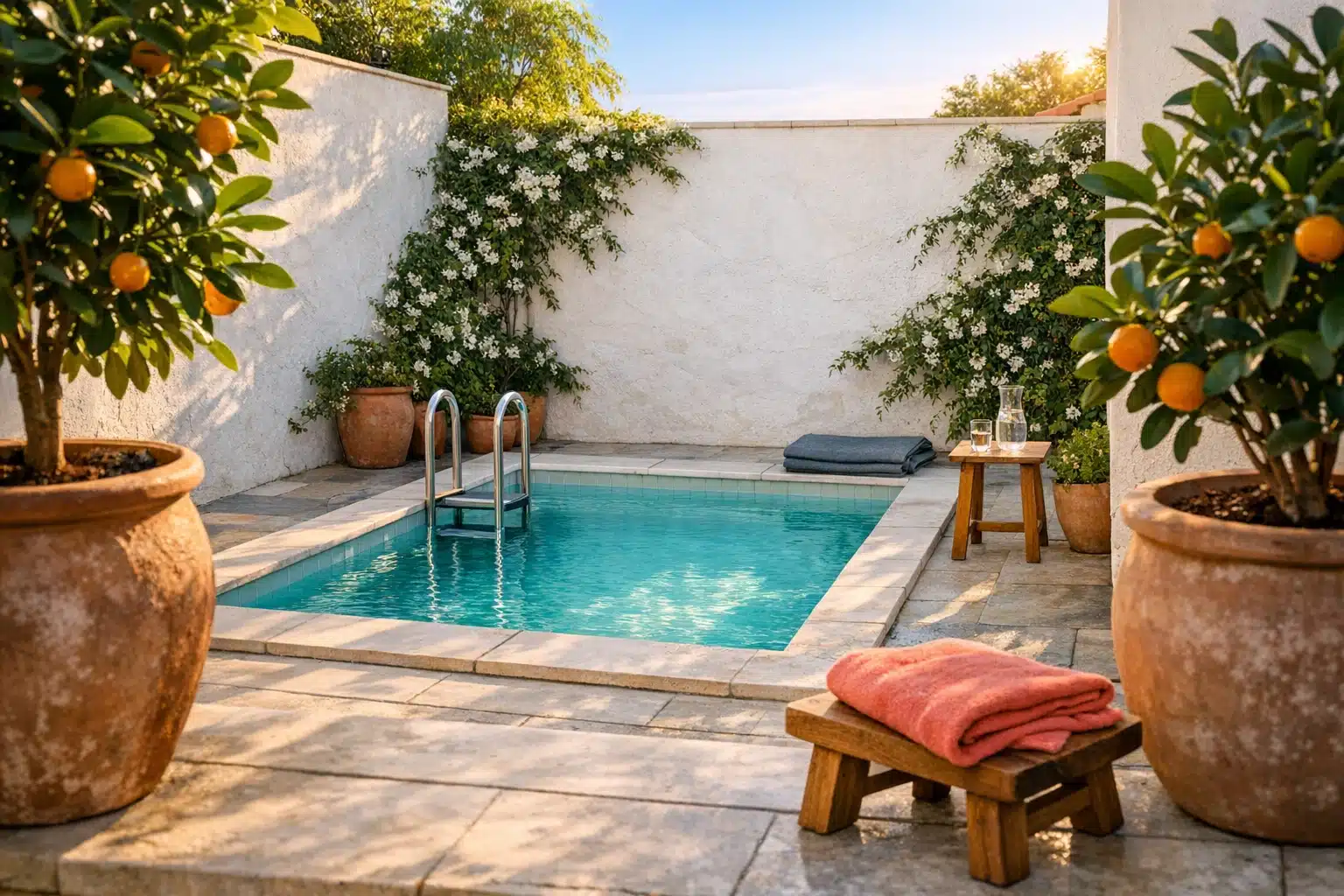
There are also compact plunge-style and modular portable pools, which may be smaller in surface area but deeper or more premium in construction. Some are designed for relaxation, cooling, or hydrotherapy-style use rather than active play. These can make sense in smaller yards where every square foot matters. They often cost more upfront and may require more careful plumbing, electrical planning, or reinforced bases.
- Choose inflatable models for low cost, easy storage, and very casual use.
- Choose quick-set pools for fast installation and moderate family use.
- Choose frame pools for stronger durability and a fuller summer setup.
- Choose compact plunge styles when space is tight but comfort matters.
The right setup option is less about what looks exciting online and more about how you plan to live with it once the novelty wears off. A pool that is simple enough to maintain will usually deliver more value than a larger one that becomes a burden after the first few weekends.
Size Differences: Footprint, Depth, Water Volume, and Real-Life Usability
Size is where many shoppers make an emotional decision instead of a practical one. A bigger pool seems like the obvious upgrade, but every jump in diameter or wall height changes setup difficulty, water use, chemical demand, and how much of the yard you lose for the season. Before comparing dimensions, it helps to think in terms of actual use. Are you buying for toddlers who need shallow supervised play, school-age children who want room to move, adults who want to cool off after work, or a mix of all three?
Small portable pools, often under 10 feet wide and under 30 inches deep, are best for light use and compact spaces. They are easier to fill, easier to drain, and easier to cover. They also place less stress on the ground, which matters more than many people realize. Water is heavy. One gallon weighs about 8.34 pounds, so a pool holding 1,500 gallons places more than 12,000 pounds in one area before you even add people, a ladder, or accessories. That single fact explains why level ground is not a suggestion; it is essential.
As sizes increase, the experience changes quickly. A 12-foot round frame pool may hold roughly 1,700 to 2,500 gallons depending on wall height and recommended fill level. A 15-foot model can move into the 4,000 to 5,500 gallon range. Some larger rectangular versions hold even more while using space differently. Rectangular pools often feel better for active play because they give users a longer line of movement, but they also demand a more carefully prepared footprint. Round pools usually distribute pressure well and can feel more natural in open lawns.
Depth matters almost as much as width. A shallow pool warms more quickly and is often easier for younger children to enjoy under close supervision. A deeper one may feel more satisfying for adults, but it increases water volume, maintenance time, and safety demands. Entry and exit become more important too, especially for older relatives or anyone with limited mobility. What seems like a modest height increase on a product page can translate into a very different daily experience.
- Small sizes are easier to maintain and better for tight yards.
- Mid-range sizes balance cost, comfort, and manageable upkeep.
- Larger models offer more freedom but demand stronger planning.
- Round shapes suit many lawns, while rectangular pools maximize usable swim space.
Leave room around the pool as well. You need space for walking, cleaning, pump access, and safe entry. Buyers sometimes measure only the pool itself and forget the ladder, hose routing, protective ground cloth, and clearance around the edges. The smartest size is rarely the largest one your yard can technically hold. It is the one your yard can support comfortably without turning the rest of the backyard into a narrow obstacle course.
Is This the Smartest Time to Buy? Timing, Costs, and the Full Ownership Picture
Whether this is the smartest time to buy a portable swimming pool depends on what matters most to you: price, selection, speed of delivery, or readiness for the season. There is no single perfect buying window, but there are clear patterns that can help you avoid frustration and overspending.
Buying before peak warm-weather demand usually gives you the widest selection. Early spring is often the moment when retailers still have the broadest mix of sizes, shapes, filter packages, covers, and ladders. If you want a specific footprint or a model that fits a carefully measured space, shopping early makes sense. It also leaves time to prepare the ground, test hoses and pumps, and solve small issues before the hottest days arrive. For households with children, that preparation window can be worth more than a modest discount.
Waiting for mid-season can be risky. Once hot weather arrives, popular models may sell out quickly, and replacement pumps, liners, and skimmer accessories can become harder to find. Prices do not always drop when demand is strongest. In some markets, the opposite happens: fewer units remain, and buyers end up paying regular or elevated prices simply because they waited too long.
End-of-season sales can deliver strong value, especially for buyers willing to store the pool and use it next year. Late summer and early autumn often bring markdowns on large seasonal items. The catch is that your choices may be narrower, and you may need to buy accessories separately. A discounted pool is not automatically a bargain if it arrives without a suitable pump, ladder, cover, or repair kit.
The real cost is also larger than the box price. A portable pool usually comes with related expenses such as:
- Ground cloths, pads, or leveling materials.
- Filters, replacement cartridges, or sand for the filtration system.
- Water testing supplies and sanitizer chemicals.
- Covers, leaf nets, and cleaning tools.
- Electricity for pumps and possible water top-offs due to evaporation or splash-out.
In broad terms, small inflatable pools may cost very little upfront, while sturdier frame pools can range from a few hundred dollars into the low thousands depending on size and included equipment. Those numbers vary by region and season, but the pattern is consistent: durability and filtration quality tend to raise the initial price while lowering some day-to-day frustration.
So is now the smartest time to buy? If you want maximum choice and enough time to set things up properly, buying before the rush is usually the smartest move. If your main goal is bargain hunting and you can wait, post-season shopping may serve you better. The wrong time is usually the panic purchase made during the first brutal heat spell, when everything feels urgent and the best options are already half gone.
What to Review Before Purchasing and a Final Verdict for Backyard Buyers
Before purchasing any portable pool, review the details that affect ownership after the first exciting weekend. Product photos tend to show sparkling water, wide lawns, and effortless family fun. Real life includes leveling the base, testing the water, storing accessories, and keeping the area safe. A few careful checks can prevent the most common regrets.
Start with the yard itself. Measure not just the spot where the pool will sit, but also the clearance around it. Look for low areas where rain collects, tree cover that drops debris, and sloped ground that could create uneven pressure on the walls. If the chosen location receives all-day sun, the water may warm faster, which many people enjoy, but that can also increase evaporation and place more strain on the liner over time. Shade keeps water cooler and may reduce some wear, yet it can also leave the pool less inviting in mild weather. There is no perfect placement, only a set of trade-offs.
Then review practical questions about use:
- Who will use the pool most often, and what depth suits them safely?
- How much time can you realistically devote to cleaning and water care each week?
- Do local rules require fencing, barriers, or specific ladder removal practices?
- Will you need a stronger extension of water or power access nearby?
- Can the pool be drained responsibly without damaging your lawn or flooding another area?
Check the equipment package carefully. Some pools look affordable until you realize the included pump is undersized or the cover is sold separately. Read warranty terms, liner thickness details, replacement-part availability, and return conditions. If a component fails mid-season, getting a compatible replacement quickly matters more than a small initial saving. A repair patch included in the box is useful, but clear access to replacement valves, filters, and hoses is even more important.
Storage deserves attention too. A truly portable pool should be portable at the end of the season, not just on the day you buy it. Large liners are heavy when dry and awkward when folded. Frames need clean storage to prevent corrosion or cracking. If your garage or shed is already crowded, a giant seasonal pool may be less convenient than it first appears.
For the target audience here, the best buyer is not the person chasing the biggest possible pool, but the one matching the pool to the backyard, the household routine, and the budget for maintenance. Families with children often do well with mid-size frame pools that balance sturdiness and cost. Small-space buyers may be happier with compact plunge or shallow lounge-style models. Bargain hunters should compare seasonal discounts against accessory quality instead of focusing on headline price alone.
In short, a portable swimming pool can be an excellent backyard upgrade when you approach it with clear measurements, realistic expectations, and a full view of operating costs. Buy early if you want choice and setup time. Buy later if savings matter more and you are comfortable with limited stock. Either way, the smartest purchase is the one that still feels sensible after the water bill, the filter cleaning, and the first windy afternoon have all arrived.