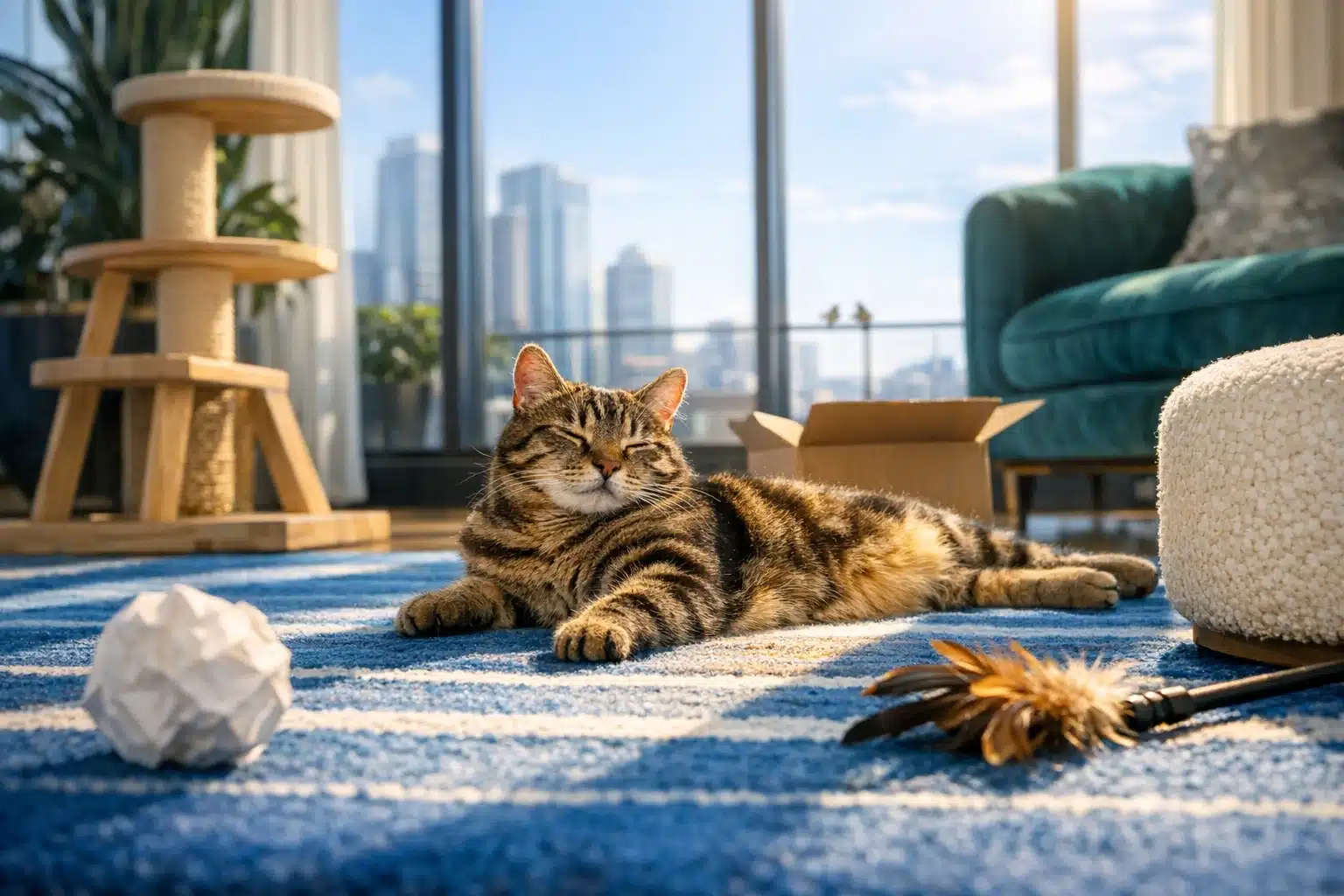
 Artificially generated image
 7 Signs That Show Your Cat Is Perfectly Happy
Introduction and Outline: Why Feline Happiness Is Worth Learning
Living with a cat can feel like sharing a home with a polite mystery: one moment your companion is curled in a sunbeam, the next it is racing down the hallway for reasons known only to cats. Because felines communicate through subtle signals, many owners wonder whether quiet behavior means comfort, boredom, or strain. Learning the signs of contentment helps you respond better, build trust, and notice early changes that may point to discomfort or illness.
A happy cat is not always a noisy, cuddly, constantly playful cat. Personality matters. Some cats are social butterflies that greet every visitor as if they are hosting a party, while others prefer a smaller circle and show satisfaction through calm routines rather than dramatic displays. What matters most is the overall pattern. When you look at body language, appetite, grooming, sleep, play, and social behavior together, you get a much more reliable picture of emotional wellbeing. That is useful not only for new cat owners, but also for experienced caregivers who want to notice subtle changes before they become larger problems.
This article is organized as a practical guide. First, it outlines the seven signs, then it explores them in depth with comparisons and real-life context. The signs are:
– Sign 1: relaxed body posture
– Sign 2: soft, friendly tail, ear, and eye signals
– Sign 3: contented vocal sounds and gentle purring in the right setting
– Sign 4: playful energy and healthy curiosity
– Sign 5: affectionate social behavior and trust
– Sign 6: steady self-care, appetite, and normal daily habits
– Sign 7: deep rest and confident use of the home environment
Think of these clues as pieces of a puzzle rather than a single pass-or-fail test. One sign on its own may simply reflect mood in the moment, but several appearing together often paint a clear picture: your cat feels safe, secure, and comfortably at home. That, in feline terms, is a very big compliment.
Signs 1 and 2: Relaxed Posture and Soft Body Language
The first two signs of a happy cat are often visible before any meow, purr, or playful leap. They show up in posture and in the smaller details of body language. A content cat usually looks physically loose rather than tightly wound. Muscles appear soft, movement seems fluid, and the animal can settle into different positions without scanning every corner of the room. You may see the classic loaf position with paws tucked under the body, a side sprawl in a warm patch of light, or a comfortable stretch that seems almost theatrical. These poses suggest ease. By contrast, a tense cat often crouches low, holds the body tightly, or remains poised for immediate retreat.
Now look at the details. Happy cats commonly carry the tail upright when greeting a trusted person, sometimes with a slight curve at the tip that resembles a question mark. This tail position is widely recognized as a friendly social signal. Ears are usually neutral or gently forward, not flattened sideways or pinned back. Eyes may appear soft, with normal blinking rather than wide, fixed staring. One of the most charming clues is the slow blink. When a cat narrows the eyes and blinks at you in a calm setting, it often indicates comfort and trust. Many owners return the gesture, and some cats respond in kind, turning a silent moment into a tiny conversation.
Whiskers also tell a story. In a relaxed cat, whiskers tend to sit naturally to the side rather than thrust sharply forward in intense excitement or pulled tightly back in fear. Even the pace of movement matters. A content feline walking through the house tends to move with unhurried confidence, not with the stop-start caution of an animal that feels uncertain. Picture the difference between a guest tiptoeing through a stranger’s home and a resident heading toward the kitchen because dinner is expected soon.
There are useful comparisons here. Belly exposure can suggest trust, but it is not always an invitation for petting. A cat may roll onto its back because it feels safe, while still preferring admiration over touch. Similarly, puffy fur, a rapidly lashing tail, flattened ears, and dilated pupils usually point away from happiness and toward overstimulation, fear, or irritation. In other words, a happy cat usually looks open, balanced, and quietly self-assured. When the body says, “I can relax here,” that is one of the clearest signs that life feels good from the cat’s point of view.
Signs 3 and 4: Pleasant Sounds, Playfulness, and Everyday Curiosity
People often assume that purring is a perfect synonym for happiness, and while it can be a wonderful sign, the truth is more nuanced. Cats may purr when they are relaxed, when they are greeting a favorite person, or when they are kneading a blanket as though they have rediscovered kittenhood. Yet purring can also appear during stress, pain, or recovery, which is why context matters. If your cat is purring while leaning into your hand, blinking slowly, and resting in a loose posture, that combination strongly suggests contentment. If the same sound appears alongside hiding, reduced appetite, or lethargy, it deserves a closer look.
Beyond purring, happy cats often make other pleasant sounds. Many use trills or chirps as social greetings, especially when they notice a familiar person entering the room. Some give a short, bright meow that seems less like a demand and more like commentary. It is as if the cat is saying, “I see you. That is all. Carry on.” These vocal patterns differ from distressed yowling, repetitive calling, or sharp growls that signal discomfort or conflict. Tone, frequency, and body language all work together.
Play is another major sign of wellbeing. A cat that still enjoys chasing a feather wand, batting a toy mouse, stalking a paper ball, or launching a controlled ambush from behind a chair is displaying healthy engagement with its environment. Play matters because it taps into natural hunting behavior. Even adult cats, including quiet indoor ones, benefit from small bursts of predatory-style activity. A happy cat is often willing to investigate movement, solve simple toy puzzles, and explore new objects with interest rather than fear. Kittens usually play in dramatic bursts, while older cats may prefer shorter, more measured sessions, but the underlying enthusiasm is what counts.
Curiosity is closely related. A content cat might inspect grocery bags, watch birds from a window perch, supervise cleaning with suspicious professionalism, or appear the instant a cardboard box arrives. These actions reflect a sense of security. An anxious cat tends to withdraw from novelty; a happy one is more likely to evaluate it. Useful signs include:
– approaching a new toy after a brief pause
– checking out a changed room layout
– returning to play after a short break
– showing interest in sights, sounds, and routines around the home
When cats make friendly sounds and remain mentally engaged with their surroundings, they are doing more than entertaining us. They are showing that their world feels safe enough to explore.
Signs 5 and 6: Affection, Trust, and Healthy Daily Habits
Affection in cats can be subtle, but when it appears consistently, it is one of the clearest indicators of happiness. Some cats express it in obvious ways by climbing into a lap, rubbing against legs, or sleeping beside their person each night. Others are more understated. They may choose the same room you are in, follow at a calm distance, greet you at the door, or press the forehead gently against your hand. That head bunt is not random. Cats have scent glands around the face, and rubbing can be part social bonding, part territory marking, and entirely charming. A cat that includes you in its scent world is usually signaling trust.
There is a meaningful difference between contented closeness and clinginess rooted in stress. A happy cat comes near by choice and can also settle independently. A worried cat may pace, vocalize, or seem unable to relax when separated from a person. Once again, the full pattern matters. When affection appears alongside normal eating, grooming, and rest, it is usually a healthy sign rather than a red flag.
The sixth sign is found in daily maintenance. Cats are famously tidy animals, and a satisfied, healthy one usually keeps up with grooming at a normal level. The coat often looks smooth, relatively clean, and well-kept. Appetite should also be steady. That does not mean your cat behaves with monk-like restraint near treats, but regular interest in meals is generally reassuring. Water intake, litter box habits, and routine movement around the home also help complete the picture. Consistency is powerful. Cats thrive on predictable rhythms, and a happy cat often settles comfortably into them.
Here are practical clues that daily habits are supporting the idea of contentment:
– grooming without obsessive licking or neglect
– showing reliable interest in food
– using the litter box normally
– moving through regular sleeping, eating, and activity cycles
– maintaining a stable level of sociability for that individual cat
Comparisons matter here too. Overgrooming can point to stress, skin problems, or pain. A sudden drop in appetite may indicate illness rather than mood. Avoiding the litter box can stem from medical discomfort, environmental conflict, or a dislike of the box setup. In other words, healthy habits do not prove happiness on their own, but they strongly support it. When a cat is affectionate, confident around trusted people, and steady in its routine care, the overall message is encouraging: this cat likely feels secure in both body and mind.
Sign 7 and Final Takeaway: Deep Rest, Safe Territory, and What It Means for Cat Owners
The seventh sign of a perfectly happy cat is the ability to rest deeply and use the home with confidence. Adult cats commonly sleep for around 12 to 16 hours a day, and some individuals rest even more depending on age and activity. Quantity alone is not the key; quality and context are more revealing. A content cat chooses sleeping spots strategically but not fearfully. It may nap on a sofa back, curl up in a favorite bed, stretch across a rug, or settle high on a perch with a full view of household traffic. These locations show that the cat feels secure enough to relax without constant vigilance.
Watch the style of rest. A happy cat may tuck into a loaf, drape itself over the edge of furniture, or expose part of the belly while sleeping. Some even fall into positions that look wildly impractical and somehow deeply comfortable. The point is not comedy, though cats excel at that. The point is vulnerability. Sleep requires trust. When your cat dozes in a visible area, naps near family activity, or comfortably alternates between private and open resting places, it is often demonstrating confidence in the environment.
Confident territory use extends beyond sleep. Happy cats usually move through their home as though it belongs to them, which, to be fair, is exactly how many of them see it. They use scratching posts, window ledges, feeding stations, hiding spots, and elevated surfaces with ease. They are not perpetually squeezed into one defensive corner. They have options, and they use them. That sense of ownership is emotionally valuable because cats feel safer when they can control distance, height, and access.
For cat owners, the most useful lesson is to look for clusters of signs rather than one dramatic proof. A cheerful cat often shows several of the following at once:
– relaxed posture
– friendly tail and eye signals
– pleasant vocal sounds
– playful curiosity
– affectionate contact
– healthy grooming and appetite
– calm, secure sleep
If most of these are present, you are probably doing many things right. Keep routines stable, offer enrichment, provide vertical spaces and quiet retreats, and pay attention to changes rather than chasing perfection. Cats are individuals, not furry checklists. Some are exuberant, some are reserved, and both can be completely happy. The real goal for owners is not to force a certain personality, but to create a home where their cat can be safe enough to be itself. When that happens, happiness usually shows up in dozens of small, beautiful ways.